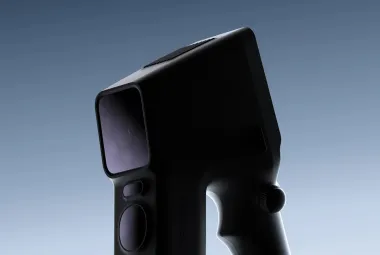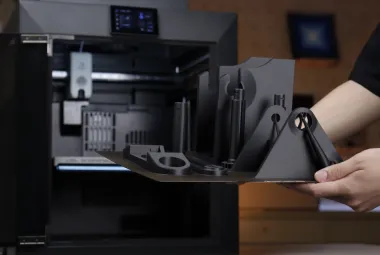
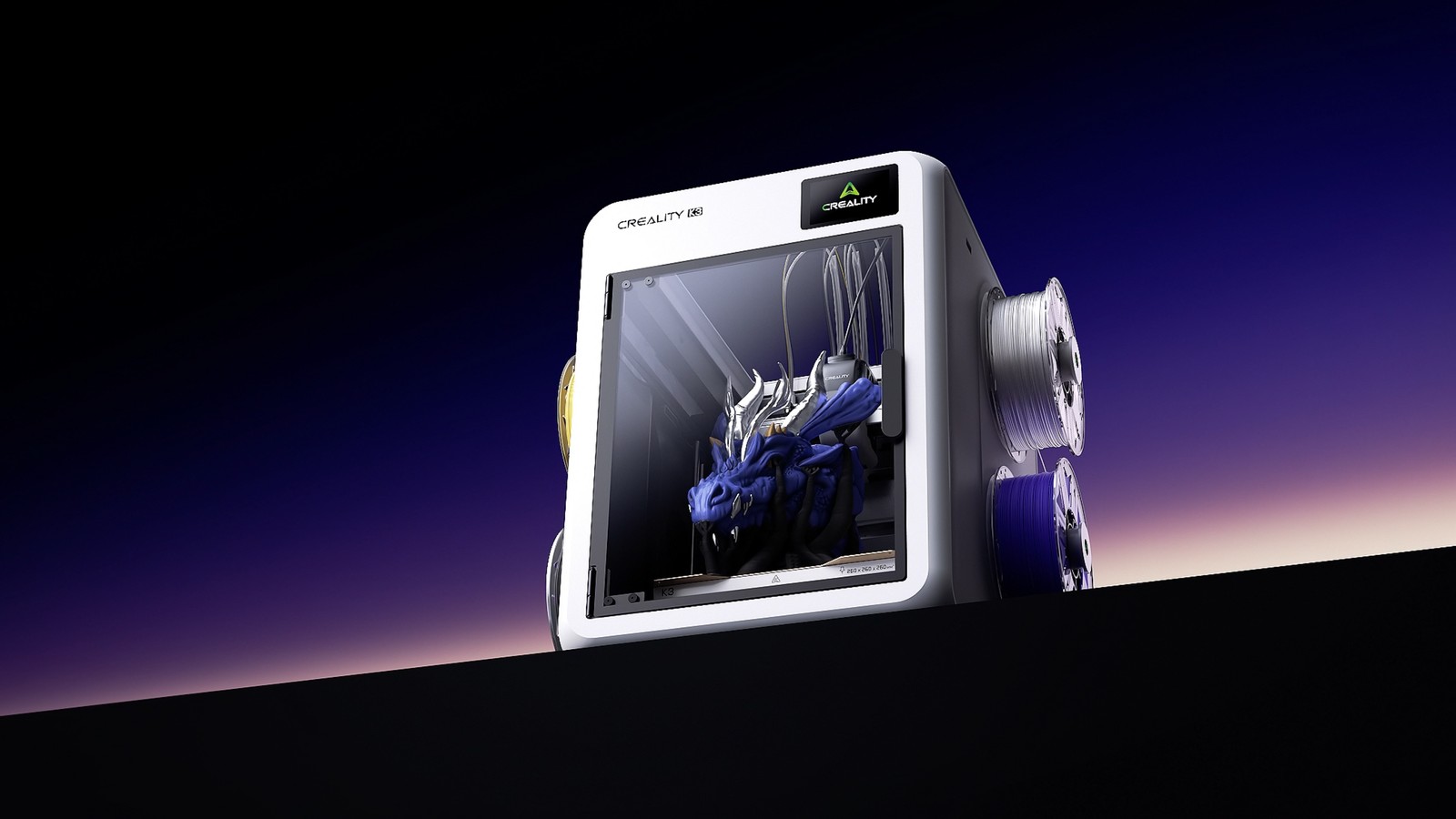
Creality has opened pre-sales in China for the K3, a four-nozzle printer that swaps between nozzles in about five seconds instead of purging one nozzle at every color change. Creality says its KliTek system cuts multicolor print time by up to 80 percent and filament waste by about 85 percent. International pre-orders are expected in mid-October, with a price reported under about $1,050. Creality's K3 product page is currently a short teaser, so the specifications below come from the China launch as reported, and the speed and savings figures are Creality's own.
How KliTek works
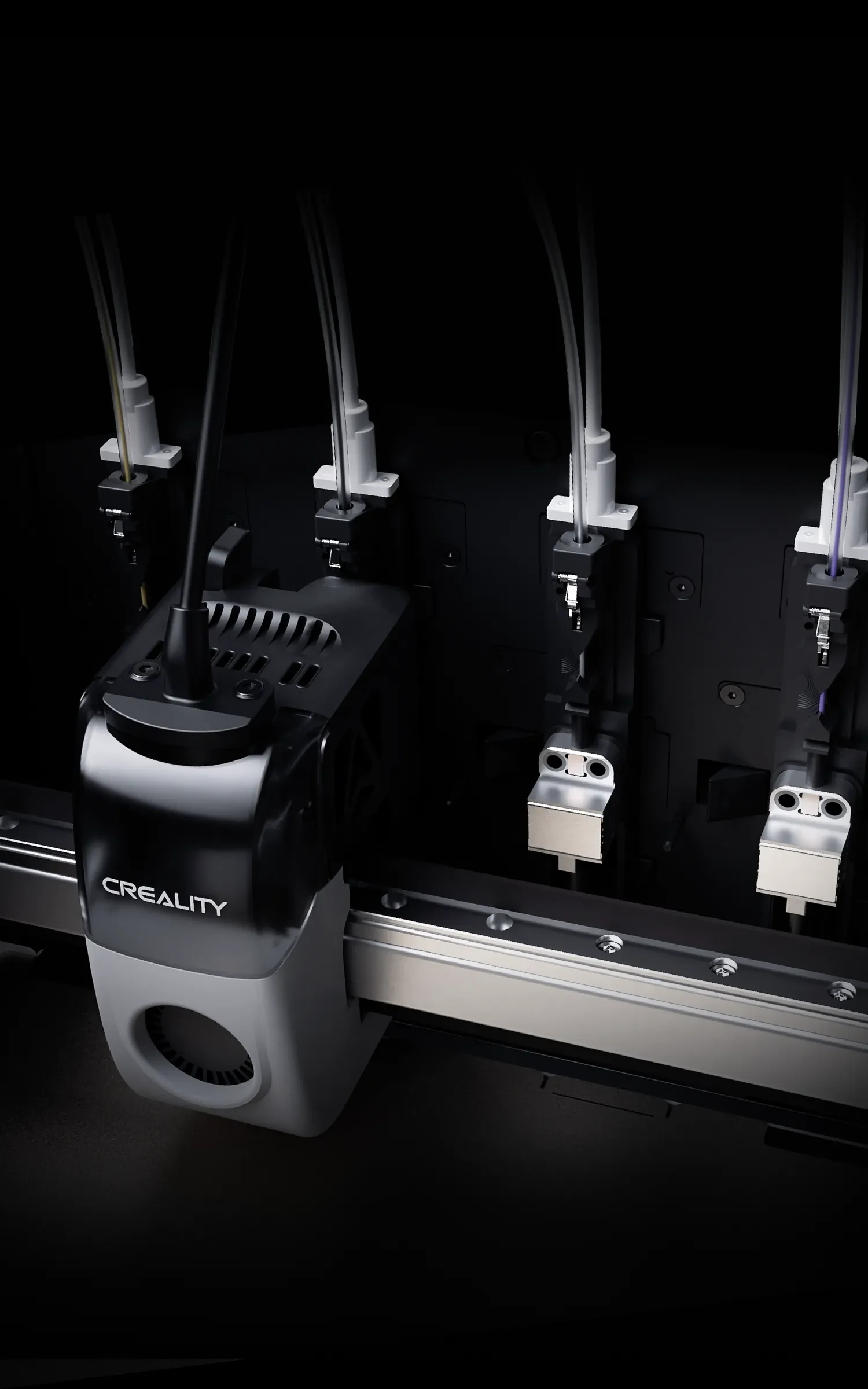
KliTek swaps whole nozzle assemblies. The printhead parks the nozzle it is using and picks up the next, which already holds the right filament, so the printer avoids the flushing step and the purge tower that single-nozzle machines need. Creality previewed the system in May on its KliTek blog, and the K3 is the first printer to ship with it.
Creality quotes about five seconds for the mechanical swap and under 15 seconds for a full color or material change. The company says a torsion-resistant aluminum frame and a pin coupling position each nozzle along X, Y, and Z, and that the mechanism has been tested over more than 600,000 swaps with 25 micrometers of repeatability. The printer reportedly carries 37 sensors, 12 of them watching nozzle changes. None of these figures has been independently verified.
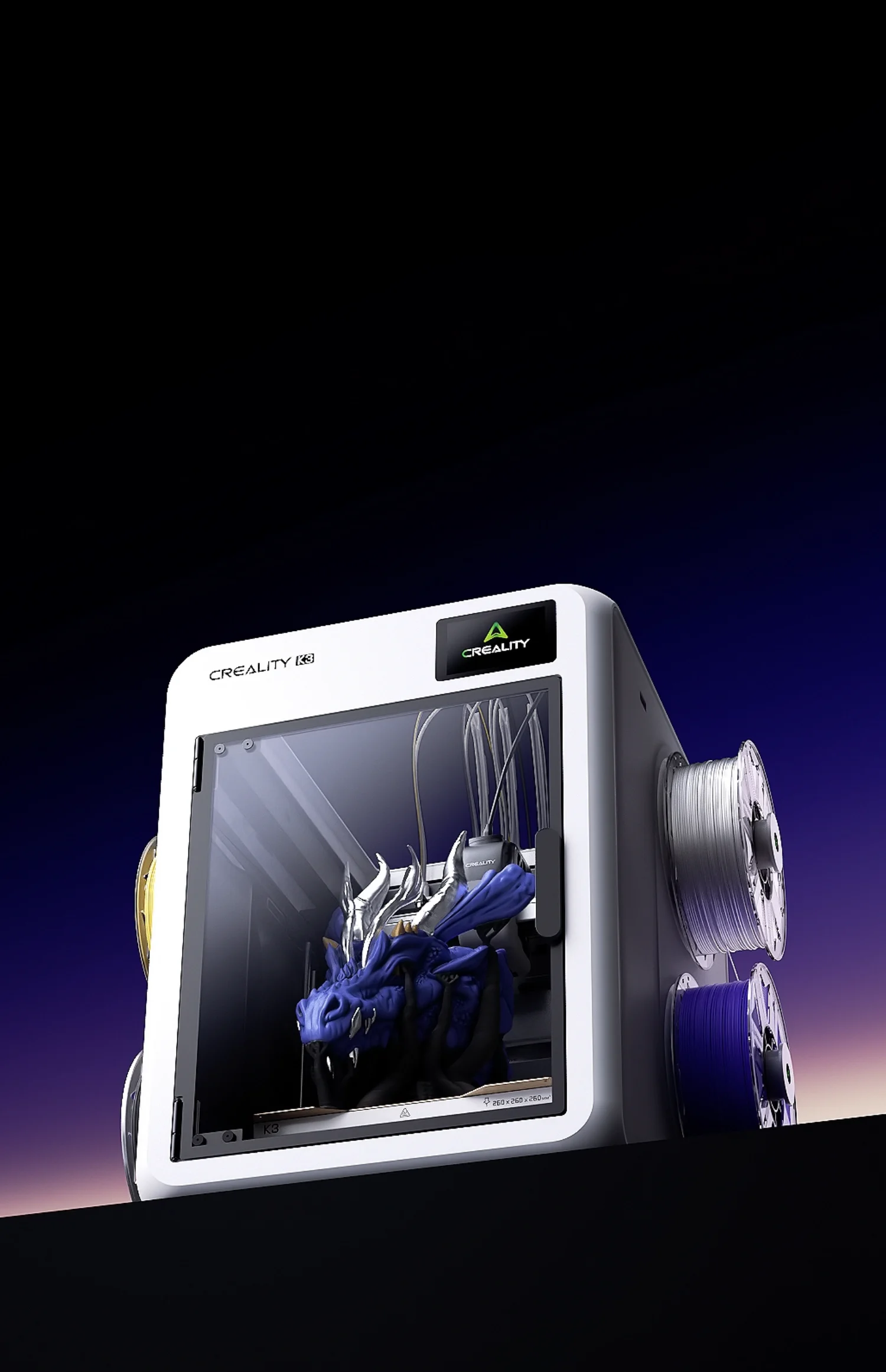
Creality's earlier KliTek preview used a 0.4 mm nozzle for visible walls and a 0.8 mm nozzle for infill as its example. The K3 makes that practical for a four-nozzle machine, since a larger nozzle lays down more plastic per pass and a smaller one captures fine surface detail. The same mechanism lets one printer hold different materials. TPU, a flexible filament, can sit in its own nozzle and feed path, and Creality says the K3 supports 95A Shore TPU as standard.
Specifications
Reported specifications include four independent nozzles with separate filament channels, CoreXY motion, and a 260 by 260 by 260 mm build volume. Nozzle sizes of 0.2, 0.4, 0.6, and 0.8 mm can reportedly be mixed in one print. Four 0.4 mm brass nozzles ship as standard, with a mixed-size set promised later. TPU of 95A Shore hardness is supported as standard, and 90A and 85A need an optional multi-material kit. Full-color printing uses physically blended translucent filaments, in a cyan, magenta, yellow, and black approach. The firmware is Klipper, with a phased rollout announced, and slicing uses Creality Print 7.0 and later, said to be compatible with OrcaSlicer. Root access is reportedly enabled out of the box, and a CFS Hub connects to Creality's filament system.
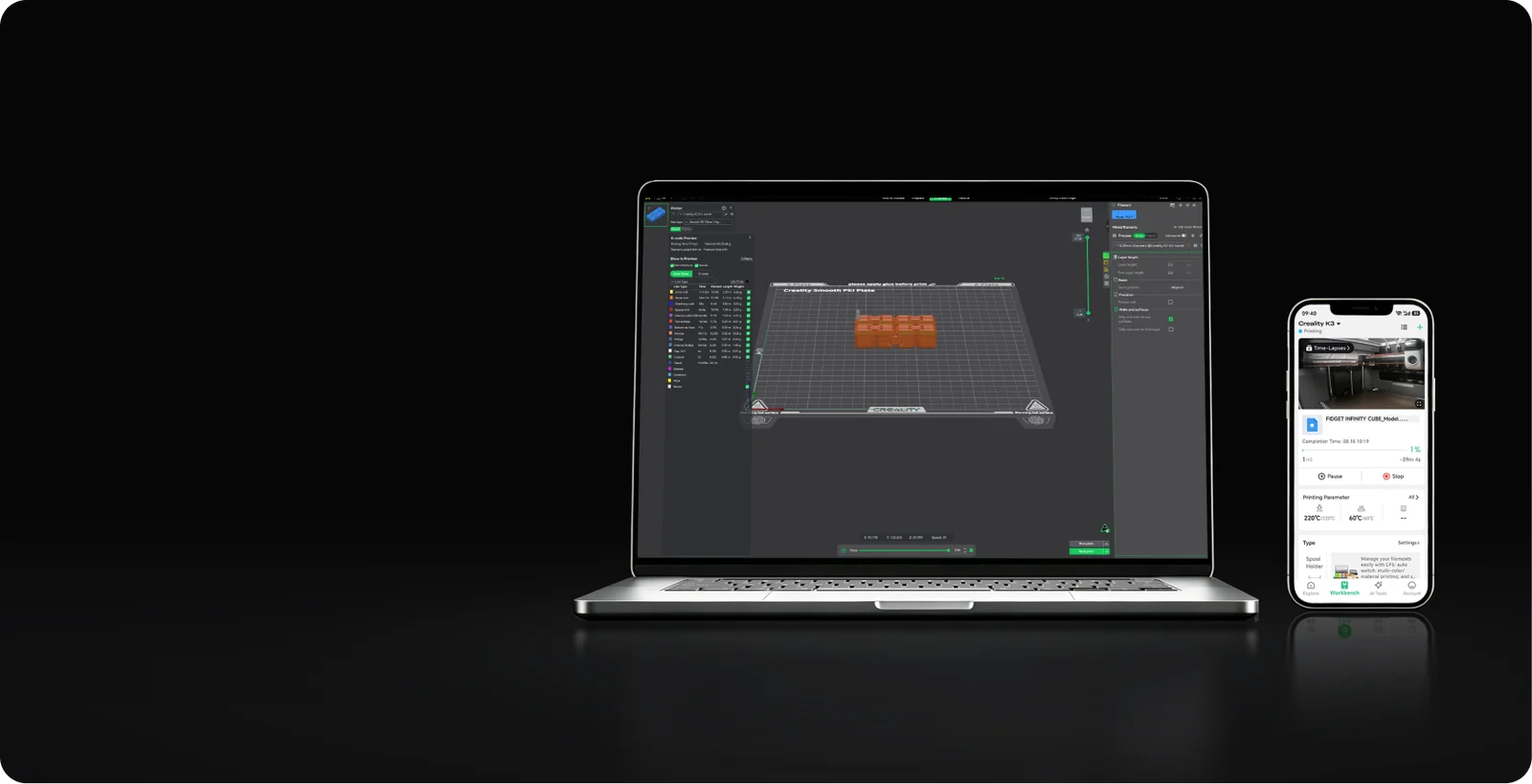
Klipper firmware and root access matter to a particular kind of buyer. Klipper moves motion planning to a more powerful host computer and is popular with people who tune their own printers, and root access means owners can modify the system software. Creality has announced a phased Klipper rollout, so features may arrive after the first units ship.
Creality's savings claims compare the K3 against single-nozzle printers that purge at every color change, and the real saving depends on the model. A part with two colors and a few changes gains little, while a multicolor figurine with hundreds of changes gains a lot. The launch reports do not name the test models behind the 80 percent and 85 percent figures.
Price and competition
The China pre-sale price converts to roughly $717. For the international market Creality has indicated a price under about $1,050. Those figures are my conversions from the local-currency prices in the launch reports, at an assumed $1.17 per euro, so they are ballpark numbers and not a quoted U.S. price. Creality has given no delivery date for markets outside China.
The K3 enters a crowded toolchanger field. Snapmaker's U1 uses four separate toolheads, Prusa's CORE One+ with INDX carries eight, and Bambu Lab's H2C uses its own hotend-changing approach, so Creality is competing on price and swap speed. The closest comparison is the U1, which Creality is reportedly targeting. Mechanical reliability over hundreds of hours of printing is the open question for any new nozzle-changing design, and independent test results have not been published yet.
Sources and image credits
- Creality K3 product page
- Creality blog: KliTek nozzle-changing 3D printer
- Images: Creality official product materials