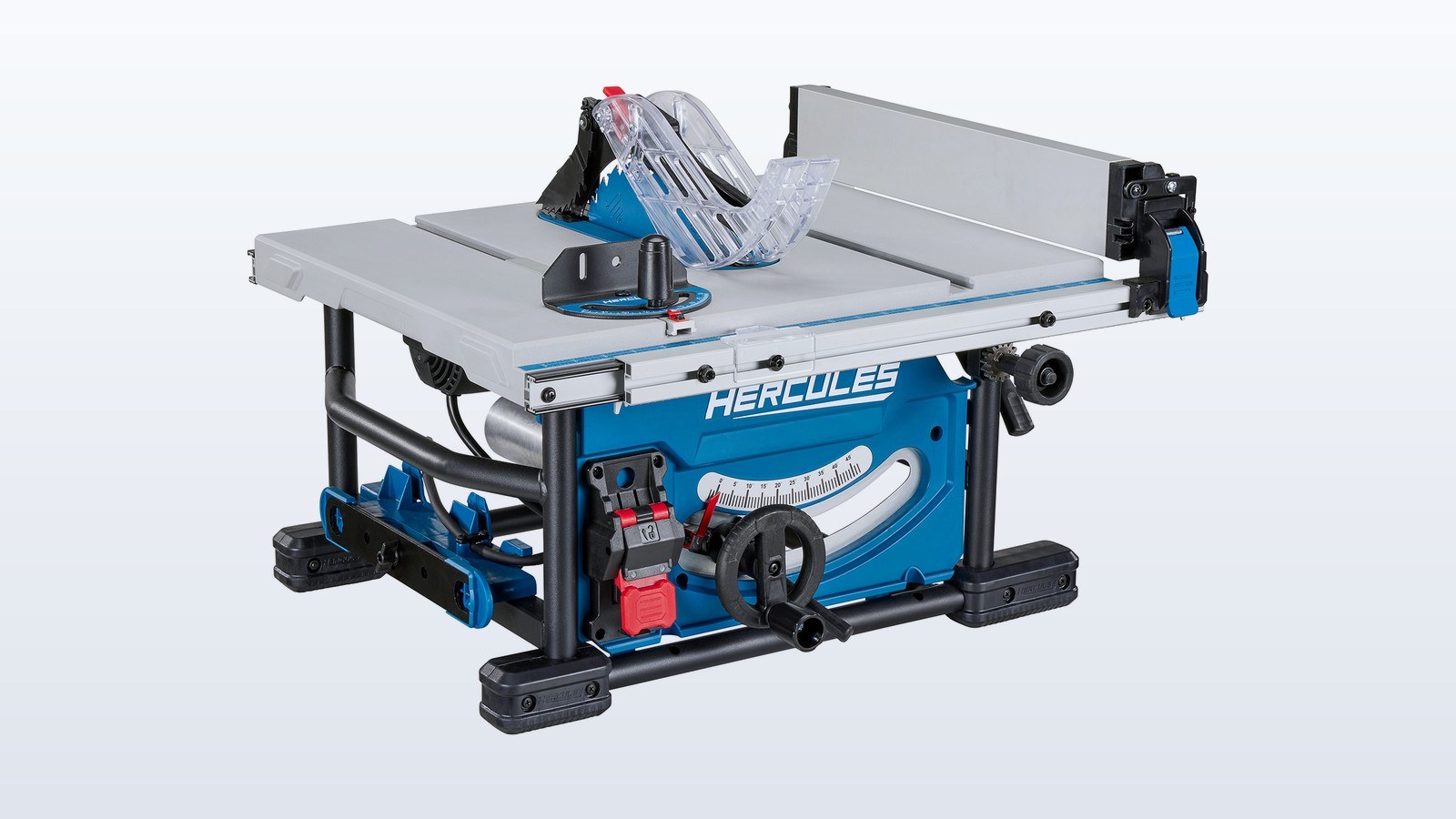
Harbor Freight added a compact table saw to the professional HERCULES lineup on July 30, 2026. It's a 15 amp, 8-1/4 inch saw with a rack-and-pinion fence, available only at Harbor Freight. The newsroom post doesn't print a price, and the product page (item 71278) has the current figure. TMWB hasn't used the saw, so these are Harbor Freight's claims.
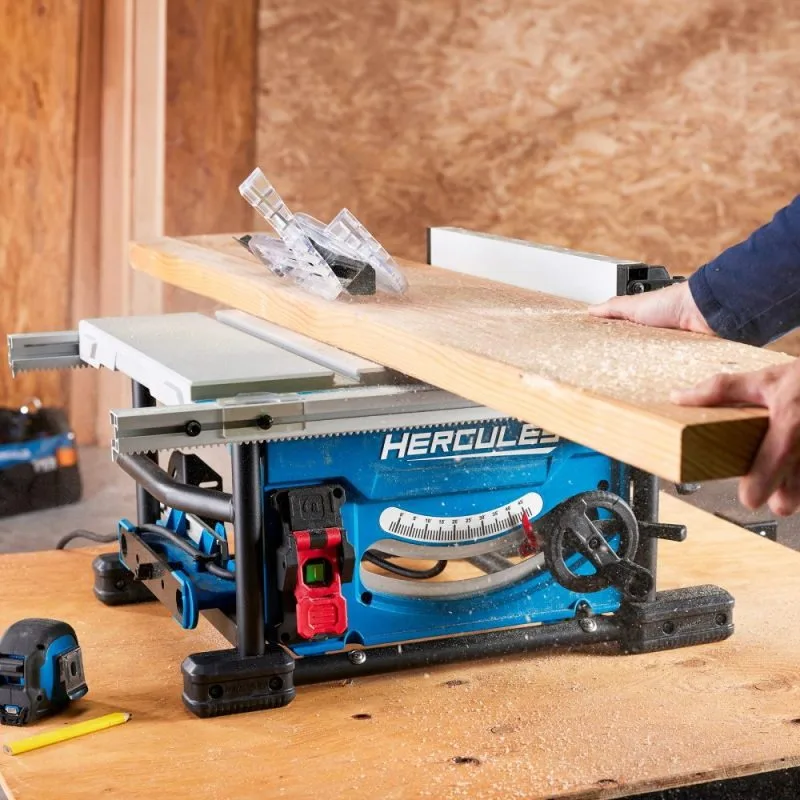
A rip cut runs along a board and a crosscut runs across it. A cabinet saw is the stationary version with a full-size blade and a closed base. This one you can move: Harbor Freight gives it a compact metal roll cage and says to shift it around a garage or take it to a jobsite. No weight is stated.

What is the rack-and-pinion fence for?
The fence is the guide beside the blade on a rip, and the distance from fence to blade is the width of the piece you keep. Many small saws clamp the fence at one end, so the free end can swing as the lever locks and skew it. When the back gap is tighter than the front, the board pinches against the teeth rising out of the table, and they can grab it and throw it at you, which is kickback.
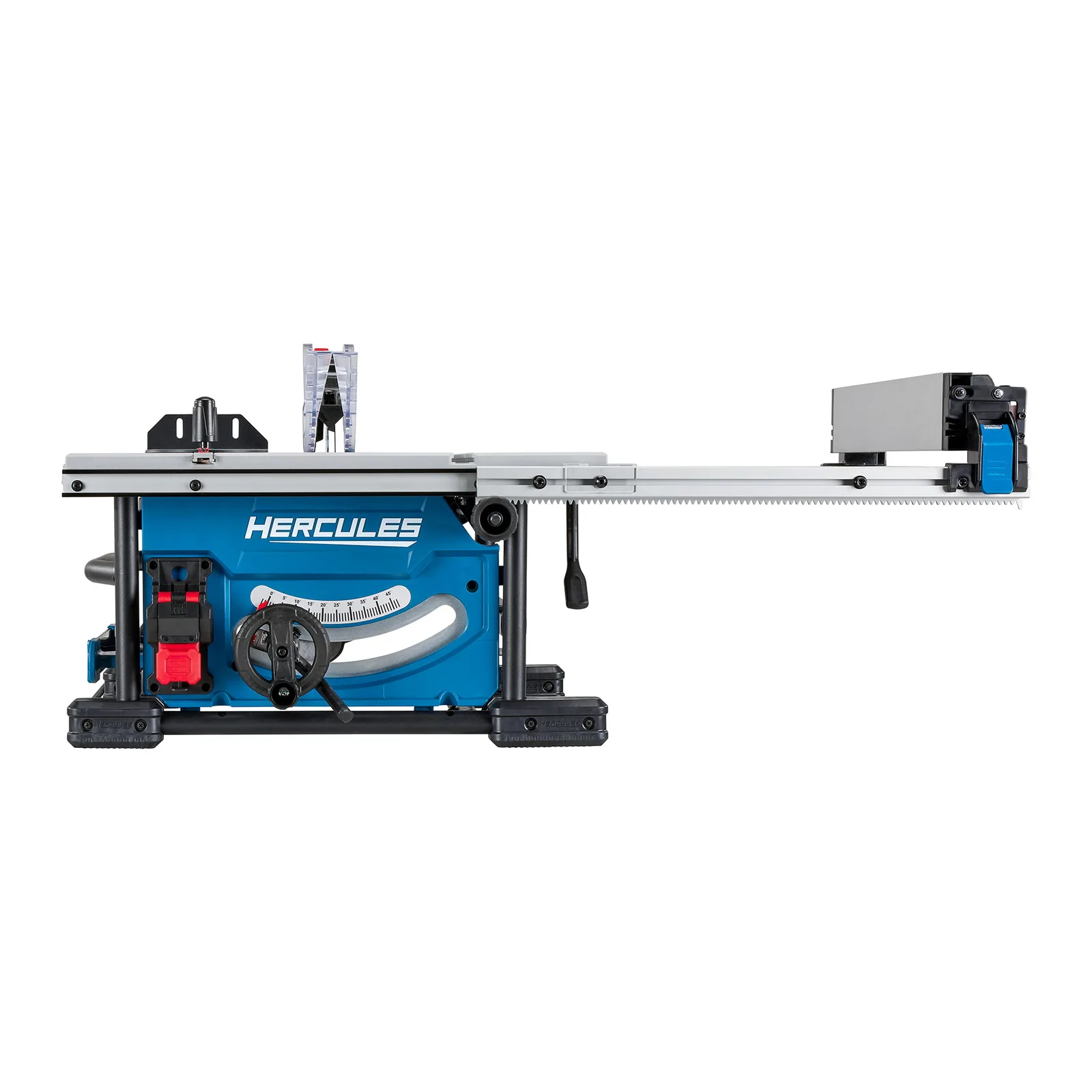
Rack and pinion is Harbor Freight's mechanism for keeping the fence parallel. A pinion is a round gear and a rack is a straight bar with matching teeth, the same pair a car's steering uses, so both ends of the fence move together. Harbor Freight says it gives smooth, consistent cuts, but the post doesn't report a measured alignment.
What depth and rip capacity do you get?
The 8-1/4 inch blade is smaller than a 10 inch contractor saw's, which limits depth. Maximum cut at 90 degrees (blade square to the table) is 2-9/16 inches. A 2x4 laid flat is 1-1/2 inches, and 8/4 stock is 2 inches, so both fit. A 2x4 on edge is 3-1/2 inches, so one pass at 90 degrees won't cut through it. No depth at 45 degrees or bevel range is given.
Rip capacity is up to 24-1/2 inches. A sheet of plywood is 48 inches wide, so a center rip needs a 24 inch fence setting and fits. Because the blade removes a kerf (the strip it turns to dust), the two halves aren't exactly equal, and kerf width isn't stated. I'd still check the fence scale with a tape, since parallel doesn't mean the cursor is accurate. The motor is 15 amps at 5,800 RPM, with no horsepower printed.
What does a 15 amp saw ask of the circuit?
Fifteen amps at 120 volts is 1,800 watts of demand on the outlet, not cutting power at the tooth. On a 15 amp garage breaker that's the whole circuit, while on a 20 amp breaker there's room for a small second load. If the circuit is also running lights or a dust vac, plan accordingly.
What's stored on the saw?
Included and stored on board are the fence, a miter gauge (rides in a table slot to guide crosscuts), a push stick, a riving knife (a splitter just behind the blade that holds the kerf open so it doesn't pinch), blade-change wrenches, and anti-kickback pawls (toothed fingers that dig in if a board is thrown back). An integrated table extension supports material, though its size and mechanism aren't stated. There's also a dust port with no diameter given.
What does 15 amps mean for a circuit?
Fifteen amps on a 120 volt circuit is 1,800 watts of electrical draw (voltage multiplied by current). That's the demand on the outlet and not a measured cutting power at the tooth. A garage circuit is often a 15 amp or 20 amp breaker and may already be shared with lights, a charger, or a dust vacuum. On a 15 amp breaker the saw's nameplate is the whole circuit before anything else runs.
How do the cut figures work out?
The 8-1/4 inch blade is smaller than the 10 inch blade on a full-size contractor saw, and diameter limits depth. Harbor Freight states a maximum depth of 2-9/16 inches at 90 degrees, with the blade square to the table. A surfaced 2x4 is 1-1/2 by 3-1/2 inches, so laid flat it fits with 1-1/16 inch to spare, and 8/4 stock at 2 inches fits with 9/16 inch to spare. Stood on edge, a 2x4 needs 3-1/2 inches, which is 15/16 inch more than the blade offers in one pass.
Rip capacity is up to 24-1/2 inches. A sheet of plywood is 48 inches wide, and half of that is 24, so a center rip uses a 24 inch fence setting and fits. The blade removes a kerf (the strip it turns to dust), so the two pieces of a center rip aren't an identical pair, and kerf width isn't in the release. The fence is parallel by design, which doesn't make the scale reading a measured distance from a tooth, and the announcement reports no check of that.
What does the saw store on board?
Onboard storage holds the fence, a miter gauge, a push stick, a riving knife, blade-change wrenches, and anti-kickback pawls. A miter gauge rides in a table slot and guides a crosscut square or at an angle, and slot width isn't stated. A riving knife is a splitter that sits just behind the blade and holds the kerf open so the cut faces don't pinch the blade. Anti-kickback pawls are toothed fingers meant to dig in if a board is thrown back at the operator, and the announcement describes no test of them. The wrenches turn the arbor nut for a blade change, and the arbor diameter isn't given. A dust port is listed with no diameter, so hose fit is unknown.
Harbor Freight's own dateline is Calabasas, California, and the release doesn't print an item number. The product page carries 71278.
Who is it for?
A small shop that wants a fence that moves both ends together, has accessories stored on the saw, and doesn't have floor space for a cabinet saw. Not stated: a 45 degree depth, weight, dust-port diameter, or any contact brake.
Sources and image credits
- Harbor Freight newsroom, July 30, 2026
- Product page, item 71278
- SawStop Compact Table Saw announcement, July 14, 2022
- Product images: Harbor Freight newsroom