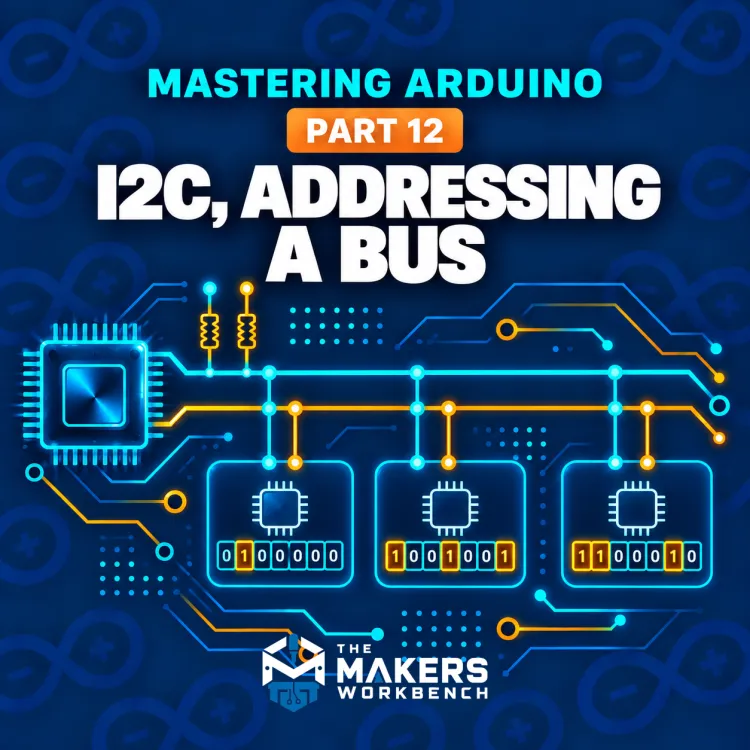
Learn how I2C shares two wires among many devices: open-drain lines and pull-ups, 7-bit addresses, the Wire library, scanning for devices, and putting two on one bus.
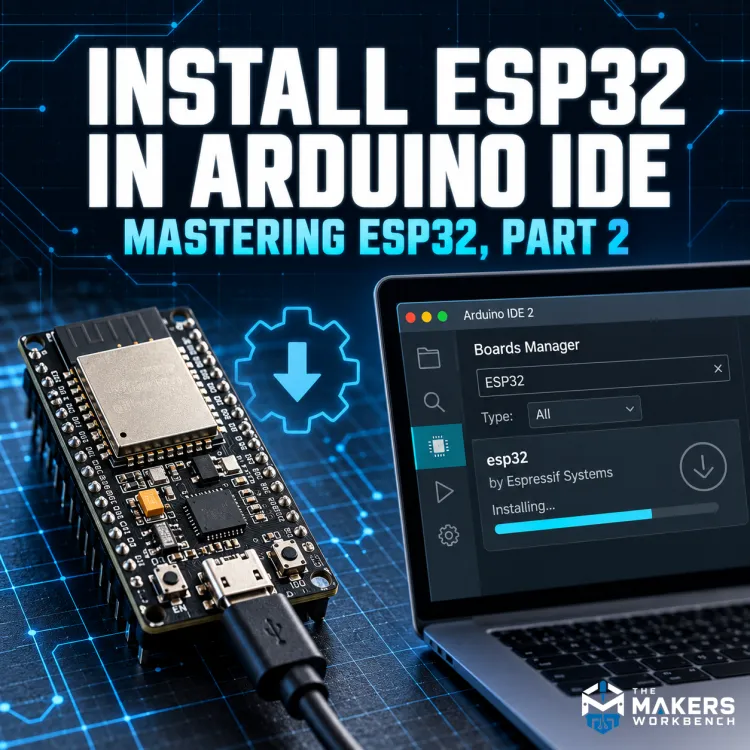
Add Espressif's stable board index, install the esp32 core, choose the right board entry, and upload your first sketch to a classic ESP32 DevKit in Arduino IDE 2.
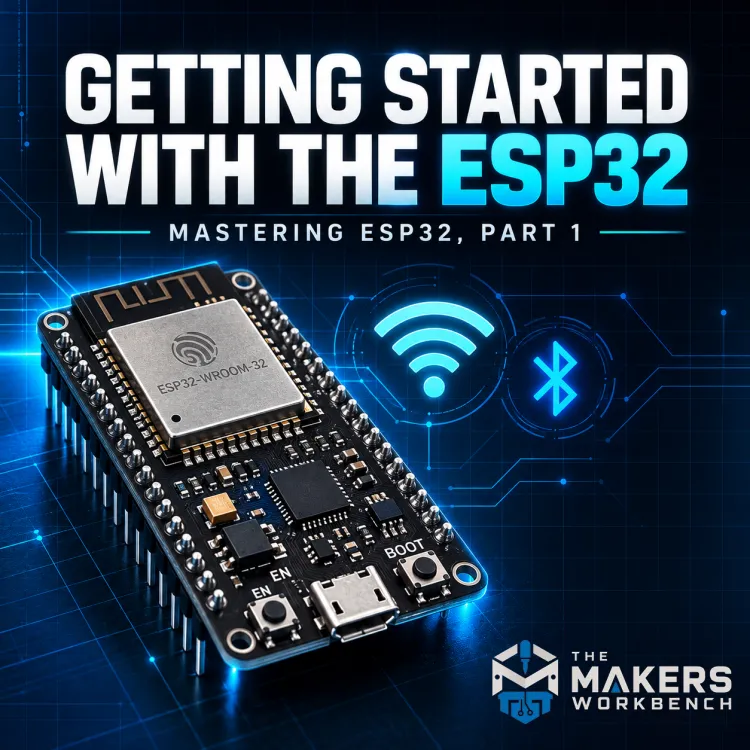
New to the ESP32? Learn what it is, what's inside, which variant and dev board to buy, how to read the pinout safely, and how it compares with an Arduino Uno.
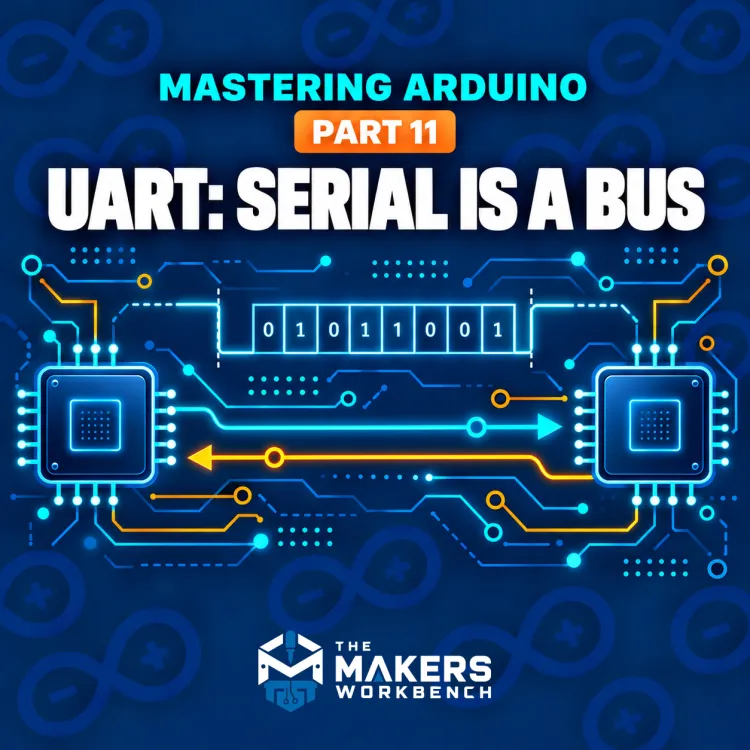
Learn what Arduino Serial really is: UART framing, baud rates, hardware vs software serial, and how to link two Arduinos with a two-board command project.
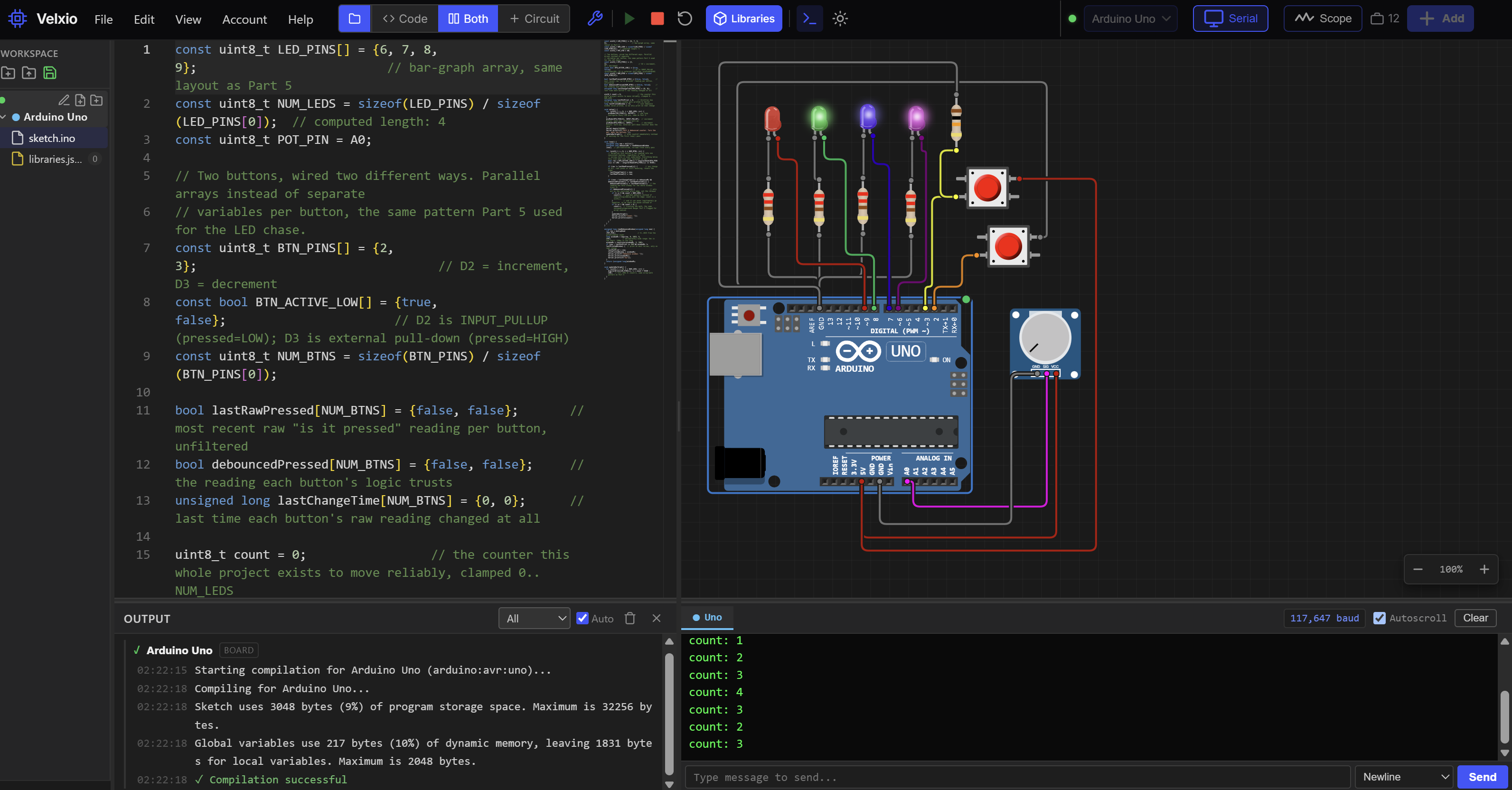
Part 6 of the Arduino Mastery Series: why a mechanical button chatters, how pull-up and pull-down resistors work, and a tunable two-button counter project that debounces both the hard way and the easy way, for real this time.
Part 5 of the Arduino Mastery Series: how arrays store more than one value under a single name, how a C-string differs from Arduino's String class, and a serial-controlled LED chase project that puts real data types to work.
Part 4 of the Arduino Mastery Series: why delay() freezes your whole sketch, how millis() and micros() track time without blocking, and a non-blocking control panel project that blinks, dims, and times a button press all at once.
How a sketch actually runs, the core Arduino functions, Serial as a debug tool, installing libraries, and SRAM awareness: the vocabulary the rest of the series assumes you have.