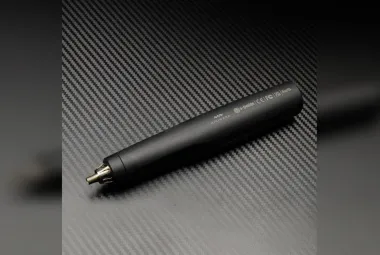
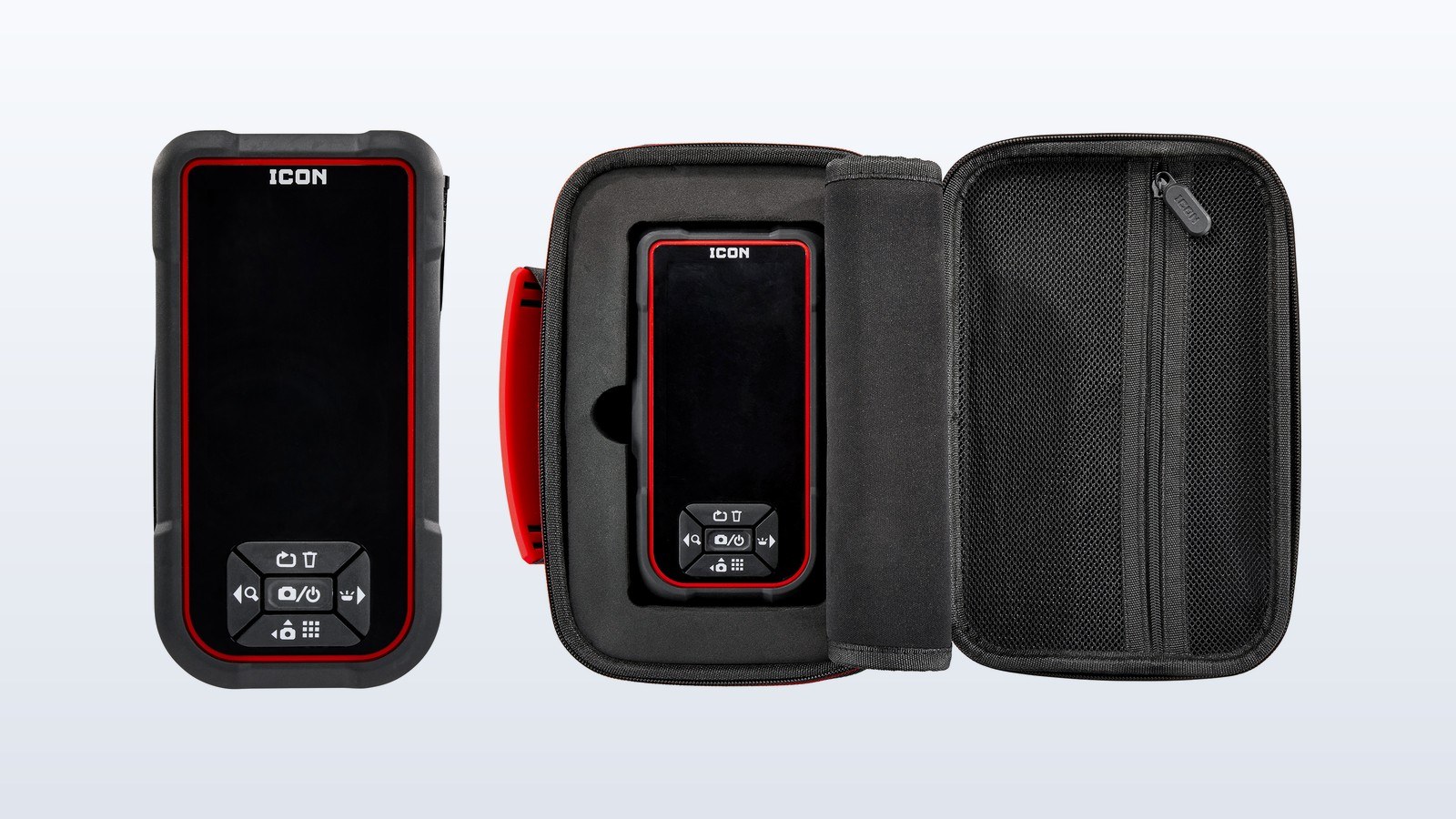
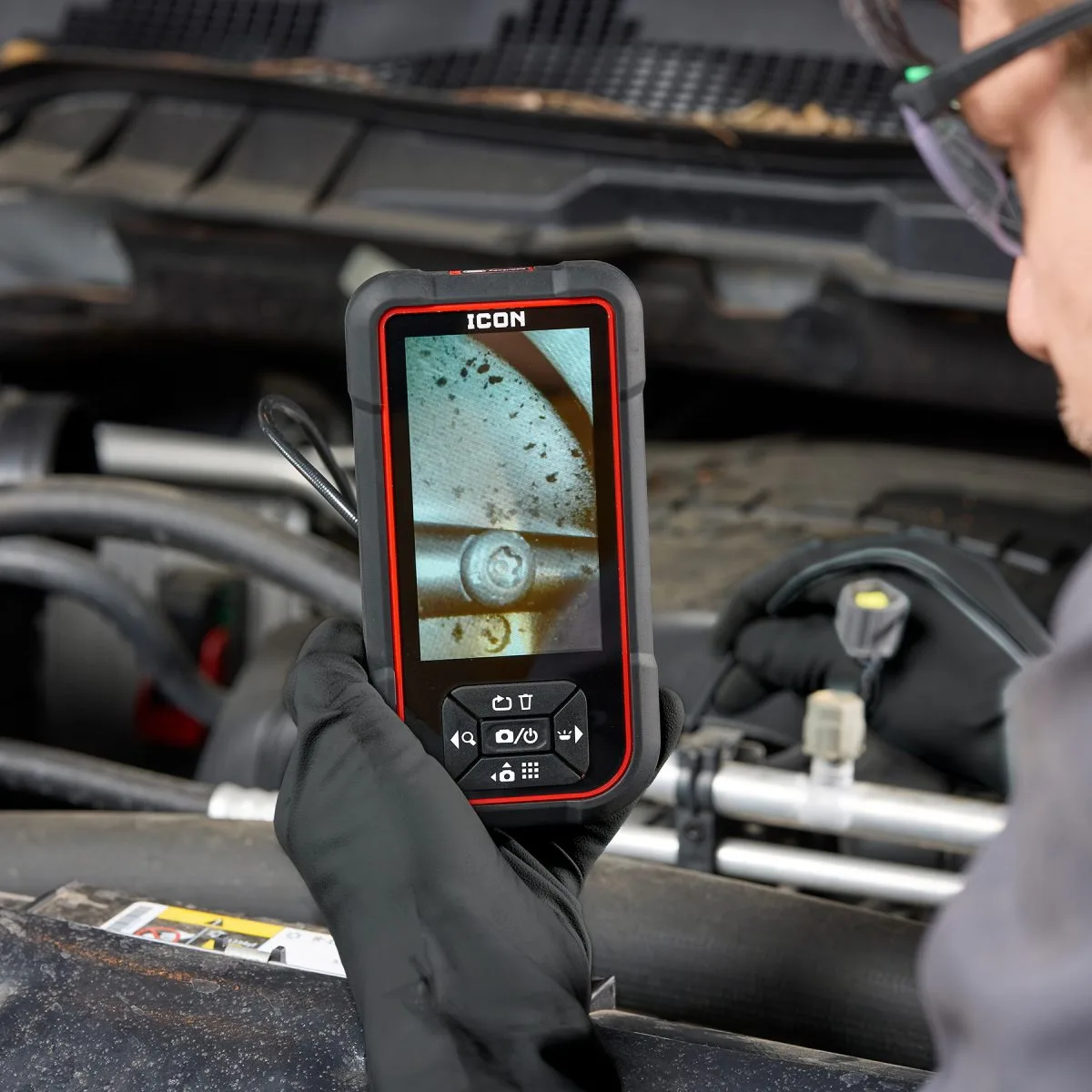
Harbor Freight added a handheld inspection camera to its ICON lineup on September 9, 2026. It calls it a professional 4.3 inch camera with a 5.5 mm dual imager, sold only at Harbor Freight. The newsroom post doesn't give a price, and the current figure is on the product page (item 58398). TMWB hasn't used the camera, so these are Harbor Freight's claims.
An inspection camera is a lens on a cable with a screen in your hand. You feed the lens into a space you can't see and watch the picture.
What's special about the dual-lens probe?
The probe is 5.5 mm across (about 0.22 inches) and has two lenses, so it can switch from a forward view to a 90-degree side view without being pulled out. A mirror tip is a separate attachment: to look sideways you back the probe out, flip the tip, and push the cable in again, and whatever you had centered is easy to miss the second time. A lens already aimed sideways just changes the view.
Harbor Freight's example is a cylinder wall, the bore a piston travels in. A forward lens looks down the bore and sees the wall as a thin band at the frame's edge, while the side lens looks at the wall beside the probe, where scoring and rust sit. About 0.22 inches suits a spark-plug well, a drain trap, and the gap beside a fuse block.
Zoom is four steps, with no magnification printed, and it isn't said whether the steps are optical or a digital crop, which enlarges a casting number and softens it at the same time. The two views are fixed, so the tip doesn't steer.
What does the screen and lighting offer?
The screen is a 4.3 inch backlit LCD. LCD is liquid crystal display, the panel that forms the picture, and backlit means the panel has its own lamp so it's readable in dim spaces, though that lamp lights the screen for the viewer and not the cavity. The probe carries front and side LEDs for that. Harbor Freight says they illuminate dark areas such as engine bays, drains, and electrical panels, and it calls the camera compact and lightweight, with a clear, real-time view. "Clear" is Harbor Freight's adjective and not a pixel count. No screen resolution, brightness, or battery type is stated.
How should the IP67 rating be read?
IP stands for ingress protection, a code from the IEC 60529 standard describing how an enclosure keeps out solids and water. The first digit is solids, and a 6 means dust-tight. The second digit is water, and a 7 means protected against temporary immersion, commonly read as 1 meter for 30 minutes. Harbor Freight says IP67 and doesn't quote a duration, depth, or lab method, so that reading is the code's usual meaning and not the company's stated test. The rating is attached to the probe, and the release doesn't give IP67 to the handheld screen. The cable is 36 inches (3 feet), which is enough for a sink trap, a spark-plug well, or the space beside a fuse block. A sewer camera is a different tool, with a larger head on a reel of tens of feet.
What is stored, and what isn't printed?
The camera stores up to 100 images, and a USB-C port transfers the photos. The release ties that port to photo transfer and doesn't say it charges the camera. It doesn't say whether storage is built in or on a card, what file type comes across the cable, or whether video or a frame rate is supported. Resolution in pixels is absent for both the screen and the file, and so is focal distance, meaning how far a surface must be from the lens to look sharp.
Harbor Freight names automotive, plumbing, HVAC, and electrical work. An electrical panel is on the list, and the camera doesn't make one safe to open, so the circuit has to be de-energized and verified dead before the probe goes in. The release names panels without describing that step.
What isn't the camera described as doing?
The announcement describes a camera on a cable and nothing more elaborate. It doesn't mention video or a frame rate, a measurement reticle (marks in the image for estimating size, which some borescopes include), or an articulating neck that bends so one lens can look around a corner. A borescope is a tube with a camera or optics for seeing inside a bore such as a cylinder. The two views here are fixed, forward and 90 degrees to the side, so the method for looking sideways is the second lens, and a photo of scoring in a cylinder wall doesn't come with a depth.
Where does it sit in the market?
By September 9, 2026, small cable cameras were already familiar in parts stores, plumbing suppliers, and on electronics benches. ICON is Harbor Freight's brand for professional hand tools, diagnostics, and storage, and this camera is the diagnostic addition in the September 9 post. Harbor Freight's release says the camera "offers incredible value compared to the competition," which is the company's sentence, with no competitor named and no price beside it.
Where can you buy it?
It's sold only at Harbor Freight, including its website. The newsroom post, datelined Calabasas, California, doesn't give a price or a stock number, and the item number on the product page address is 58398. The post presents the camera as available, with no future ship date.
Where would you use it?
Harbor Freight names automotive, plumbing, HVAC, and electrical work. The jobs that fit are the ones a flashlight and mirror can't finish: a dropped nut beside a fuse block, a casting mark you can't face, corrosion on a cylinder wall or inside a drain. An electrical panel is on the list, but the camera doesn't make one safe to open, so de-energize the circuit and verify it's dead before the probe goes in.
Harbor Freight says the camera "offers incredible value compared to the competition," which is the company's sentence, with no other camera or price named.
Sources and image credits
- Harbor Freight newsroom, September 9, 2026
- Product page, item 58398
- IP code (IEC 60529) on Wikipedia
- Product images: Harbor Freight newsroom