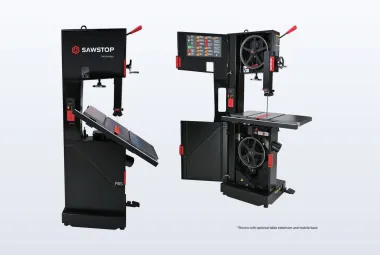
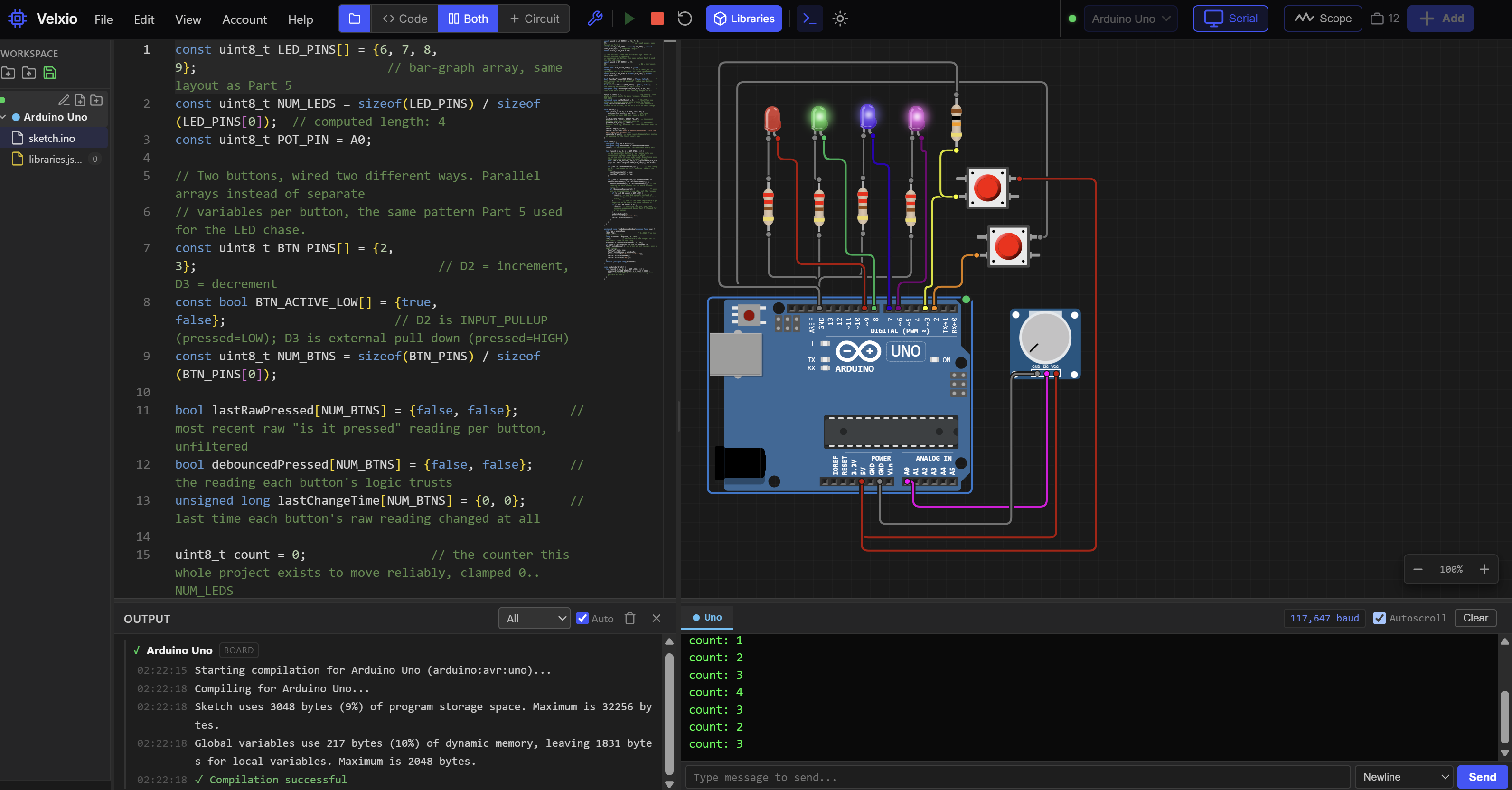
Harvey Industries International, based in Los Angeles, formally launched the Alpha A-15 bandsaw on May 20, 2025, with a PR Newswire release at 10:00 ET and a matching page on Harvey's own site. The company had posted a YouTube introduction about a month earlier, on April 21, but I'm not pulling specifications from that video. The release doesn't state a price, and TMWB hasn't used the saw.
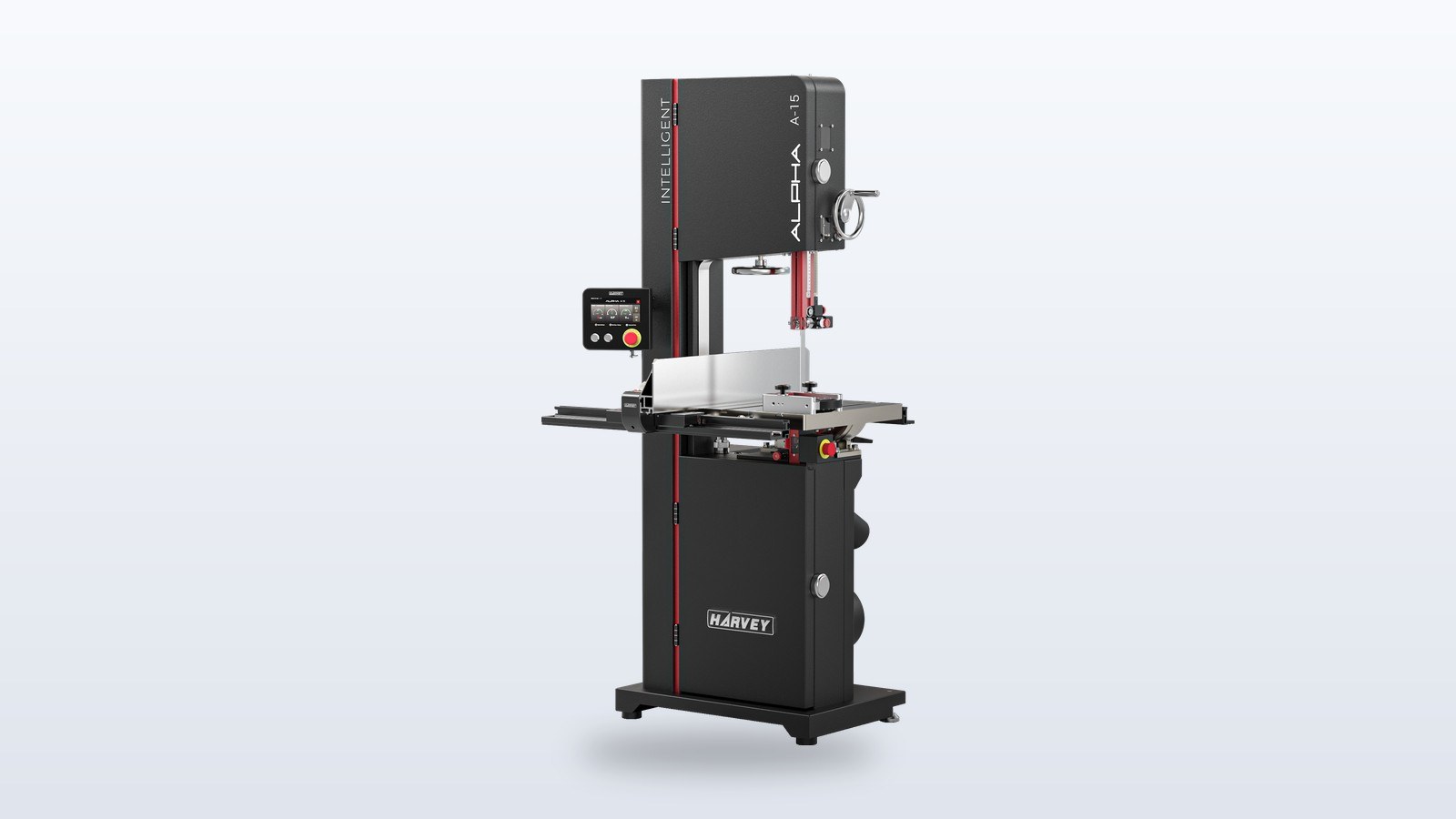
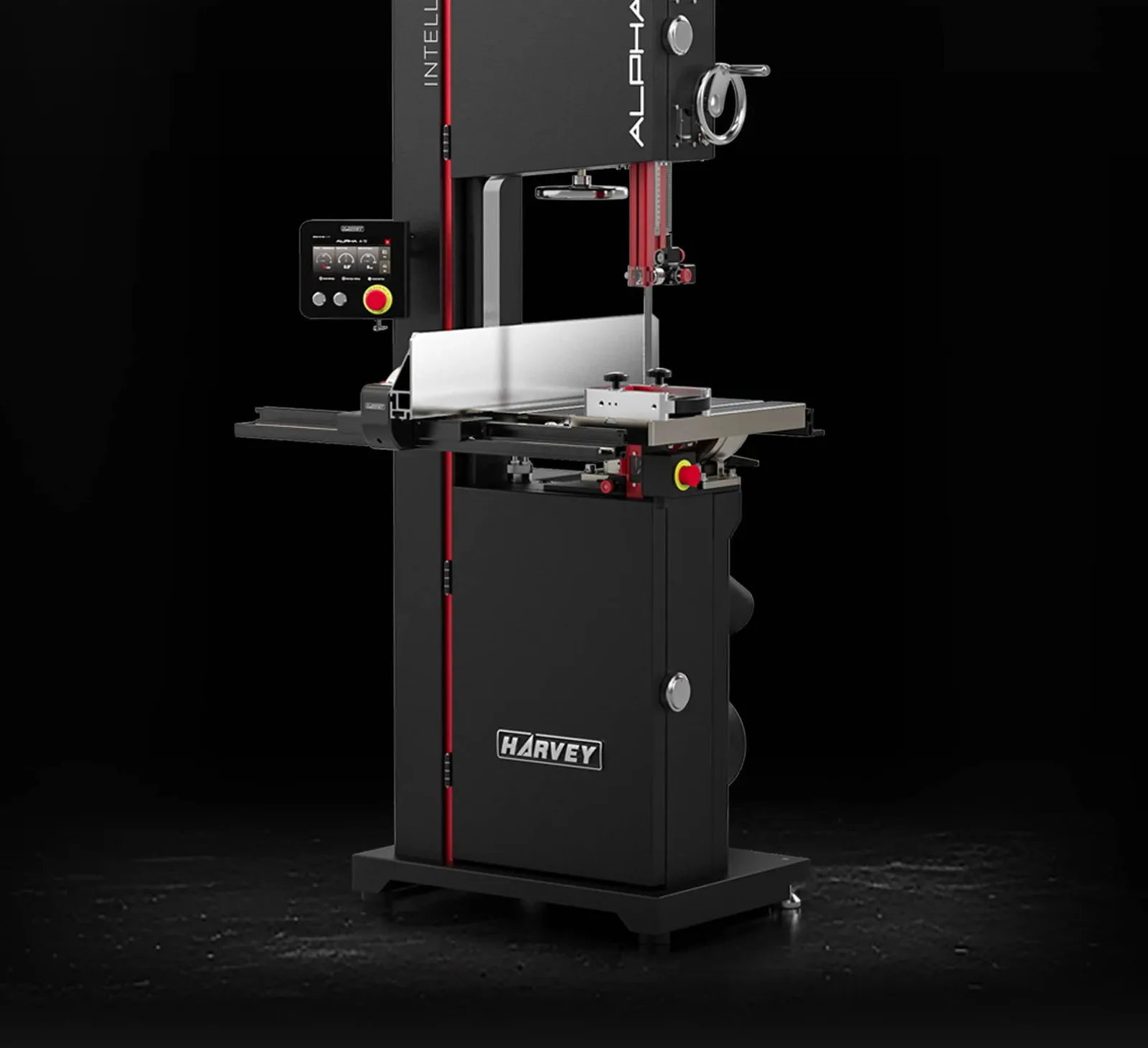
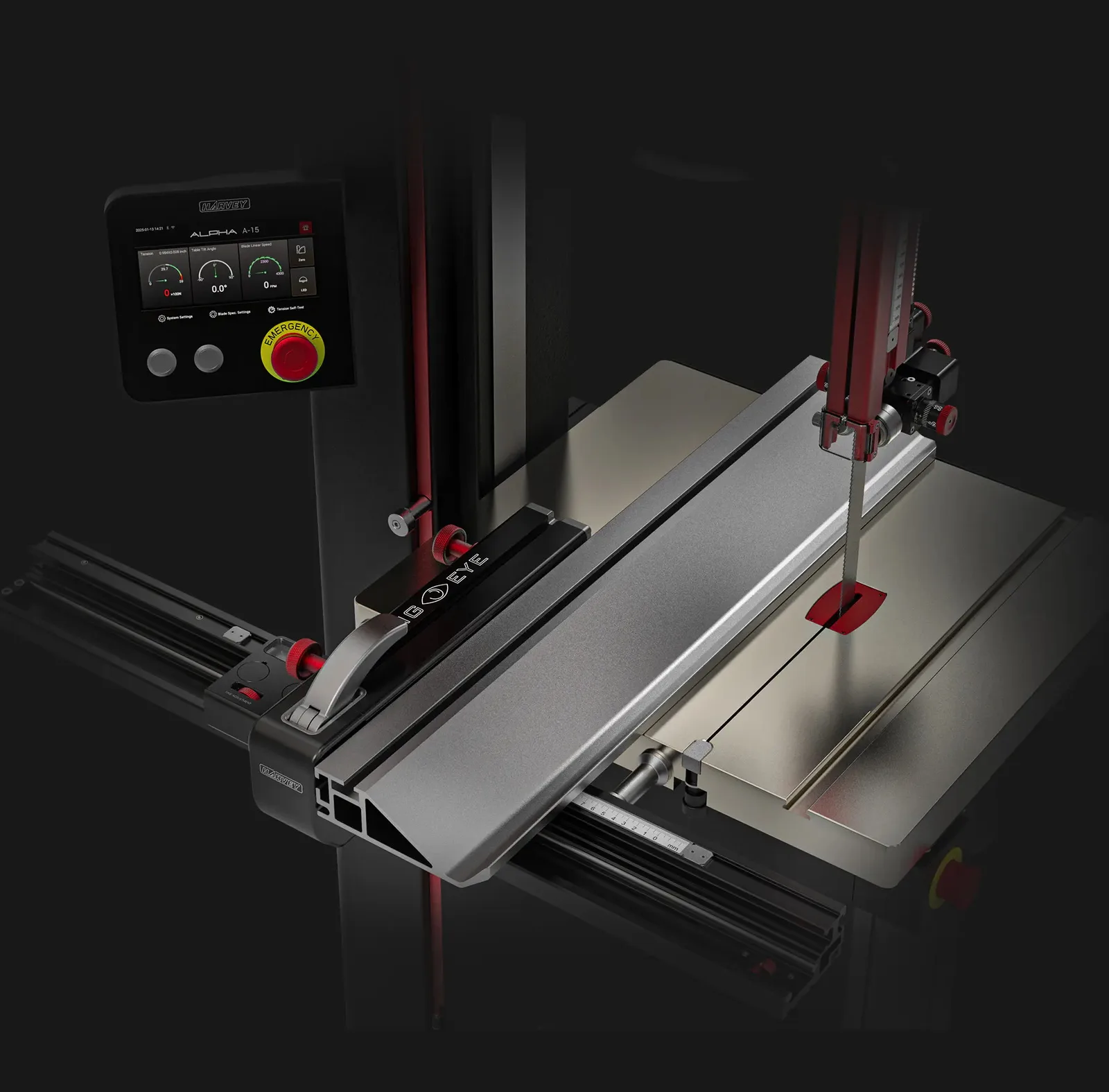
Harvey's headline calls the Alpha A-15 the "world's first artificial intelligence bandsaw." That's Harvey's claim, and I'm not adopting it as fact. The functions the company actually describes are a 7-inch touchscreen showing blade tension, table tilt, and blade speed, fault detection, a voice-controlled work light, and lockouts that keep the blade from spinning with the doors open or in unsafe conditions.
Why do tension and drift matter on a bandsaw?
A bandsaw runs a toothed steel loop over two wheels, with a table in the middle and guides beside the blade so it doesn't twist. The cut that tests it hardest is resawing, which means standing a board on edge and slicing it into thinner leaves. People resaw to bookmatch (open the halves like a book so the grain mirrors across a panel) and to saw veneer, a thin skin of wood. The blade stays buried for the whole pass, so a small setup error turns into a taper, a cupped face, or a blade that wanders out of the cut.
Blade tension is how hard the loop is stretched over the wheels. Too little and the blade wanders or flutters between the guides, and too much loads the bearings and the blade weld. Shops have traditionally set tension with a gauge, a flutter test (pluck the blade and watch how it settles), or a mark from the last good cut. Harvey's screen shows tension live, though the specifications don't give its accuracy or units, and they don't say which faults it detects.
Drift is the other classic problem. Bandsaw teeth can lead slightly left or right of the line the fence implies, a short cut hides it, and a long resaw tapers or burns one face. The usual cure is a test cut in scrap, followed by angling the fence to match the blade's lead. Harvey puts table tilt on the same screen as tension, but the materials don't say the saw measures drift or sets the fence for the user. Tilt and drift meet in the work, but they aren't the same reading.
What are the published specifications?
The motor is 3 HP (2.2 kW), four-pole, single phase, 230 volts, 14 amps at full load, 60 Hz. Single phase is the power a house or small shop has, as opposed to three-phase factory power. The saw uses a NEMA 6-20 plug and calls for a 20-amp breaker. That's a 240-volt plug, which means a garage with only ordinary 120-volt outlets can't run this saw until a 240-volt circuit exists, and the A-15 is a 230-volt machine only.
Blade speed comes in two steps, 2,300 and 4,300 feet per minute (700 and 1,300 meters per minute), though the specifications don't say how the speed is changed. The worktable is chemically nickel-plated, a coating meant to slow rust on bare cast iron in a damp shop, and the flywheels are cast iron. Table tilt uses a worm gear, a screw meshed with a toothed wheel that moves a heavy table in small steps and tends to hold position when released, and the tilt range isn't stated. The rip fence is Harvey's BIG EYE, with no length, height, or scale listed.
The release also describes lockouts that prevent the blade from spinning with the doors open or in unsafe conditions. Open doors expose the wheels and the blade's return path, so a machine that refuses to run in that state removes a real hazard. "Unsafe conditions" is the release's broader phrase, and it doesn't itemize what counts.
Where does Harvey sit in the bandsaw market?
Harvey Industries is based in Los Angeles, and the Alpha A-15 is a 15-inch machine. A 15-inch bandsaw sits between the common 14-inch hobby saws and the heavier 18-inch and larger machines, which gives it a bigger frame and a stronger motor than the entry class without needing three-phase power. The 3 HP motor is large for a 15-inch saw, and it's what pushes the electrical requirement to 230 volts.
The "intelligent" angle is Harvey's way of differentiating. Other makers compete on the weight of the casting, the quality of the guides, and the resaw capacity. Harvey is competing on information: a screen that tells you the blade's tension, the table's tilt, and the speed. Whether that information changes the quality of a cut depends on how accurate the sensors are, and the release doesn't state that.
What does the release say about price and where to buy?
The release doesn't state a price, and I'm not printing one. Harvey's own copy of the release is on its news page, which points readers to the Alpha A-15 product page. Harvey calls the launch official and the saw a listed product, past the point of a concept drawing. The release also calls it a 15-inch bandsaw and a 3 HP machine, but the published specifications don't separately state a wheel diameter or a resaw height, so those figures stay out.
What isn't in the announcement?
Price is the first gap. Capacity is the second: resaw height, wheel diameter, weight, and throat depth (the horizontal distance from blade to column) aren't in the packet, nor are blade length and width range. Fault detection is named but not itemized, the tension display has no stated accuracy, and nothing says the saw corrects drift by itself. The voice-controlled light has no command list, and the release doesn't say how voice control behaves over a running bandsaw. The A-15 suits a shop that has or will add a 240-volt circuit and wants a 15-inch-class saw with tension, tilt, and speed on a screen, mainly for resawing, but price and capacity questions have to be answered by Harvey.
Sources and image credits
- PR Newswire release, May 20, 2025
- Harvey news page
- Alpha A-15 product page
- Product images: Harvey