On October 15, 2024, iFixit announced that the first batch of FixHub preorders had started to ship. Demand was high enough that not every configuration was available right away, so this wasn't a "buy it today and it arrives tomorrow" notice. What made the day more interesting than a normal shipping update is that iFixit also published repair guides, a schematic, and a replacement-parts page for the soldering gear at the same time. A company that built its name on repair manuals for other people's products turned that habit on its own product the moment it left the warehouse.
The product itself was announced on September 12, 2024, and that earlier post is where the prices and most of the hardware details come from. TMWB hasn't tested FixHub, so what follows is iFixit's own description of it.
What is iFixit selling?
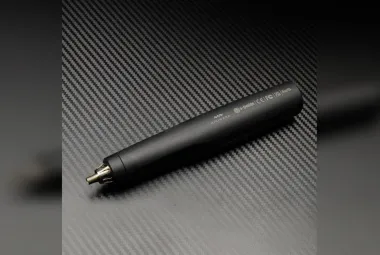
FixHub is a portable soldering system sold three ways. The Smart Soldering Iron on its own is $79.95. The Portable Soldering Station, which adds a battery pack, is $249.95. The Soldering Toolkit, which adds a set of hand tools and consumables, is $299.95. Prices in other currencies were also listed, and the October post doesn't say any of them changed.
Soldering joins metal parts with a filler alloy that melts at a lower temperature than the copper underneath. The iron heats a small tip, the joint soaks up some of that heat, and the solder flows and then freezes when the iron moves away. A weak joint usually means the tip was too cool, too dirty, or pulled away before the solder had "wet" both surfaces, which is the term for liquid solder spreading across metal instead of beading up.
What does the iron do?
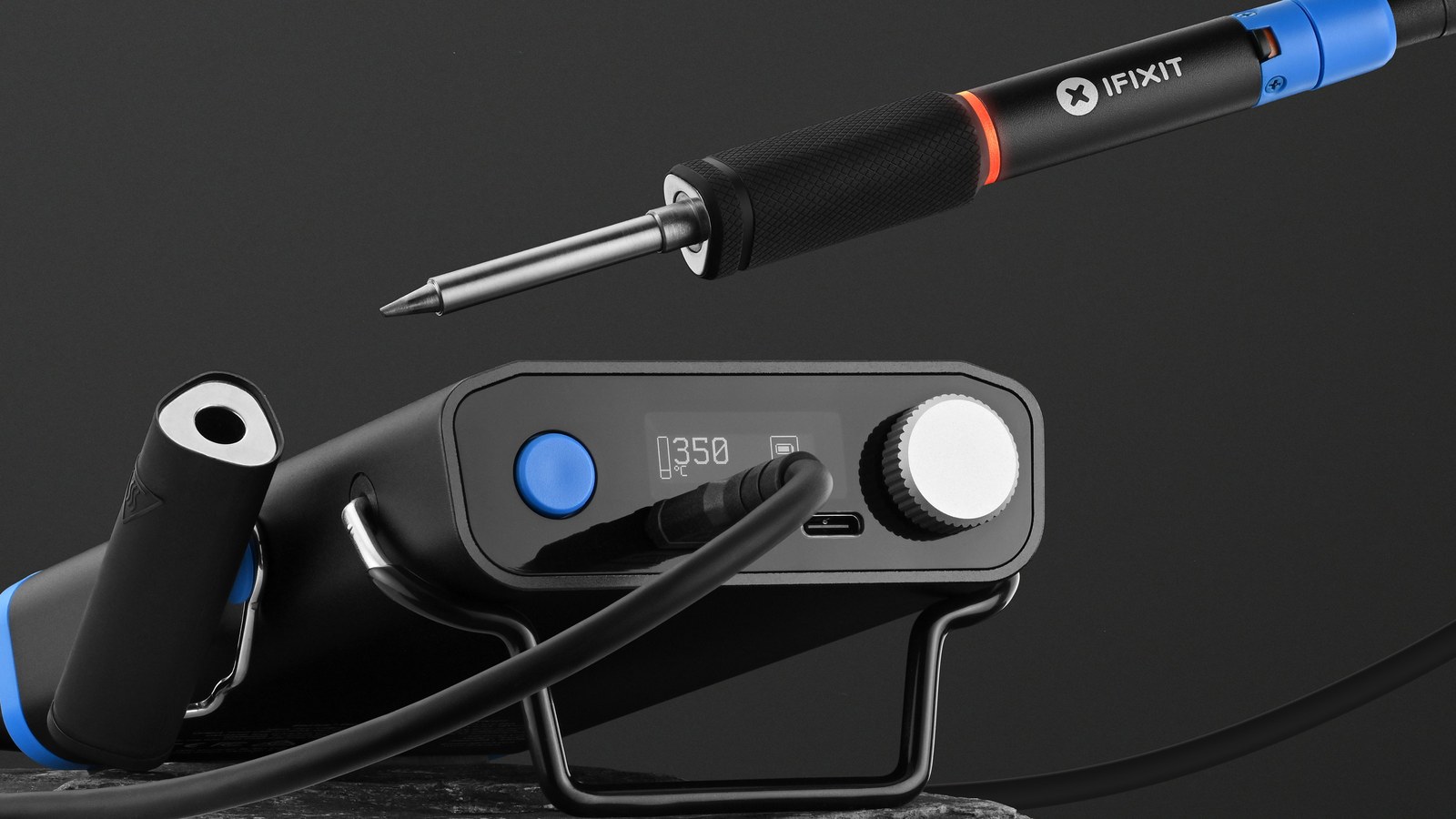
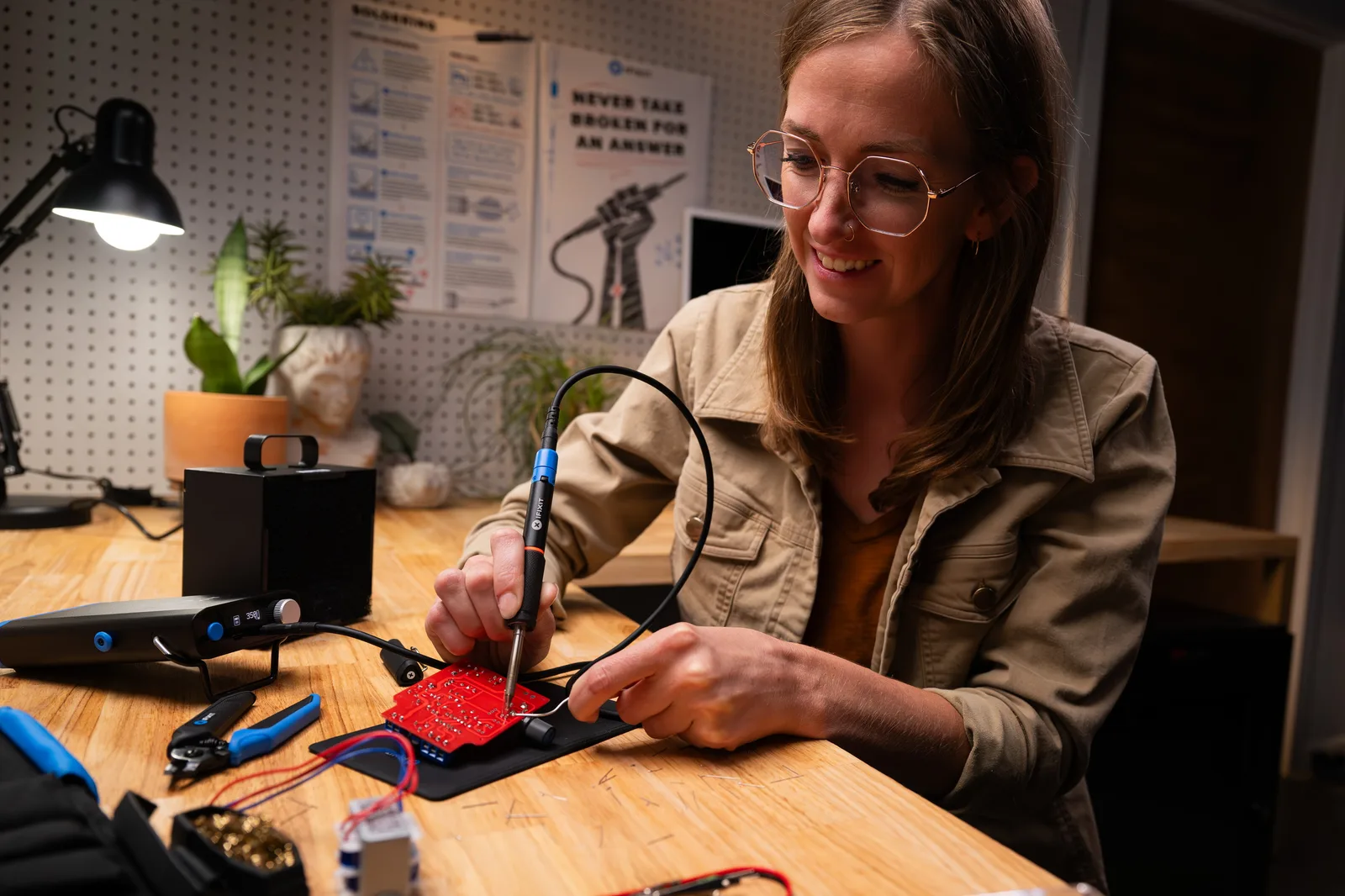
iFixit rates the iron at 100 watts, which is a measure of how fast the heater can push energy into the tip. It says the iron reaches soldering temperature "in seconds." The September post never printed a temperature range, but iFixit's retail page now lists 200 to 420°C (395 to 790°F) with a default of 350°C (660°F). The iron has a pencil-style grip, and iFixit says the tip is shorter than the competition's, though it doesn't name the competing iron or give a length.
Power arrives over USB-C using USB Power Delivery (PD), which is the negotiation a charger and a device run to agree on a voltage and a wattage. A 100-watt iron can't pull 100 watts from a charger that only offers 65, and iFixit named its own 65-watt GaN charger as an example source. GaN is gallium nitride, the semiconductor behind a lot of the compact chargers on the market. The launch post doesn't say how the iron behaves at that lower wattage.
A colored ring on the iron reports its state: blue below 40°C (100°F), purple while it heats or cools, and orange at the temperature you've set. An accelerometer, which senses motion, cools the iron when it sits untouched, so a hot tip left among wires doesn't scorch a mat or a cable. The idle delay and the resting temperature aren't published. A heat-resistant cap covers the tip for carrying, again with no stated temperature rating.
Why won't Hakko and JBC tips fit?
Kyle Wiens, iFixit's founder, explained on the September 12 page that Hakko T12 and T15 tips and JBC cartridges don't fit this iron. FixHub runs at 100 watts, and iFixit wanted a shorter barrel than those systems allow. He also wrote that the iron pours in more power when it detects a load, which is how it's meant to keep the tip from sagging when it touches a big pad. The announcement doesn't list the tip shapes, widths, or part numbers that replace the familiar cartridges, so anyone who already owns a drawer of T12 tips has to weigh that cost.
What can the battery pack do?
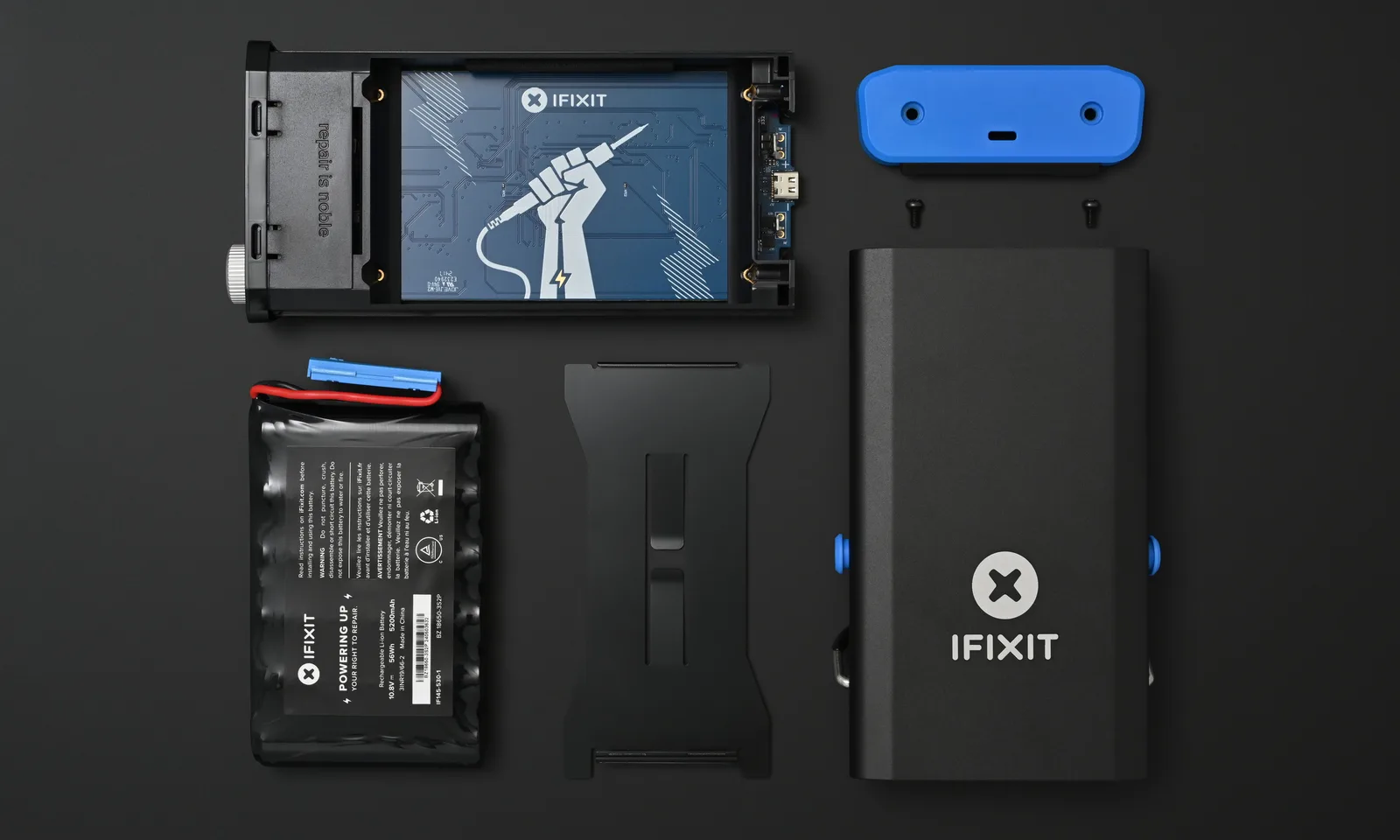
The portable power station is rated at 55 watt-hours. A watt-hour is energy, one watt for one hour, so watts describe how fast energy moves and watt-hours describe the size of the tank. A heavier load empties the tank sooner, which is why any runtime claim assumes a certain kind of work. iFixit says the pack supports more than eight hours of continuous soldering and more than 2,000 through-hole joints per charge. Through-hole means a component lead passes through a hole in the board and solder forms a cone around it.
Both numbers are iFixit's, and the post doesn't define the pad size, the solder, or what "continuous" included. An iron that cools when set down and only drives hard during a joint spends much of its time well under 100 watts, so generous figures aren't a surprise. The pack has two USB-C ports. iFixit says it can run two irons or charge a phone, but it doesn't say how the 100 watts divides when both ports are busy. The battery is also described as designed for quick replacement, and the new guides are where that procedure lives.
What is in the toolkit?
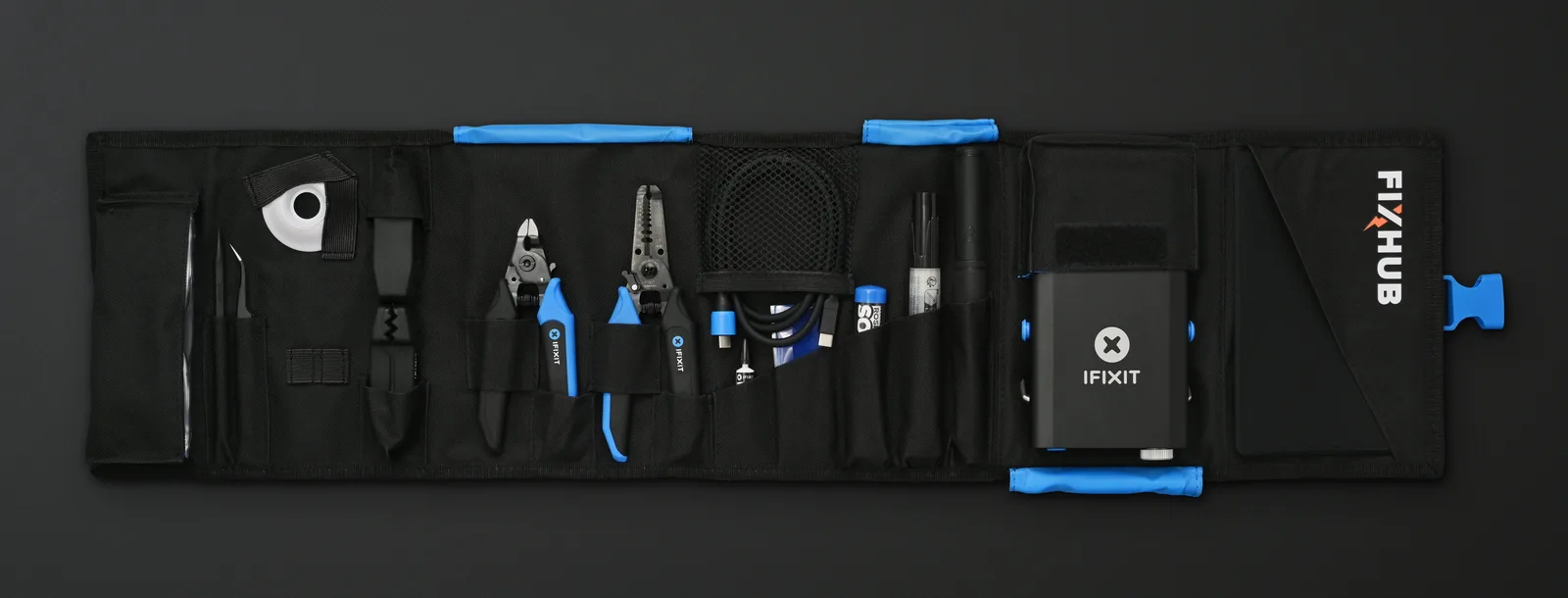
The $299.95 kit is meant for a bench that doesn't own the hand tools yet. It includes flush cutters (jaws that meet flat so a lead snips close to the board), a wire stripper, precision angled tweezers, a silicone work mat, silicone electrical tape, and safety glasses. There's a spudger, a pry tool for opening housings, made from iFixit's heat-resistant Fixite material so it can work nearer a hot joint than ordinary plastic. A pen meters isopropyl alcohol for cleaning flux residue. Desoldering wick is braided copper that pulls molten solder up by capillary action, the way a paper towel pulls up water. A magnetic soldering splint holds a board in place, and brass wool cleans the tip in place of a wet sponge.
The solder is lead-free, with no diameter, flux percentage, or alloy printed. Lead-free alloys melt hotter and forgive a cool tip less than the older tin-lead wire did, so a fast-heating iron is a sensible partner for them.
Why publish repair documents on shipping day?
iFixit's guides for other companies' products are the reason many people know the name. On October 15 it pointed the same practice at FixHub. Repair guides are on the iFixit Soldering device page, the schematic is the PDF ES-SI-2100-R15, and replacement parts have their own page. A guide gives the order of operations, a schematic is the electrical map, and a parts list is how a tip or a battery actually gets replaced, which is the public side of the quick-replacement claim. I haven't graded the guides themselves.
What does it cost, and where can you buy it?
FixHub is sold directly through iFixit's own store. The retail page lists the same three prices as the September announcement, all in U.S. dollars with no sale price: $79.95 for the Smart Soldering Iron, $249.95 for the Portable Soldering Station, and $299.95 for the Soldering Toolkit. When I checked on October 5, 2026, the station was marked "Ready to ship," with same-day shipping if ordered by 4 PM Eastern. iFixit lists free shipping on U.S. domestic orders of $75 or more, 30-day returns, and a one-year guarantee.
The station's box contents are the power station, the soldering iron handle, a cap, a bevel 1.5 tip, and a USB-C cable. The retail page also gives specifications that the announcement didn't: a 55 Wh battery (5,200 mAh), 100 W output, dual-port USB-C power delivery, a stated 8 hours of continuous soldering, and an operating temperature of 0 to 45°C (32 to 113°F) for the tool itself. One requirement is easy to miss: the station needs a USB-C power source of 65 W or more for charging.
What's still missing?
The announcement posts leave out the joint size or duty cycle behind the runtime figures, the tip shapes, the idle delay, and any split of the 100 watts across two irons. The iron alone suits someone who already owns a good USB-C charger, the station adds a battery so the iron can leave the wall outlet, and the toolkit covers the bench that is starting from nothing. The one hard limit is the tip system: if your bench runs on Hakko or JBC cartridges, FixHub means starting a new collection.
Sources and image credits
- Shipping post, October 15, 2024
- Announcement, September 12, 2024
- FixHub product page
- Repair guides and replacement parts
- Schematic PDF
- Product images: iFixit