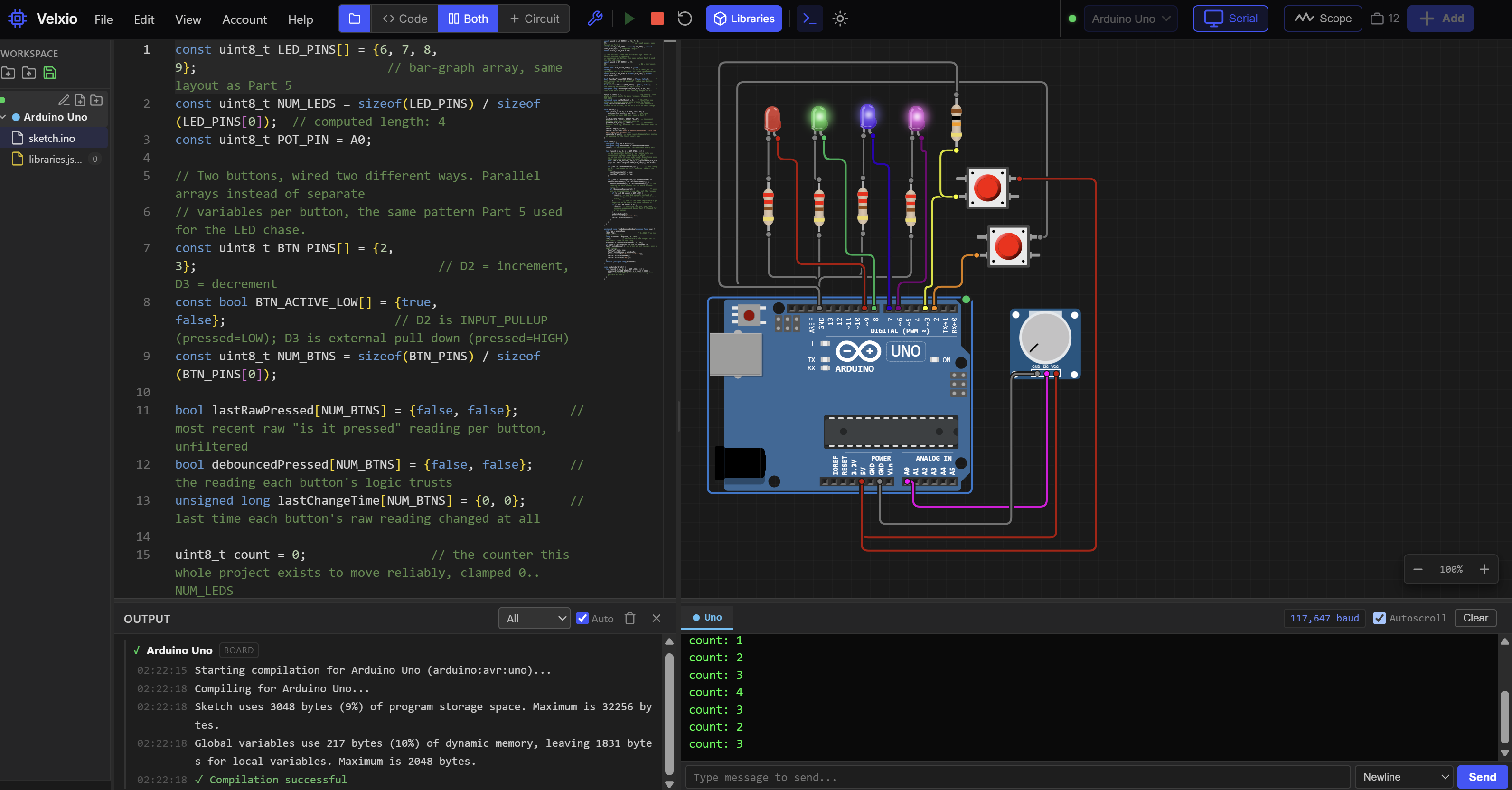
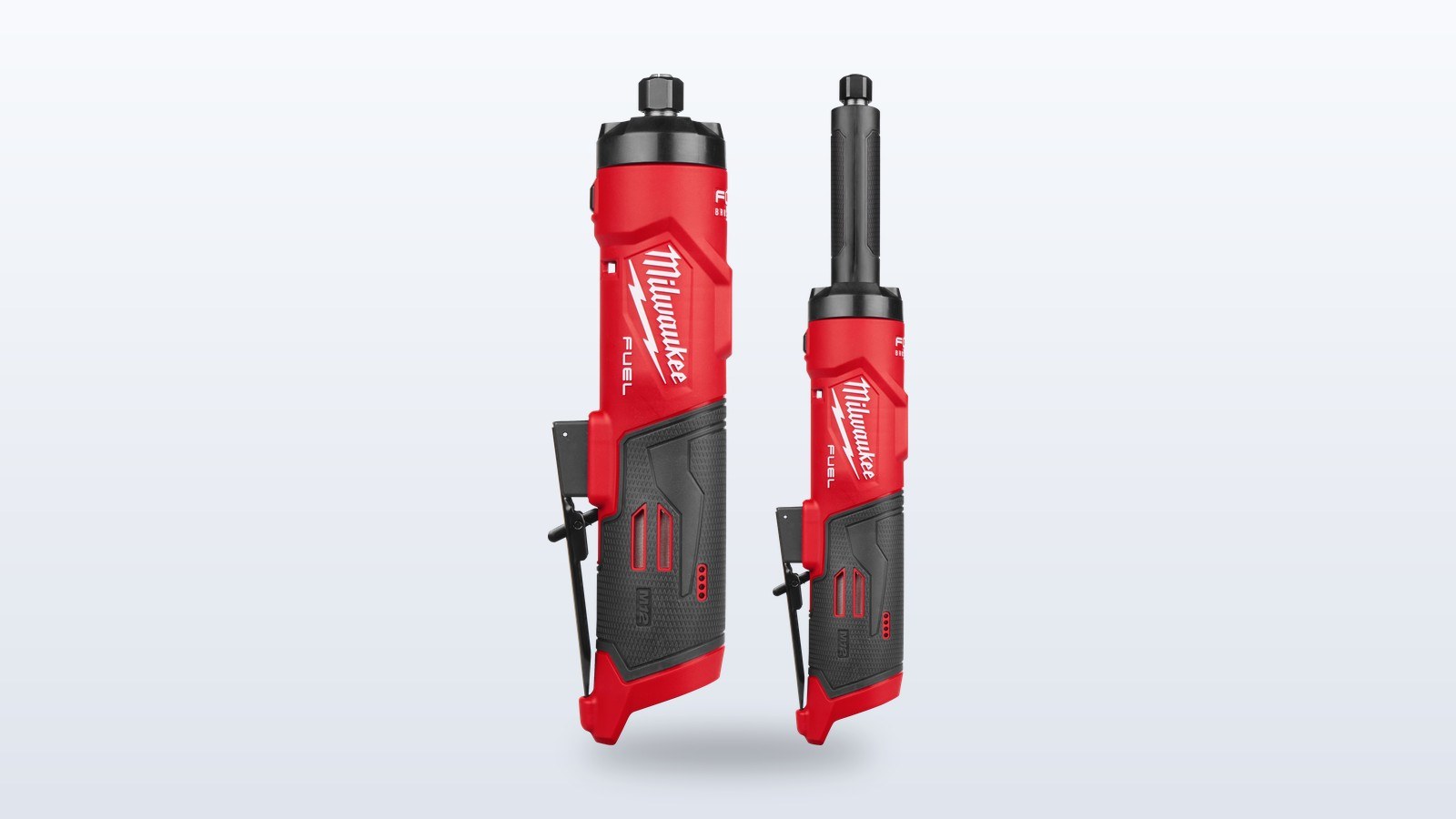
Deburring a weld, cleaning a port, or sanding inside a fixture takes a cutter that spins fast, and in many shops a hose still ties it to a compressor. On June 1, 2026, Milwaukee Tool announced a next-generation M12 FUEL 1/4 in. straight die grinder and an extended model with a longer shaft. M12 is Milwaukee's 12-volt class and FUEL is its name for this tier. Both are rated at 0.5 horsepower. TMWB hasn't used them, so the specs below are Milwaukee's.
What is a die grinder?
A die grinder is a high-speed rotary tool for a mounted point (a grinding stone on a shank), a carbide burr (a rotary file that peels metal), a sanding drum, or a small cutoff wheel. The 1/4 in. figure is the collet size. A collet is a split sleeve that squeezes the shank when you tighten the nut. "Straight" means the collet lines up with the body, where a right-angle head would turn a corner.
Top speed is 20,000 RPM. A 2 in. cutoff wheel at that speed is a bigger hazard than a solid burr, because a broken disc throws pieces. Milwaukee rates the tools for 2 in. cutting and 3 in. sanding, and any accessory needs its own speed rating that covers 20,000 RPM.
What does it cost?
- Bare tool 3486-20: the standard length. No price appears in the press extract.
- Kit 3486-22: $379, built on the 3486.
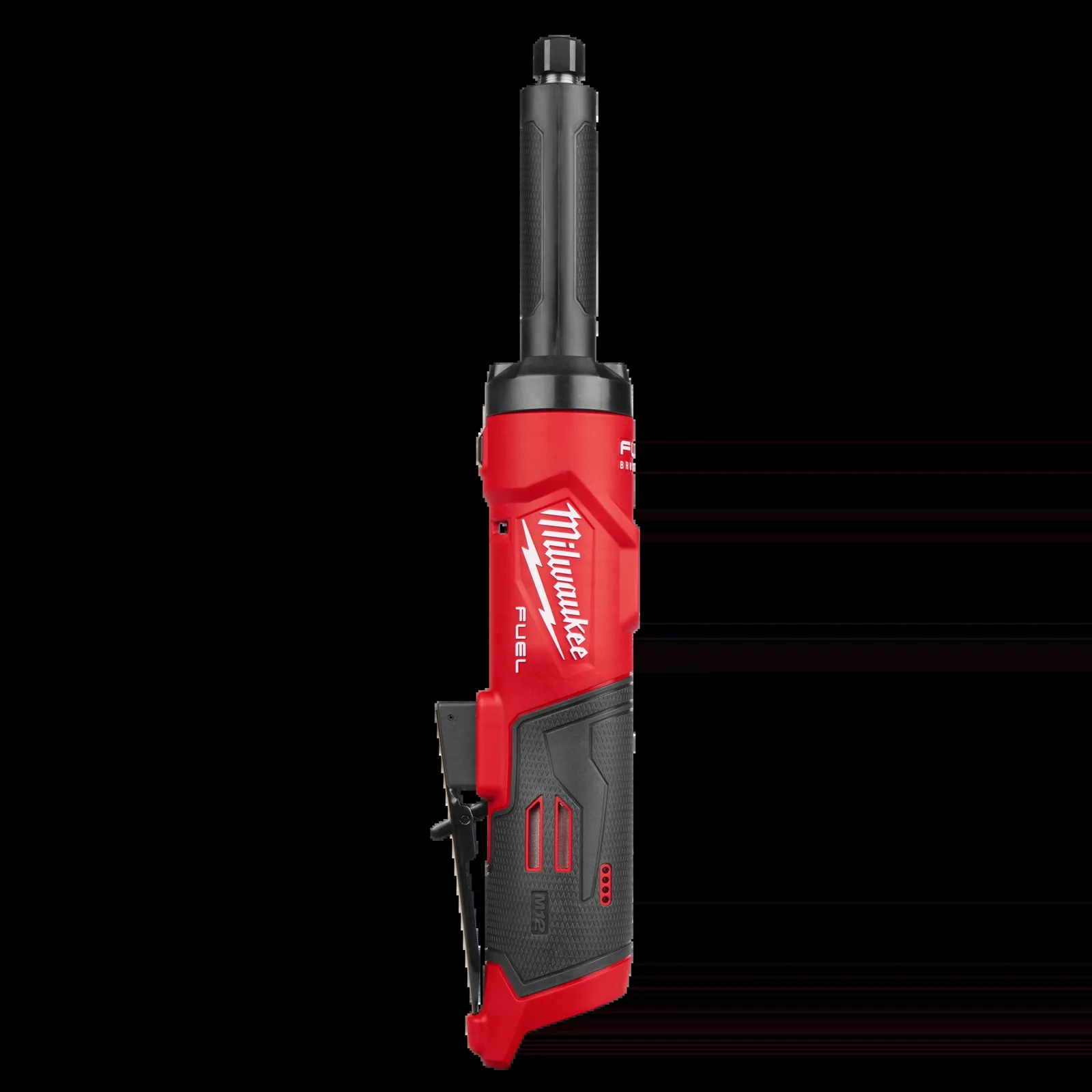
- Extended bare tool 3487-20: $249, with the long shaft.
The previous model, 2486-20, is still listed separately, with 0.3 HP and three speed modes on its own page. Milwaukee prints no head-to-head test against it.
What are the controls?
Four speed modes are listed up to the 20,000 RPM ceiling, though the four speeds aren't printed. A variable paddle changes output as you press it, and a push-button spindle lock holds the shaft so a wrench can turn the collet nut. A shadowless LED lights the work. Both lengths share all of this.
Why is one shaft 4 in. longer?
The standard tool is 10.8 in. and 1.6 lb. The extended model is 14.7 in. and 1.9 lb, with a stated 4 in. shaft (the lengths differ by 3.9 in., which is rounding). The extra reach gets the collet past a flange, bracket, or housing lip while your hand stays at the grip. The tradeoff is a longer lever back to your hand if the tip grabs. The press doesn't say whether the weights include a battery.
How does it compare with the previous grinder?
Milwaukee still lists the earlier 2486-20, and its current page shows 0.3 HP and three speed modes. Those figures belong to that page and aren't part of the June 1 release, which rates the new 3486 and 3487 at 0.5 HP with four modes. Side by side, the listings differ in horsepower and in mode count, but the release prints no head-to-head test, and watts and amps are missing for both generations, so neither nameplate can be turned into a runtime or a removal rate.
What does 0.5 horsepower mean?
One horsepower is 746 watts, so 0.5 HP is about 373 watts. That's a nameplate conversion and not a measured electrical draw, and the press prints neither watts nor amps. Horsepower is twist multiplied by speed once the units match, and the release gives only 0.5 HP and 20,000 RPM, so no spindle torque is available. At that high speed the same horsepower means less twist at the collet than it would at a drill's lower speed, which is why a die grinder's work comes from a sharp burr and surface speed.
What do the controls and the light add?
Both new tools have four speed modes up to the 20,000 RPM ceiling, though the four speeds aren't printed, and the count is what the release gives. A stone, a sanding drum, and a cutoff wheel are different jobs, which is why a mode selector matters. A variable paddle sits under the finger so the output changes as it's pressed, and the release doesn't say whether the selected mode caps the paddle. A push-button spindle lock holds the shaft so a wrench can turn the collet nut, which would otherwise spin with it. The kit's wrench size isn't printed, and the lock is on the extended model too. Both tools list a shadowless LED, which is Milwaukee's word for a nose lamp that doesn't throw a hard shadow on the cutter, with no lumen figure.
Where is it sold, and what does the line-up look like?
The press release prices kit 3486-22 at $379 and the extended bare tool 3487-20 at $249. A separate price for bare tool 3486-20 isn't in the press extract, and the product page address in the release is for that bare tool. The older 2486-20 is still listed on its own page. The extended tool at $249 is bare, without the packs, case, and wrench that come with the shorter kit, and no extended kit number is described.
What do the packs in kit 3486-22 look like?
The kit includes the tool, an M12 HIGH OUTPUT XC5.0 pack (part 48-11-2450), an M12 HIGH OUTPUT CP2.5 pack (part 48-11-2425), a case, and a wrench for the collet nut. A charger isn't on that list. The packs differ in capacity, given in amp-hours: XC5.0 is a 5.0 Ah pack and CP2.5 is a 2.5 Ah compact pack. An amp-hour is a nameplate capacity, with 5.0 Ah rated for 5 amps for one hour or 1 amp for five hours before real draw is counted, so the 2.5 Ah pack holds half as much. That's a comparison of ratings and not a measured grind time, and pack weight isn't printed.
The release also prints a size of 10.8 in. and 1.6 lb for the standard tool and 14.7 in. and 1.9 lb for the extended one, without saying whether either figure includes a battery. The press describes the shaft as 4 in., and the printed lengths differ by 3.9 in., which is simple rounding.
Sources and image credits
- Milwaukee press release, June 1, 2026
- Product page, 3486-20
- Product images: Milwaukee Tool