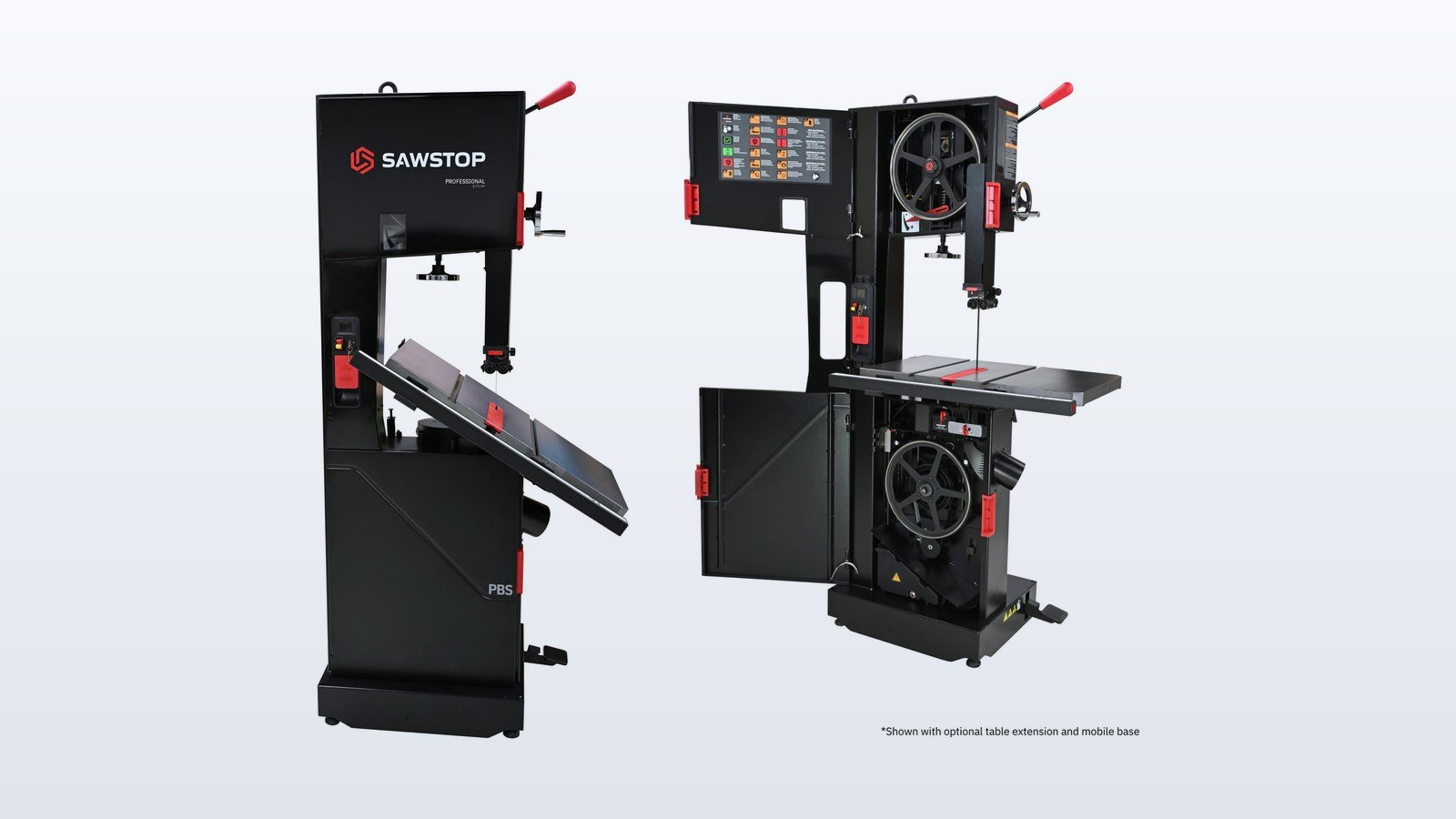
SawStop showed a 14-inch professional bandsaw at the 2026 International Woodworking Fair in Atlanta, and you can't buy it yet. The product pages say "Available For Purchase in 2027," and as of August 28, 2026 there's no price. SawStop's FAQ says the price isn't set because of supply conditions and will come around pre-order. Stores are described as mid-2027, with pre-order about 3 to 4 months earlier, in the United States and Canada first. International timing isn't set. TMWB hasn't handled the saw, so the specs below come from SawStop's pages.
There are two configurations of the same saw: the 1.75 HP PBS11120 and the 3.0 HP PBS31230.
How can a bandsaw pull a hand in, and what does the brake do?
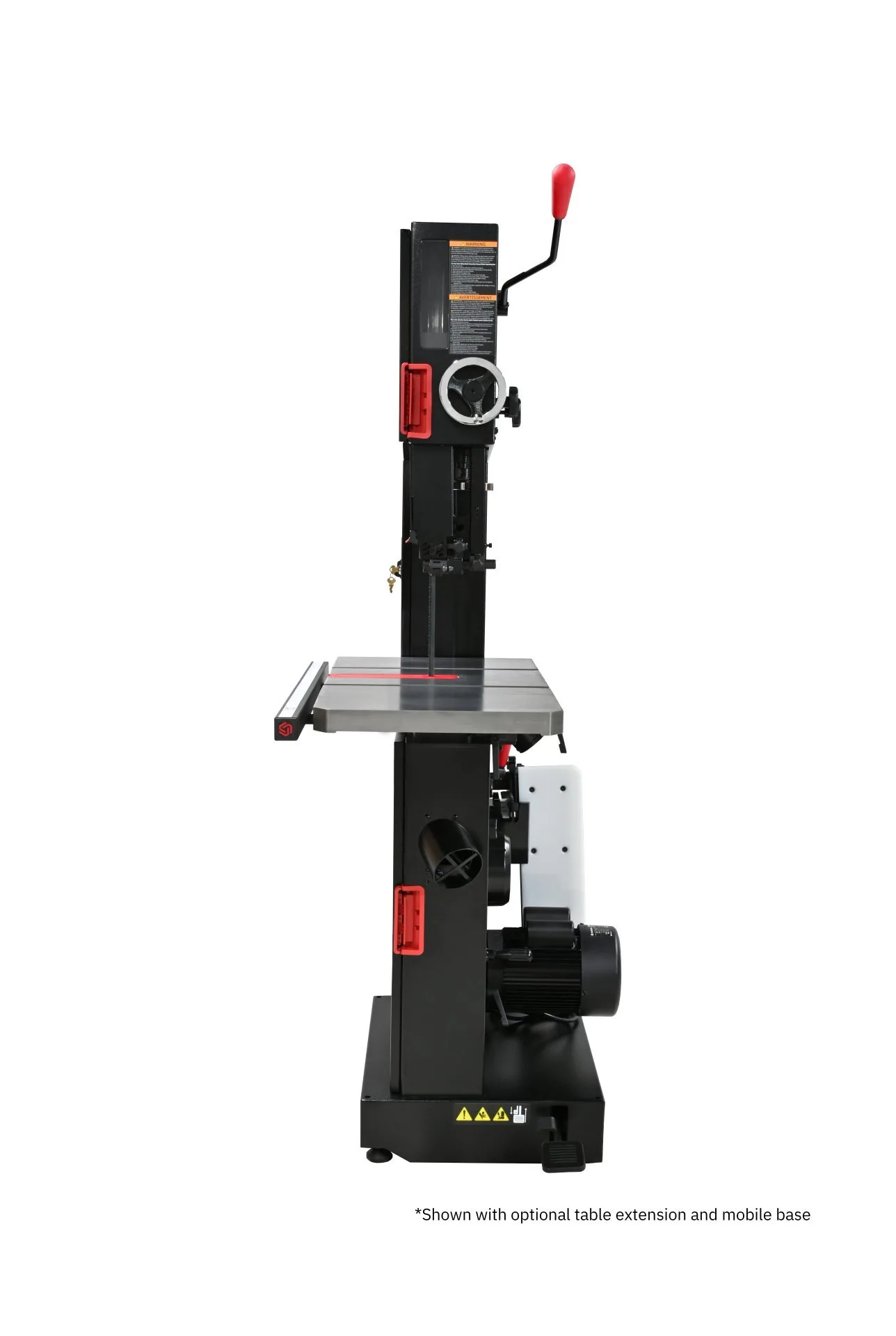
A bandsaw cuts with a toothed loop running over two wheels, down through the table on the cutting side. The teeth point downward, so the blade pulls wood into the table, and the same pull is why a hand at a bandsaw is in a different kind of trouble than at a table saw. Kickback is the table saw's training topic. A bandsaw's risk is the open loop above the table, where a finger can meet teeth already traveling down and the blade can draw the hand in.
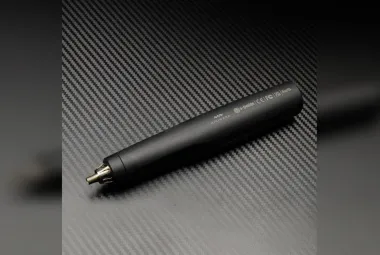
SawStop's answer is Sensic Active Safety, which it says detects skin or any conductive material, then cuts and captures the blade. The bandsaw cartridge breaks the blade loop and clamps it, a different mechanism from the table saw's aluminum block driven into a circular blade. SawStop says it stops the blade in less than 5 milliseconds, which is its own claim. The ordinary shutoff is separate: an electronic brake stops the blade within 2 seconds of hitting the paddle.
Because the sensor looks for conductivity, wet wood, pressure-treated lumber, and anything with a nail in it can look like a trigger. SawStop lists a bypass mode for those, with two bypass keys included. It says the brake can't be retrofitted to another bandsaw, the warranty is 2 years, and one cartridge ships with the saw. The cartridge is replaced free if SawStop confirms accidental skin contact, matching its table-saw policy.
What are the specs?
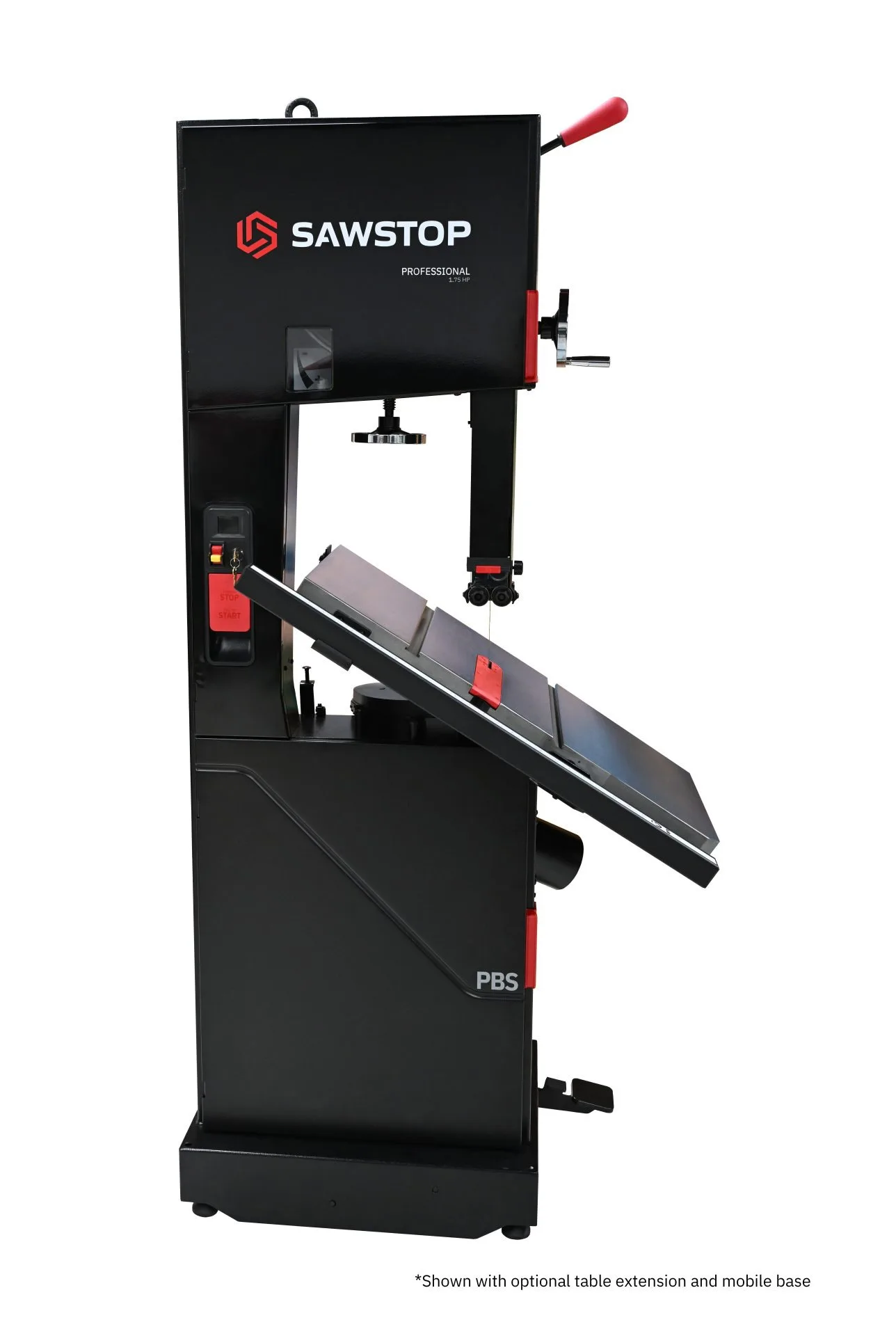
- Motors: 1.75 HP at 120 volts (a normal household outlet) or 3.0 HP at 230 volts (like a dryer circuit). Full-load amps aren't given.
- Capacity: 14-inch wheels, 14 inches of resaw, and a 13.4-inch throat (the room from blade to column). SawStop calls its resaw height the best in the 14-inch wheel class, which is the company's claim.
- Table: cast iron, 16.9 by 21.8 inches, with an optional 16.9 by 7.9 inch extension. It tilts 45 degrees right and 9 degrees left, and sits 38.1 inches off the floor.
- Size and weight: 72.3 in. tall, 37.2 in. wide, 28.3 in. deep. The spec table says 368 lb, while marketing says "400 pounds of steel and cast iron," so I'm treating that as advertising language. Shipping weight is 527 lb.
- Blade: 1,450 rpm, which is 2,510 feet per minute at the teeth. It takes a 130 inch blade from 1/8 inch (curves) to 3/4 inch (resaw), with 0.025 inch recommended and nothing thicker than 0.032 inch.
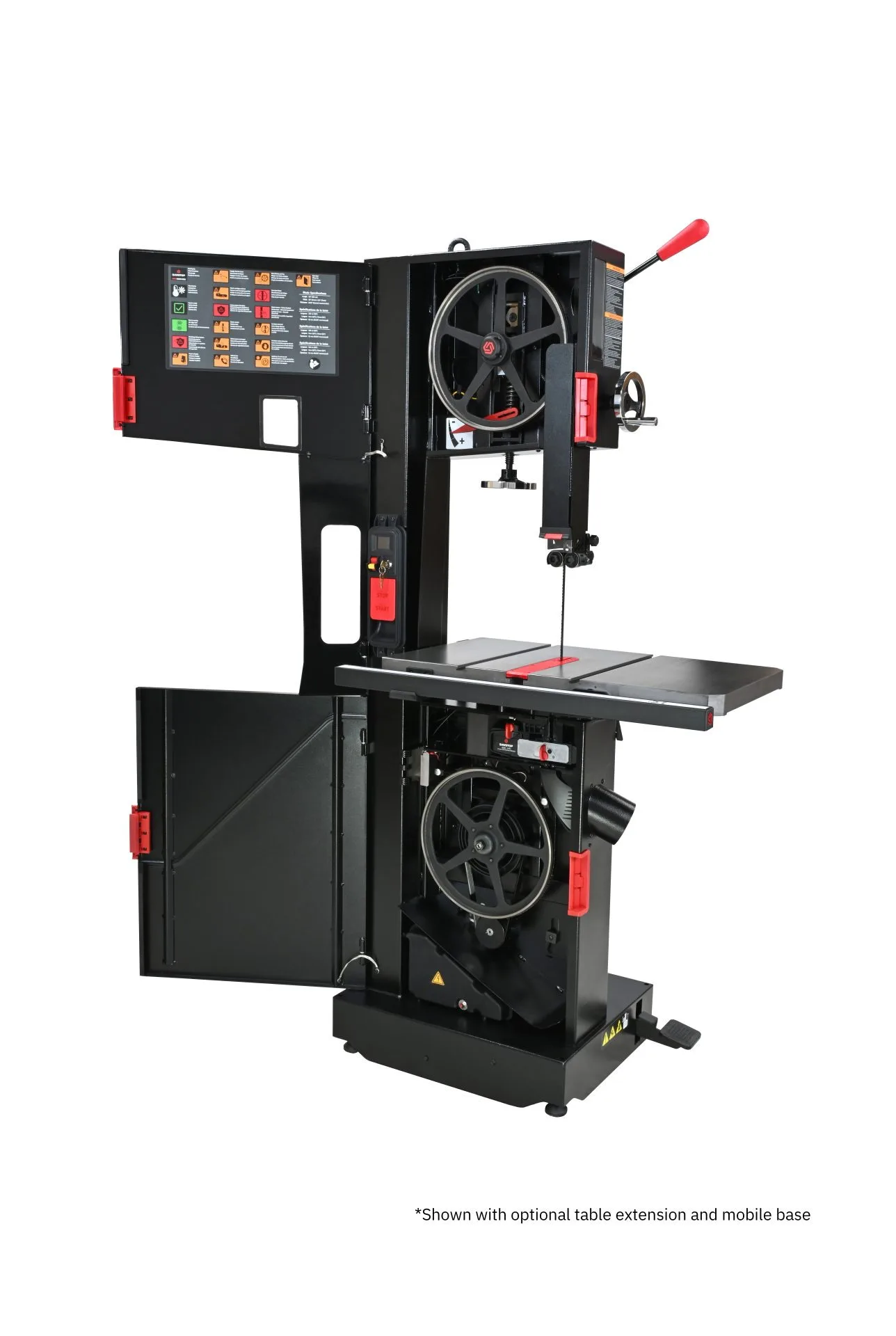
- Dust: two 4-inch ports below the table, plus an upper port in the included parts, with a 300 CFM minimum airflow.
- Fence: Hi-Low HDPE (tough plastic) that can sit low for thin stock or tall for resaw, up to 5.5 inches.
- Guides: tool-free eccentric ball-bearing guides, with an off-center shaft that sets the gap without tools, and a built-in light above them.
What is the timeline for the saw?
The paper trail is short and dated. Product pages for the two motors were indexed on August 25, 2026, Woodworking Network's show report from Atlanta is dated August 26, and Fine Woodworking's report on new tools at the fair is dated August 28, the date used for this article. SawStop's marketing page is the overview, and the configurations have their own pages: the 1.75 HP PBS11120 and the 3.0 HP PBS31230. The specifications come from those product pages, and the safety-stop timing is SawStop's own wording.
What does the bypass and brake policy involve?
Sensic Active Safety detects skin or any conductive material, so ordinary shop stock can look like a trigger. Wet wood conducts, pressure-treated lumber (the outdoor framing stock) can conduct because of its treatment, and a nail in a repaired leg conducts. SawStop lists a bypass mode for wet wood, conductive material, and pressure-treated wood, with two bypass keys among the included parts, and the pages don't give a step-by-step for them. SawStop says the brake can't be retrofitted to another bandsaw. The company states a 2-year warranty and will replace the cartridge free if it confirms accidental skin contact, the same policy as on its table saws. One cartridge ships with the saw.
What's included in the box?
The included list covers the Hi-Low fence, one brake cartridge, hardware, a magnetic fence-rail bracket, an upper dust port, a push stick and holder, a magnetic push block, a table alignment foam block, an insert, a wrench, manuals, and two bypass keys. Two 4-inch dust ports sit below the table, and SawStop gives a 300 CFM minimum airflow, which is its minimum and not a reading from a particular collector. The upper dust port in the included list isn't explained in terms of how it lines up with "both below the table."
Not in the pages I used: full-load amps, plug type, noise, and the cost of a cartridge fired by a nail or by a forgotten bypass.
Who is it for?
A shop that wants skin sensing on a 14-inch bandsaw and can wait. The 1.75 HP model fits household voltage, and the 3.0 HP model suits a shop with a 240-volt circuit. It isn't for anyone who needs a bandsaw this season or hoped to add a cartridge to an existing saw. Still unknown: price, full-load amps, plug type, noise, and what a cartridge costs once it fires on a nail or wet wood.
Sources and image credits
- Fine Woodworking, August 28, 2026, new tools at IWF
- SawStop bandsaw page
- PBS11120 (1.75 HP, 120 V) and PBS31230 (3.0 HP, 230 V)
- Product images: SawStop