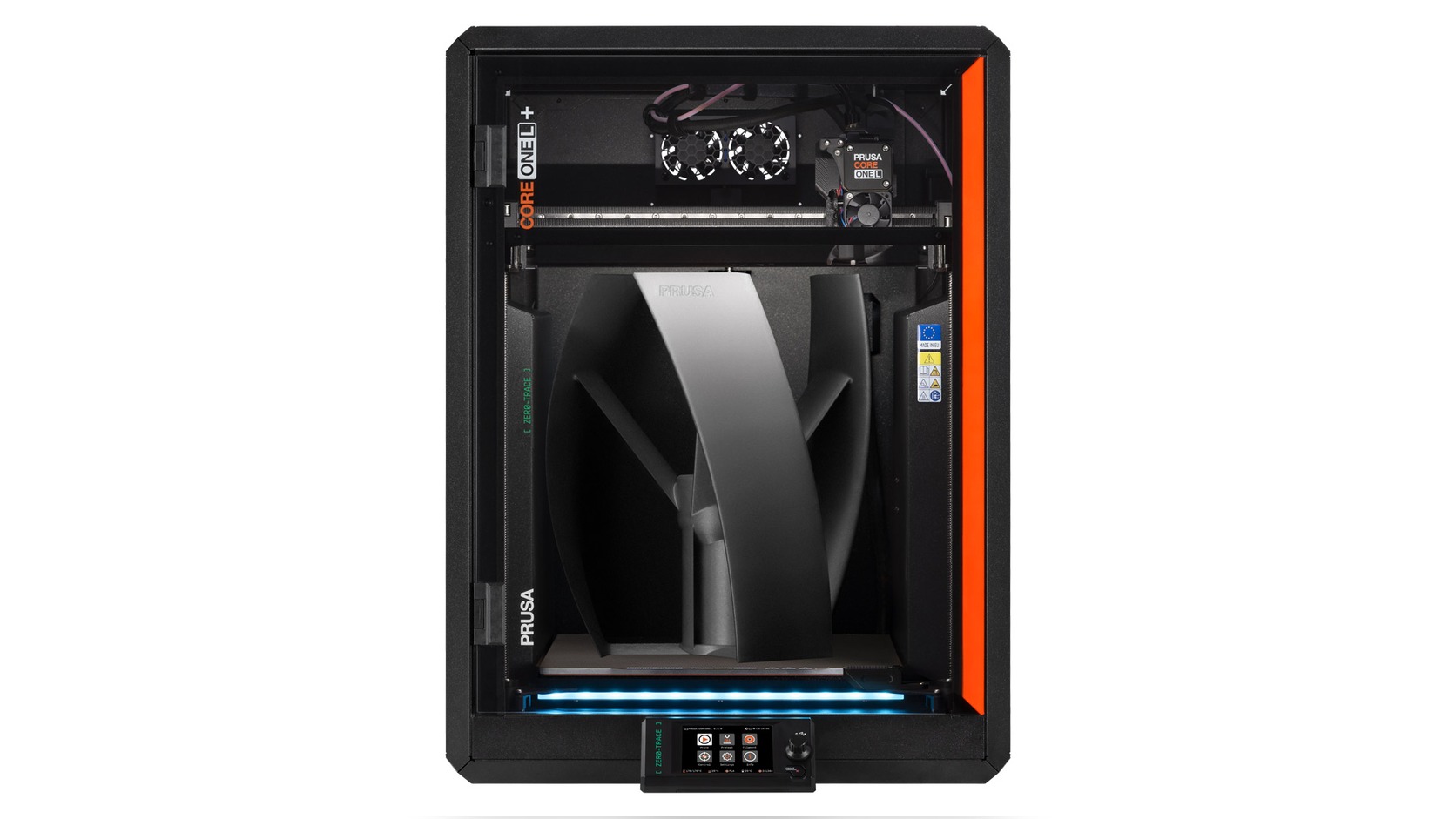
Prusa Research has published a product page for the CORE One L+ Zero-Trace, a version of its large-format CORE One L+ printer that holds print files only in encrypted volatile memory, so cutting the power erases the file and the key. The Zero-Trace page says demonstration units are available now and first deliveries are planned for January 2027. It lists no price and directs buyers to a sales inquiry form.
The printer has no USB port, no Wi-Fi, and no camera. Jobs arrive over a network cable from a Prusa Connect server that the customer runs on an isolated network, encrypted along the way. Prusa says the file sits encrypted on a Zero-Trace module while the decryption key lives on a separate electronics board, so the module alone yields only scrambled data. The company also says the motherboard's debug port is permanently disabled and can be inspected.
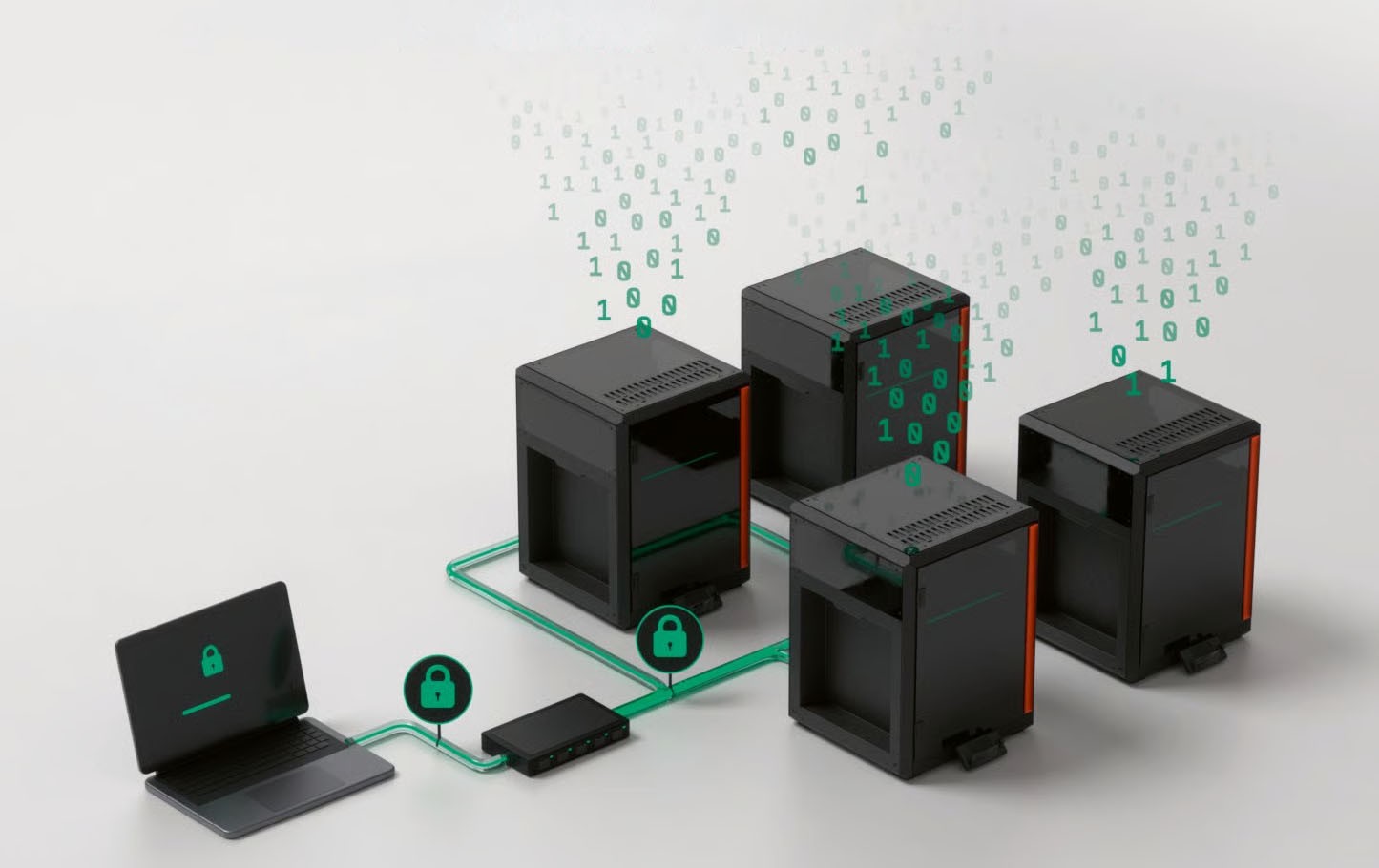
Image: Prusa Research. Prusa's diagram of printers paired with an on-premise Prusa Connect server.
What Zero-Trace removes compared with the existing secure edition
Prusa already sells a CORE One L+ Critical Infrastructure Edition with the Wi-Fi circuitry physically removed from the mainboard, no camera, and a certified encrypted USB drive. That model still takes its files from a USB drive. Zero-Trace goes a step further by dropping the USB port and persistent storage entirely, which Prusa says leaves zero print files on the machine after power-off.
The build is otherwise the standard CORE One L+. Prusa lists CoreXY motion, a 300mm by 300mm by 330mm build volume, optional hotends up to 400°C for materials such as PA-CF, PC-CF, PPS-CF, and PEI (Ultem), and a load-cell first-layer calibration. Its enterprise page says the chamber heats to 60°C and that the standard CORE One L+ starts at $1,999. Zero-Trace is aimed at defense sites, export-controlled aerospace parts, and unreleased designs, and Prusa notes TAA and NDAA compliance and a five-year spare parts guarantee. Letters of volatility, which document what a printer stores and what a power cycle clears, are available on request.
Several security controls sit around the printer. Each unit is cryptographically paired with the Connect server and rejects jobs from anywhere else. Audit logs record who printed what and how many copies. Firmware updates run fully offline through the customer's Connect server, and the printer runs only signed firmware. A security whitepaper with network threat models and key-management protocols is available by email request.
The server side is a public beta anyone can download
The part of the package a hobbyist can try today is the server. Prusa's Connect Local page describes a self-hosted printer server that runs from a single downloaded file on Linux, Windows, macOS, or a Raspberry Pi, with no cloud and no Prusa account. Prusa says it is free for personal use and small businesses and has been tested with 400 printers on one server. A Raspberry Pi Zero is enough for one printer, according to Prusa, and a Pi 4 or 5 handles a small workshop.
The source is public. The prusa3d/prusa-connect repository published release 0.1.0-beta.1 on November 17, marked as a pre-release, with binaries for 64-bit and 32-bit ARM Linux, Intel Linux, macOS, and Windows plus the source archive and a sample configuration file. The README describes a REST API, live events, MQTT, and storage in SQLite or PostgreSQL, and it warns that the configuration, API, and extension SDK can change between releases. Prusa's page says printers need firmware 6.4.0 or newer and lists the CORE One and CORE One L (also with INDX), MK4 and MK4S, MK3.9 and MK3.5 families, XL, and MINI as supported, while Klipper printers can connect through Moonraker with an example driver. Features beyond the core, such as fleet statistics, a filament materials catalog, and server-side slicing, arrive as extensions from a built-in marketplace, and each extension shows the permissions it needs before download.
The repository's license field reads "Other" on GitHub, and the README names a custom Open Community License. Prusa's page summarizes it as free for non-commercial use at home or school and for companies under €1 million in annual revenue. The revenue ceiling means the terms differ from those of a standard open-source license.
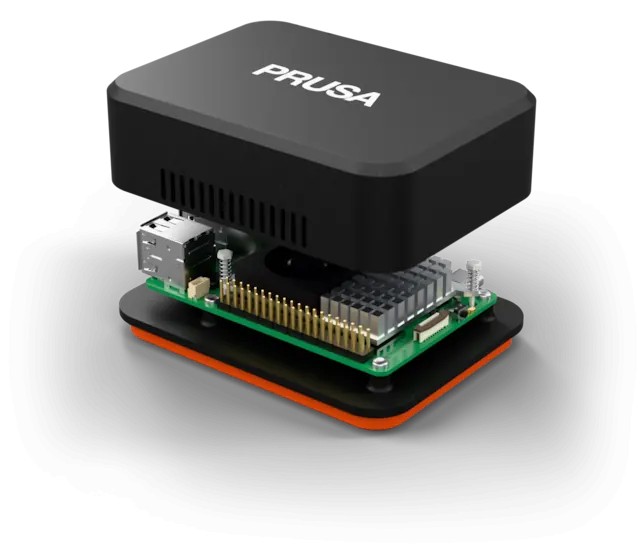
Image: Prusa Research. A printed Raspberry Pi case shown on the Connect Local page.
What is still unspecified
Prusa has not published a Zero-Trace price, and the page says only that deliveries start in January 2027. It does not say whether the Zero-Trace module can be retrofitted to an existing CORE One L+, whether it works with the INDX toolchanger, or whether the Critical Infrastructure Edition stays on sale. The Connect Local server runs without internet, but the page says it contacts Prusa for marketplace and update checks unless those are turned off.
Prusa's standard CORE One L+ remains available from $1,999, and Zero-Trace units are offered through sales inquiry only.
Sources and image credits
- Prusa Research: CORE One L+ Zero-Trace, opened November 23, 2026
- Prusa Research: CORE One L+ for enterprise and Critical Infrastructure Edition
- Prusa Research: Prusa Connect Local and GitHub: prusa3d/prusa-connect, release 0.1.0-beta.1 (November 17, 2026)
- Images: Prusa Research.