
I have spent most of my life collecting the skills and tools needed to make almost anything. I have a full woodworking shop, a modest metalworking shop, a complete set of mechanic's tools, lasers, CNC routers, 3D printers, bait-making molds and supplies, an electronics lab, and enough equipment for nearly any crafty project that catches my attention. I like making things. I like repairing things. I even like letting friends use my tools because a well-equipped shop should produce more than one person's ideas.
In Part 1, I wrote about agentic open-source applications as a response to subscription fatigue. That is the economic side of this revolution. This is the personal side. AI is doing more than giving me alternatives to expensive software. It is giving me the ability to become the kind of broadly capable maker I have always wanted to be.
I am well equipped on the digital side too. By day, I am a programmer, writer, and marketing guy. I have built hundreds of websites and written more lines of code than I could count for websites, applications, and embedded systems. I have written white papers, articles, and blog posts read by presidents of nations and CEOs of Fortune 500 companies. I have hosted webinars, joined corporate panels, and done the other polished business things that come with that world.
Even with all that experience, I have stayed close to the core technologies I learned in my teens and twenties: PHP, JavaScript, Drupal, CKEditor, Arduino, Raspberry Pi, Python, KiCad, and G-code. My video work has stayed in Adobe Premiere, After Effects, and DaVinci Resolve. I could reach outside those boundaries, but every new language, framework, or specialty demanded time. With a day job, a family, and a shop full of unfinished ideas, time has always been the tool in shortest supply.
Agentic AI changed that. It did not give me my curiosity, my workshop, or my understanding of how things work. It gave me reach. For the first time, I can carry an idea through disciplines I understand without having to spend months becoming fluent in every technology between the idea and a finished result.
The bottleneck was never a lack of ideas
Being a maker can become a strange form of frustration. The more you learn, the more clearly you can imagine what you want to build. You can picture the table, the enclosure, the circuit board, the software interface, and the article that explains all of it. You also see every dependency standing between you and the finished object.
A custom table may need a parametric model, joinery plan, cut list, CNC toolpaths, hardware selection, finishing schedule, and room in the weekend. An enclosure for a development board may need accurate measurements, thermal planning, CAD, test prints, and several rounds of revision. A circuit may need component research, schematic capture, simulation, firmware, a PCB layout, a bill of materials, and documentation.
I could do much of that work myself eventually. “Eventually” is where many good maker projects go to die.
AI agents let me describe the result, provide constraints, answer questions, and review progress while the agent handles a large share of the mechanical work. I can ask for a Rust application even though Rust is not one of my native languages. I can work on something built with C#, Ruby on Rails, or nearly any other modern stack without spending six months on prerequisite tutorials. I can move between front-end development and back-end architecture, work with databases, build retrieval-augmented generation systems, and research a technical question in an hour that might once have consumed weeks.
The reach extends beyond code and fabrication. I can ask an agent to plan a vacation down to routes, schedules, lodging options, activities, packing lists, and the small logistical details that usually require dozens of browser tabs. The common thread is not the category of work. It is that I can hand a complicated goal to the same class of tool, then guide and verify the result.
That does not make me an instant expert in every field. It makes my existing judgment portable. I still need to know what I want, recognize nonsense, test the result, and take responsibility for what ships. My background lets me ask better questions and notice when an answer feels wrong. The agent supplies speed, breadth, and persistence.
My childhood game-development dream finally became practical
I have wanted to make video games since I was a kid playing Super Mario Bros. on my NES in 1991. The dream never disappeared. It simply sat behind all the other work required to become a competent game developer: graphics, physics, game state, networking, input systems, audio, deployment, and the endless details that turn a prototype into something another person can actually play.
Recently, I was watching electronics-repair videos on YouTube and had an idea for a game about running an electronics repair shop. I did not want a shallow clicker game with repair-shop artwork. I wanted repairs grounded in the real world. Components should fail for believable reasons. The player should diagnose the fault, work through an electrical simulation, desolder the failed part, choose a replacement, solder it in, and confirm the repair.
I gave that idea to Claude Code in a short prompt. Several five-hour usage sessions later, I had a functioning electronics-repair game called Bench Tech. An idea that could have remained on my project list for years had become software I could play, evaluate, and improve. Bench Tech is part of the growing collection in TMWB's AI Created Games hub.
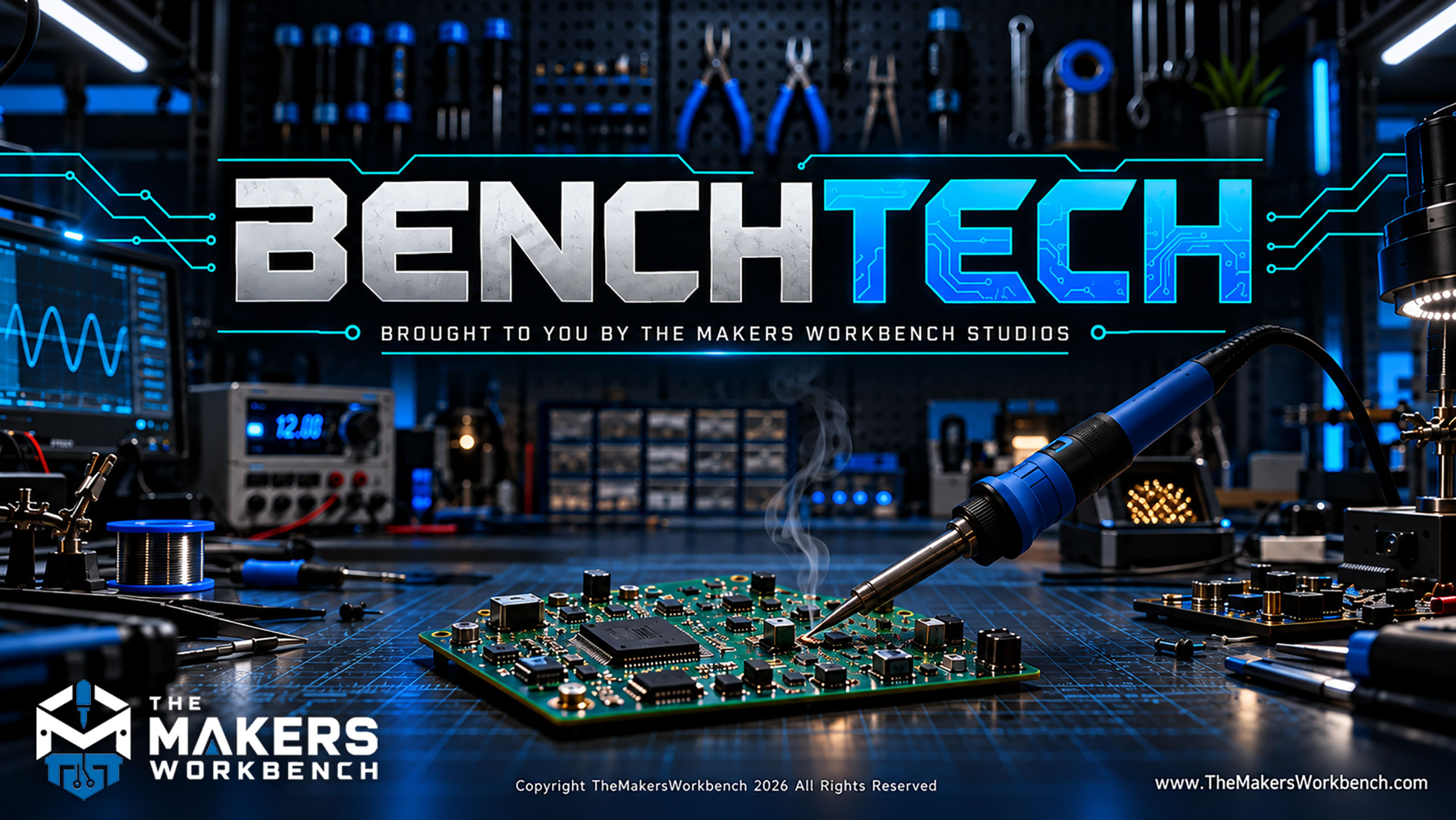
Bench Tech turns the electronics repair process into a game built around diagnosis, component replacement, and bench work. Credit: The Makers Workbench Studios.
The same thing happened after I watched an NHRA race on YouTube. I wanted a casual drag-racing game where my friends and I could race through a tournament-style bracket. One prompt and two usage sessions later, the game was online. That idea became Drag Racing With Friends, a browser game with private play for small groups and tournament support for as many as 100 racers.

Drag Racing With Friends grew from one prompt into a browser-based tournament game that can host up to 100 racers.
Neither game appeared through magic. I supplied the concept, rules, feedback, testing, and taste. The agents wrote, revised, debugged, and connected far more code than I could have produced during the same stretch of spare time. That changed game development from a childhood ambition into something I now actually do.
The Virtual Workbench turned articles into interactive laboratories
The same acceleration is changing The Makers Workbench itself. I wanted a real Arduino and ESP32 simulator with boards, sensors, components, and examples that I could embed into tutorials. Readers should be able to study a circuit and then run it, change the code, manipulate a sensor, watch the serial output, and see what breaks.
I asked Codex to research open-source simulators with licensing that could support that use. The search led me to Velxio, an open-source browser-based circuit and microcontroller simulator. Velxio became the foundation of The Lab inside The Virtual Workbench. My Arduino and ESP32 articles now include interactive labs instead of stopping at static wiring diagrams and code blocks.
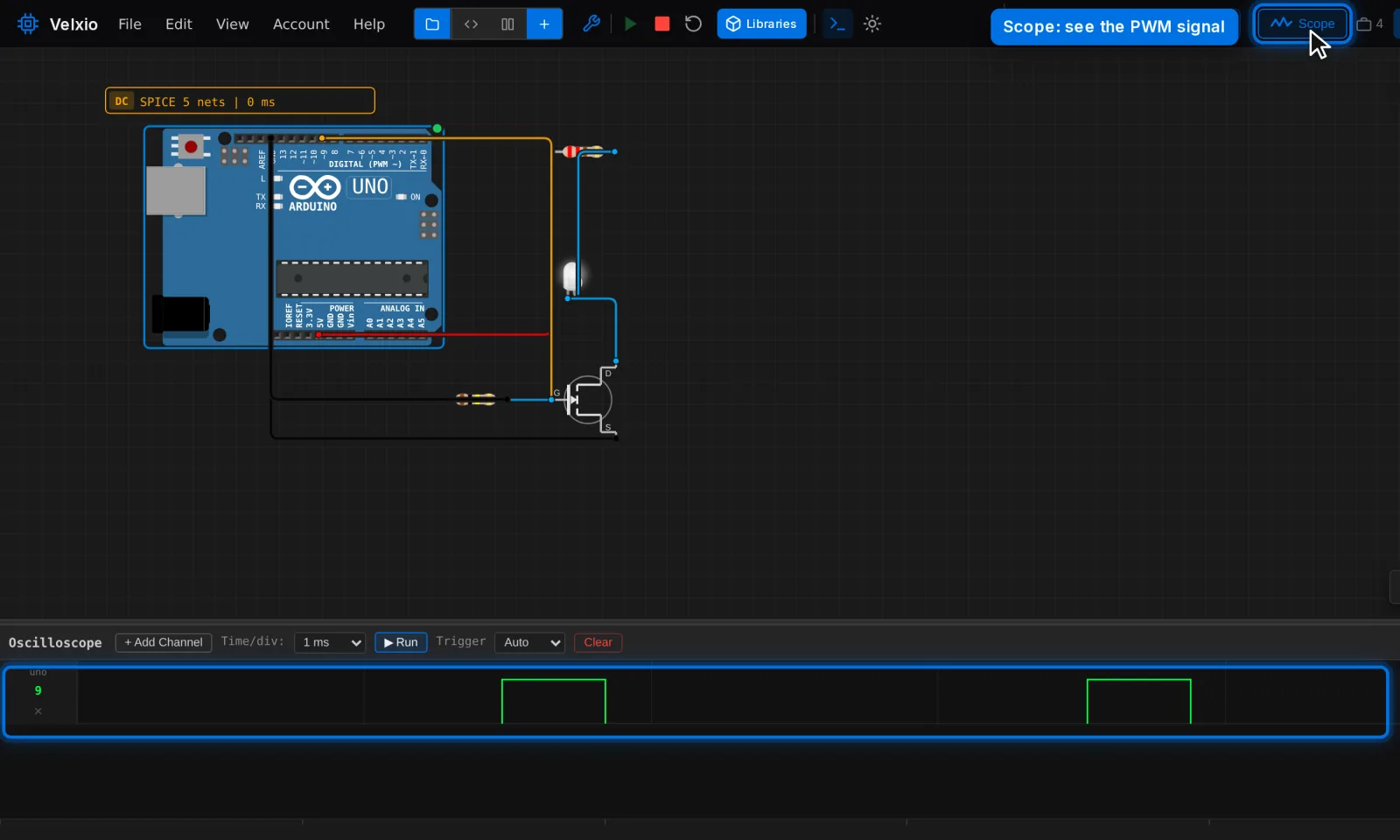
Velxio combines a visual circuit canvas, simulated development boards, electrical behavior, and virtual instruments such as this oscilloscope in one browser interface. Credit: Velxio project.
That distinction matters for technical education. Reading that a pin went high is useful. Changing the program and watching a virtual LED respond is better. A learner can make mistakes without damaging a board, work without owning every component, and repeat an experiment until the behavior makes sense.
Then I started the Electronics Fundamentals series and needed something different. Development-board simulation was not enough. I wanted readers to build circuits on breadboards, run electrical simulations, and inspect them with a multimeter and oscilloscope. Another Codex-assisted search led me to Chip Hippo, a free and open-source desktop application for building and simulating circuits on virtual breadboards.
Chip Hippo was an Electron desktop application. With Claude Code, I was able to port it to the web for interactive use in the series. Work that would once have demanded a long detour into an unfamiliar codebase became another working part of the site.
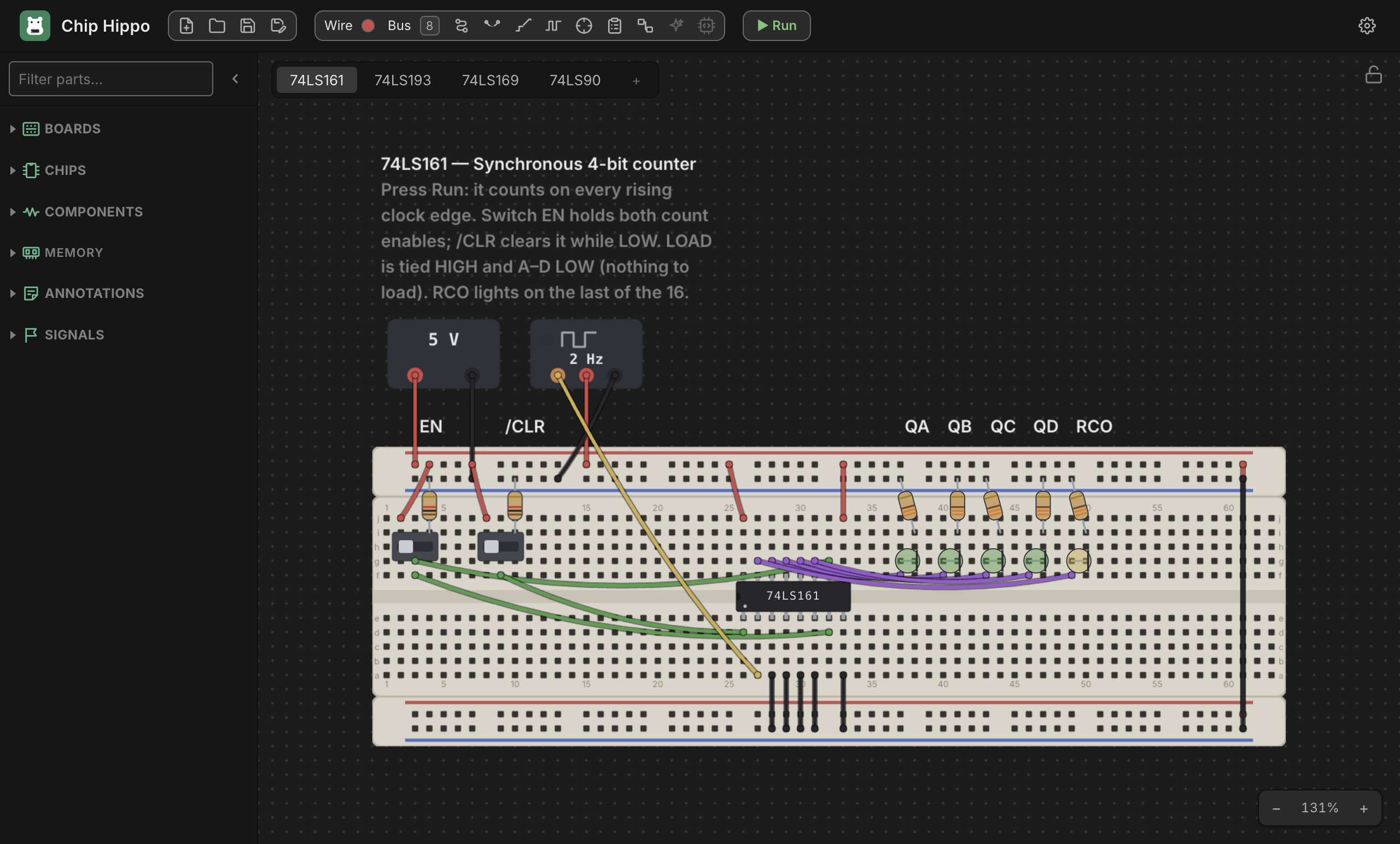
Chip Hippo provides a virtual breadboard desk and simulation tools. Agentic coding made a web port practical for interactive TMWB lessons.
I kept going. The Virtual Workbench now has calculators, a component marking decoder, a pinout finder, and other utilities an electronics hobbyist might reach for at the bench. Each tool is modest on its own. Together, they change the site from a place that explains projects into a place where readers can actively work through them.
AI gives time back to the physical work
The most important benefit is not that AI lets me produce more software. It is that software no longer consumes all the time I wanted to spend making physical things.
Before agentic coding, a large digital project meant waiting until I finished work, then giving up nights and weekends to research frameworks, learn unfamiliar APIs, write boilerplate, debug integration problems, and repeat the cycle. The table, enclosure, circuit, lure, repair, or family time waited while I stared at another screen.
Now I can define a task, give an agent the necessary context, and let it work while I am at my day job earning money. I can review what it produced, correct its direction, and start the next pass. The agent can continue the slow digital construction while I spend my limited free hours testing the result, building the physical project, helping a friend in the shop, or being with my family.
This is not passive creation. Good agentic work still requires active direction. Agents misunderstand requirements, choose weak dependencies, produce insecure code, and confidently head down the wrong path. I inspect the work, run tests, keep backups, check licenses, and verify anything that could create safety, privacy, or financial consequences. Delegating keystrokes does not delegate responsibility.
What has changed is the ratio. More of my time goes to decisions, experimentation, and finishing. Less goes to repetitive scaffolding and weeks of learning that I only needed to cross one narrow technical gap.
The maker I wanted to be was a generalist
For years, the technology industry pushed people toward specialization. That made economic sense. Complex systems needed specialists, and employers wanted proof that a person could go deep in one stack. Makers tend to resist that shape. We want to weld a bracket, mill a panel, write firmware, route a PCB, print an enclosure, edit the video, publish the instructions, and then learn whatever the next project demands.
AI is unusually well suited to that instinct. It lets a capable generalist cross boundaries without pretending the boundaries no longer matter. I do not need to become the world's best Rust developer to make a useful Rust program. I need enough understanding to define the job, question the architecture, test the behavior, and recognize when I should call someone with deeper expertise.
That is the maker I always wanted to be. Not a person who already knows everything, but a person whose ideas are no longer trapped behind everything I have not learned yet.
Agentic coding has allowed me to build in weeks what could have taken months or years. It has helped me make games I dreamed about as a child, turn tutorials into laboratories, and build tools that other makers can use. It has also returned some of my nights and weekends to the physical projects and people that matter to me.
My shop was already full. AI did not give me more tools to store. It connected the tools, skills, and ideas I already had, then gave me enough leverage to finish more of what I start.
Disclosure
Disclosure: This article is not sponsored by Anthropic, OpenAI, xAI, Velxio, Chip Hippo, or any other company or project named here. Charles uses paid AI services and has contributed his own time and development work to the games, integrations, and web ports described. Product capabilities and project links were checked on October 21, 2026 and may change.