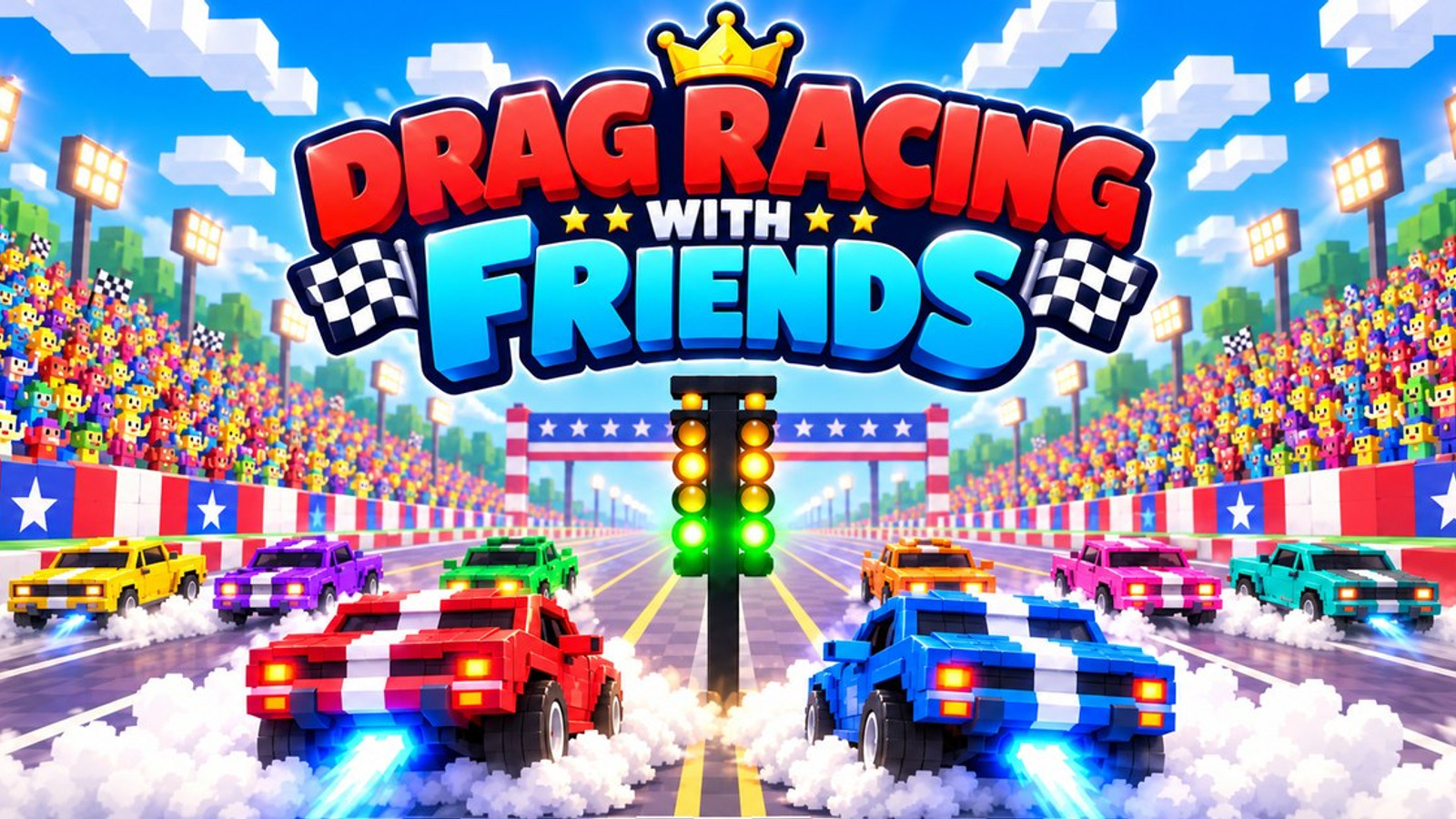
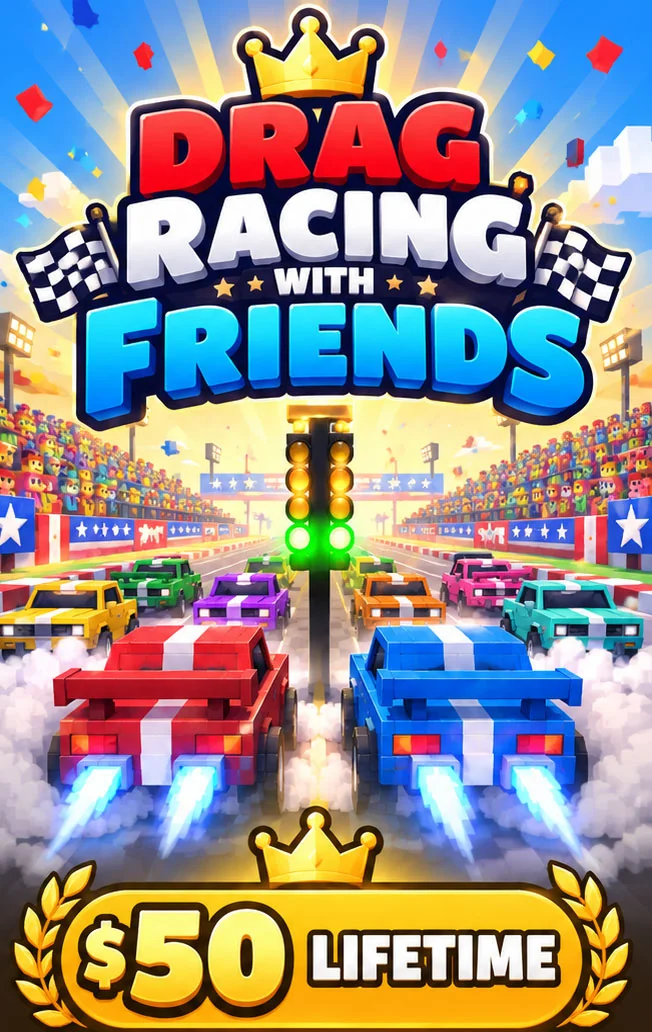
I wanted to make a game that a streamer could launch in a few minutes and an entire audience could understand just as quickly. That idea became Drag Racing With Friends, a browser-based drag racing tournament that puts up to 100 racers into a live elimination bracket. Eight cars line up at a time, each player controls a secret build, and every heat comes down to reaction time, throttle control, and how bravely you use the nitrous button.
You do not need to install an app. You do not need an account just to race. If your browser can open a link, you can join from a PC, Mac, or phone.
The free version lets you race computer-controlled drivers by yourself or create a private lobby for up to four friends. Streamers can open the full 100-racer tournament, drop one permanent invitation link into chat, and run the whole event from a browser window captured in OBS Studio. OBS Studio is the free broadcasting application many streamers use to send their video to Twitch, YouTube, Kick, and similar services.
That combination is important. I did not want viewers to watch someone else play while waiting for a chance to participate. I wanted the audience to become the race field.
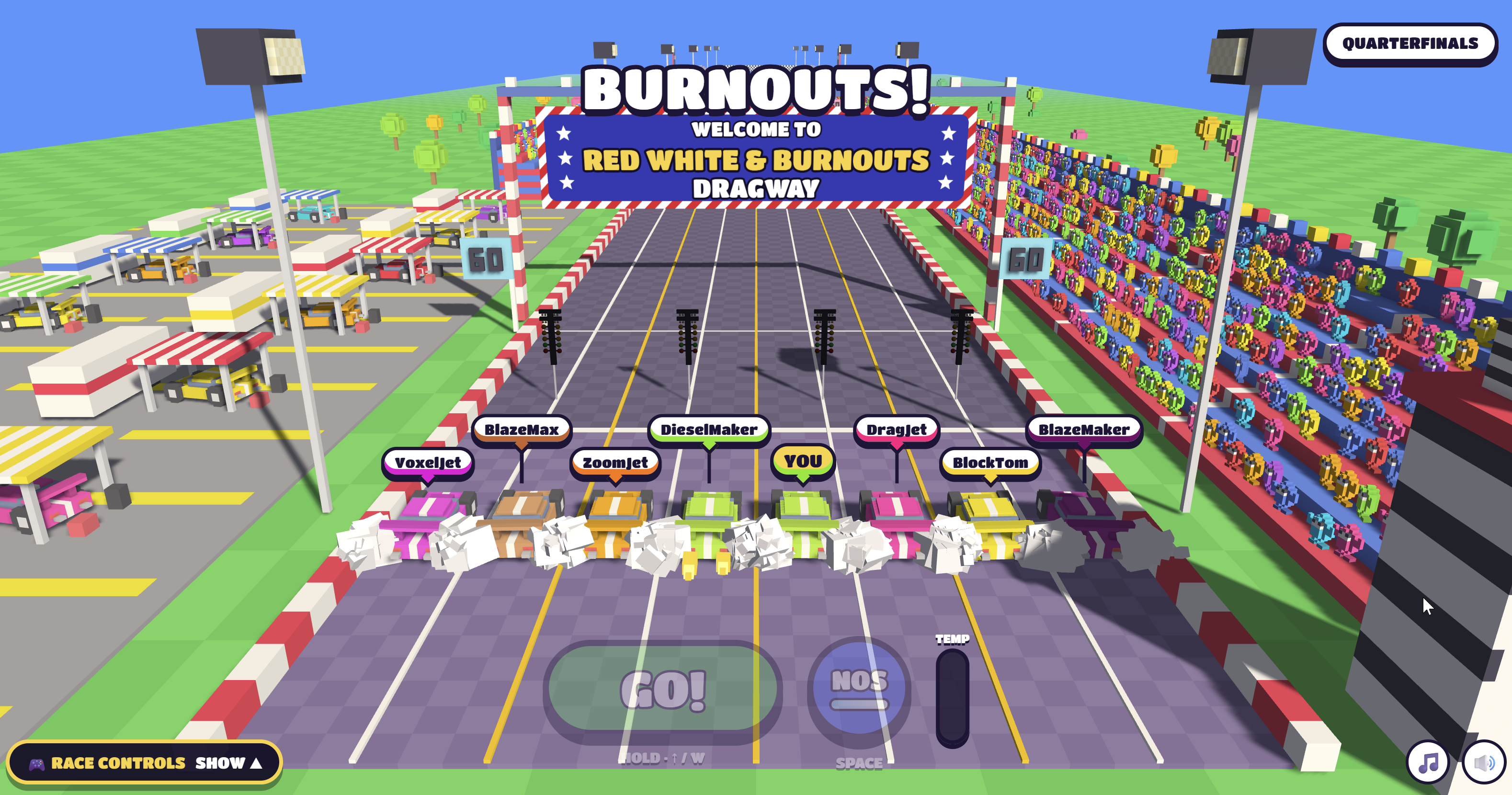
What Happens in a Race?
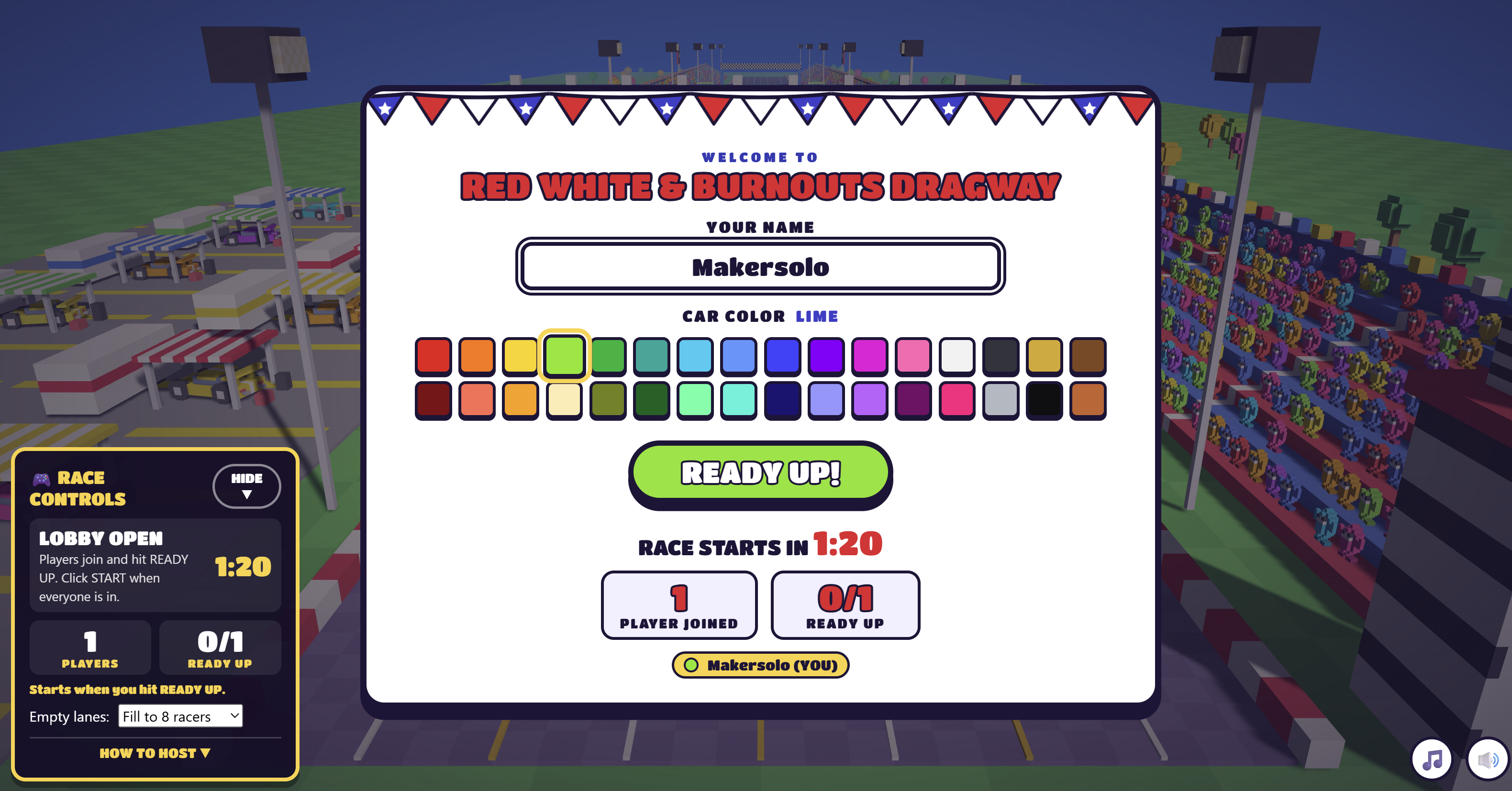
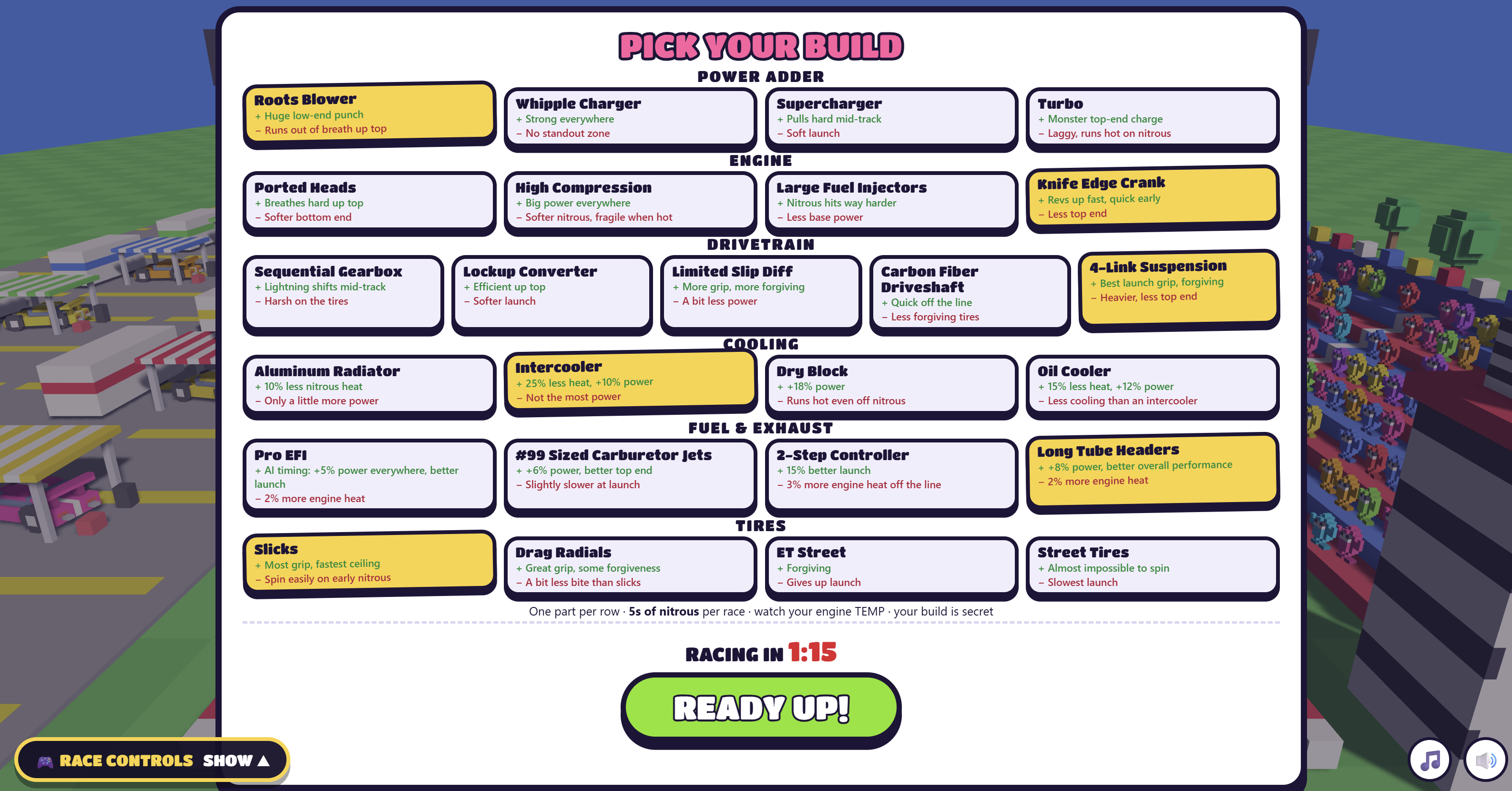
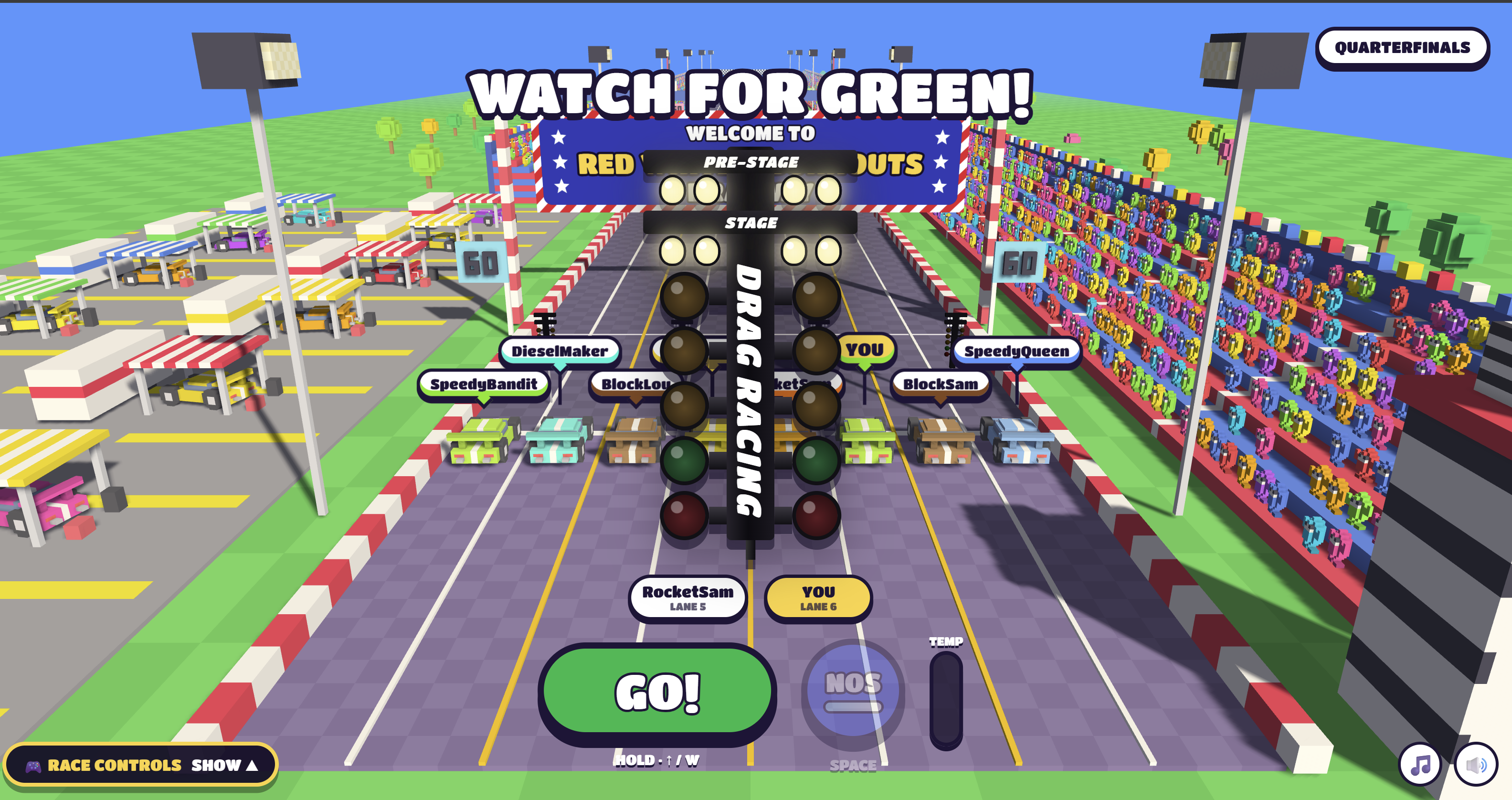
Every tournament begins in the lobby at Red White & Burnouts Dragway. A racer joins, chooses a display name and car color, then picks one part from each of six upgrade groups: power adder, engine, drivetrain, cooling, fuel and exhaust, and tires.
There are 5,120 possible combinations. Each build has a strength and a tradeoff. A turbo pulls hard near the top of the track, for example, but it takes time to build boost and creates extra heat when paired with nitrous. Slicks offer the highest grip ceiling, but an impatient nitrous hit can still spin them. Street tires are more forgiving, although they give up some launch performance.
The builds are deliberately secret. Other racers can see your car color, but they cannot see the parts you chose. That keeps the starting line focused on driving instead of copying whichever setup happened to win the last heat.
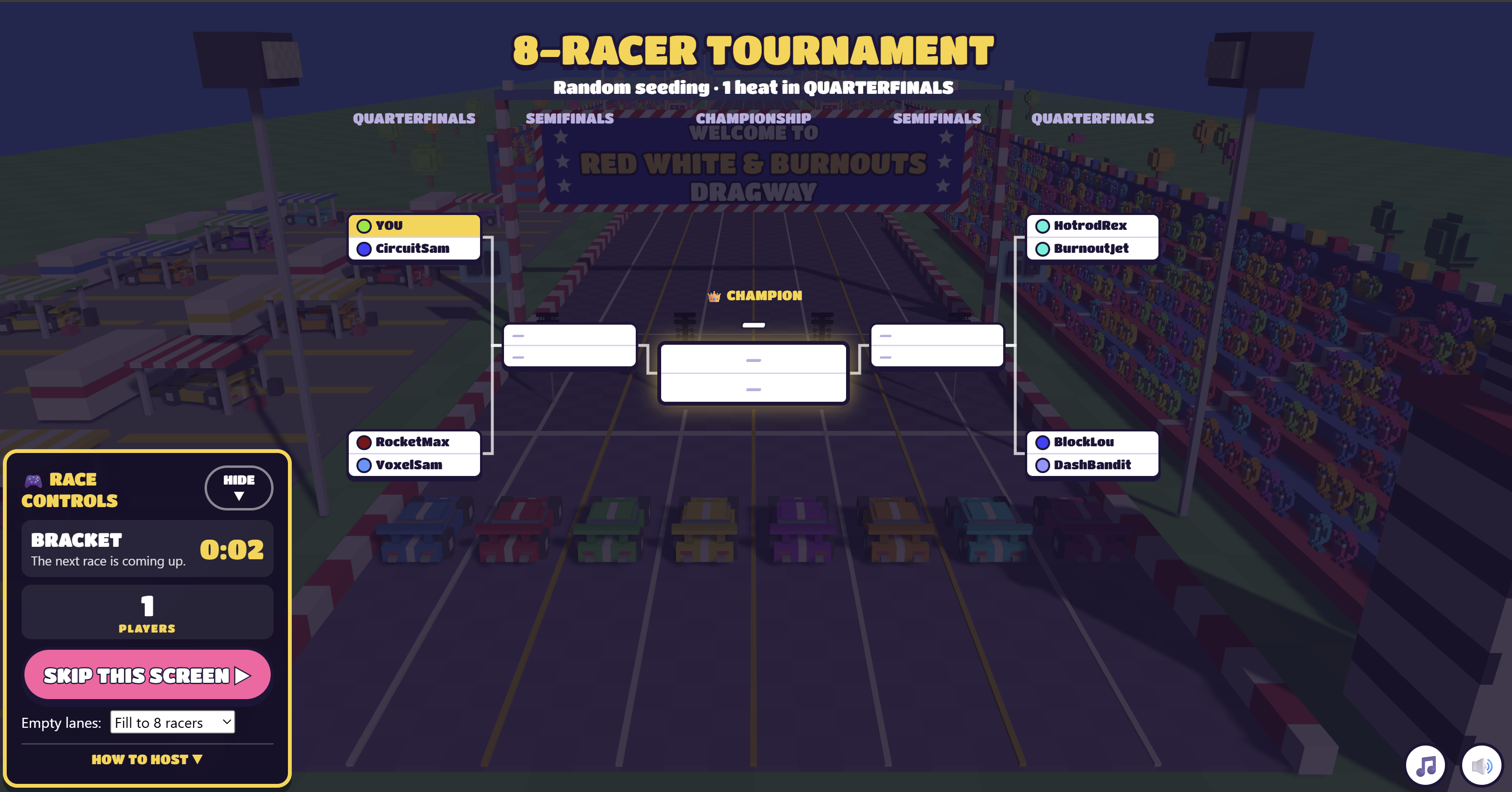
Once everyone is ready, the tournament groups racers into eight-car heats. Empty lanes can be filled with computer drivers, which means a small stream can still put on a full-looking race. Winners move through the bracket until the final two cars meet in the center lanes.
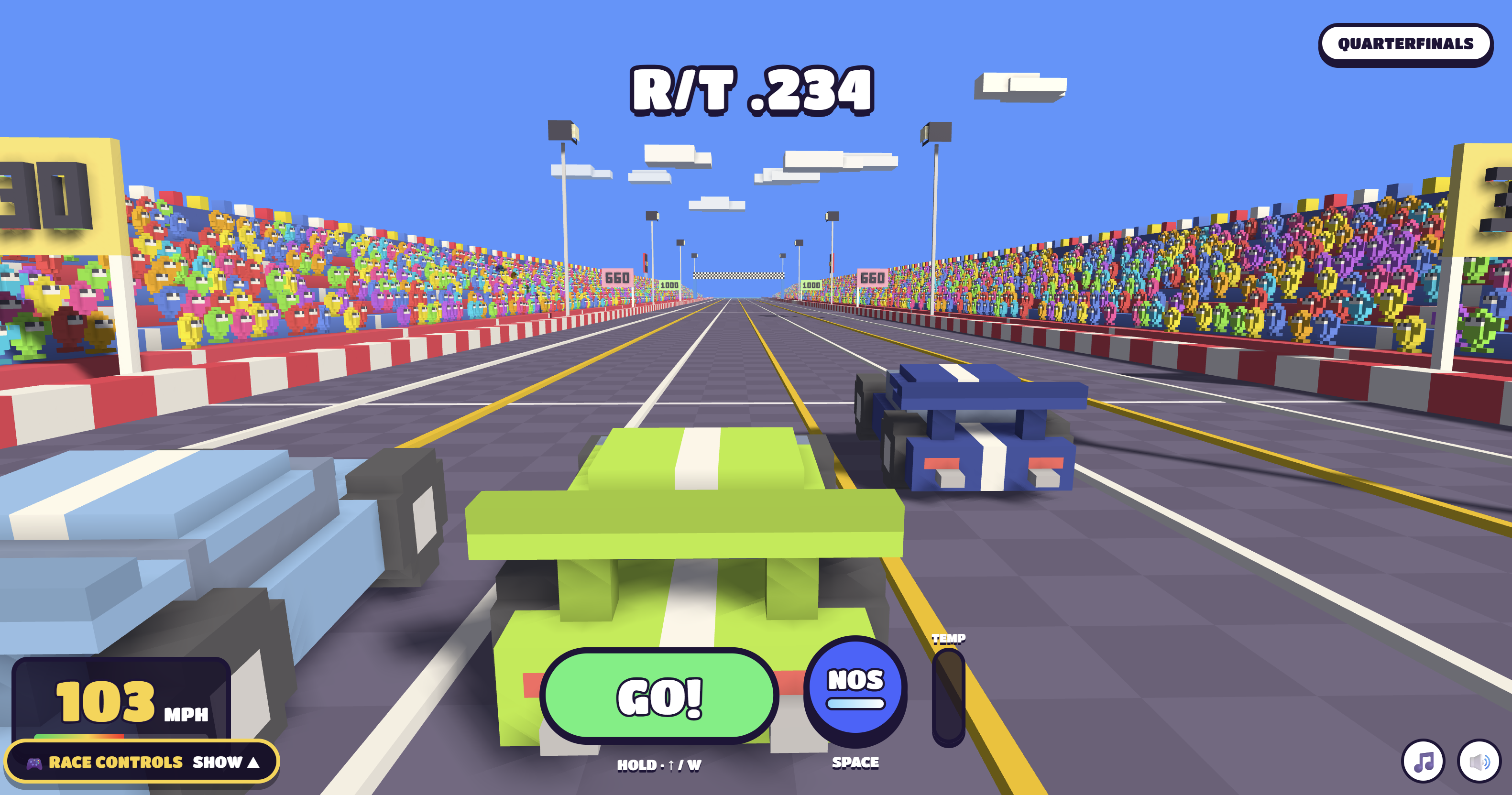
The starting tree controls the launch. Leave before the green light and you red-light, which is drag racing language for starting too early. Hold the accelerator when the tree turns green and keep it down through the finish. Each racer also gets five seconds of nitrous oxide per race. Nitrous gives the engine a short burst of extra power, but it also creates heat. Use too much at once and the engine can lose power or blow before the finish line.
It Uses Real Drag Racing Numbers
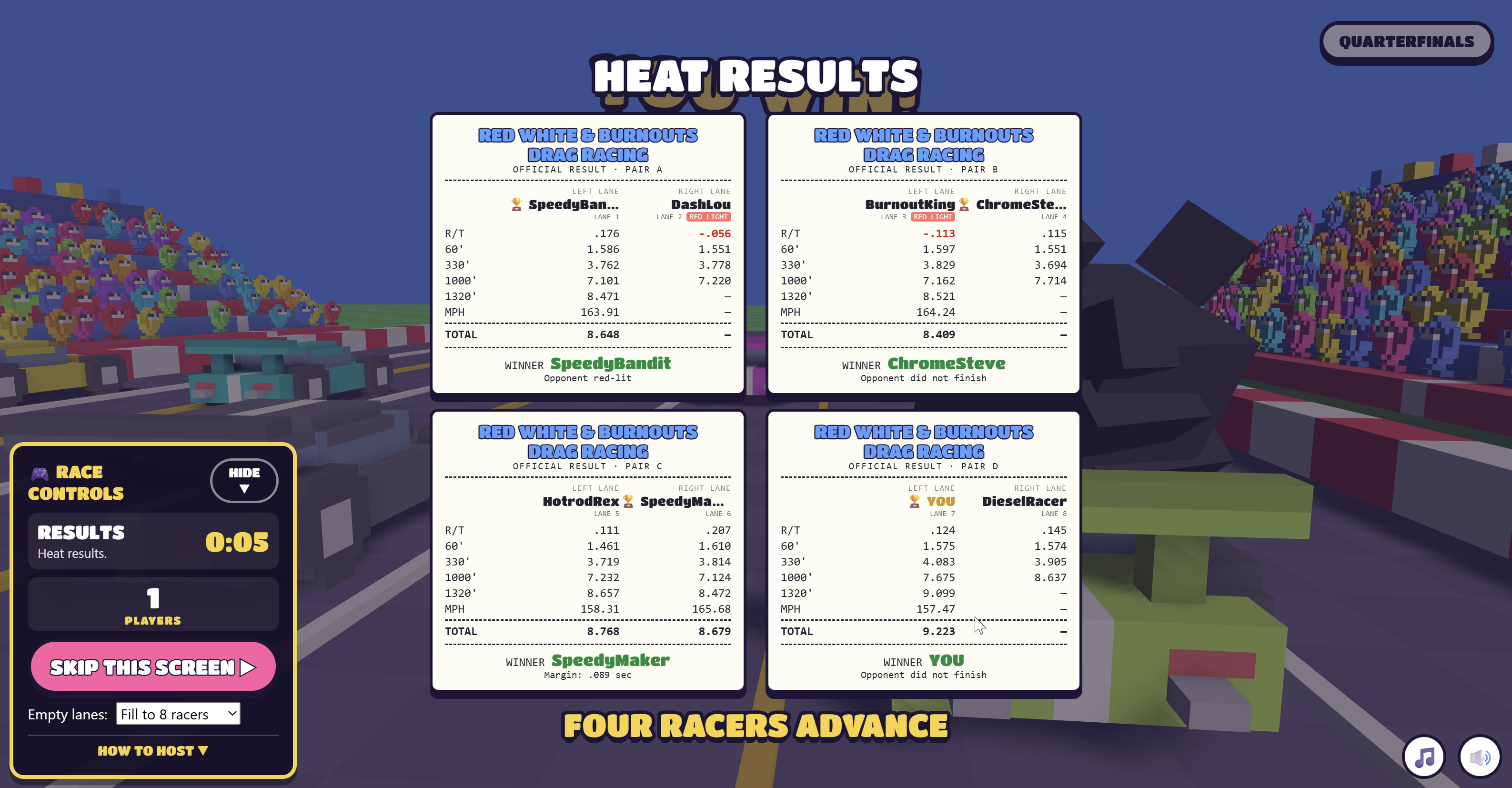
The bright voxel cars make the game approachable, but the timing screen uses the numbers drag racing fans expect to see. Every pass records reaction time, 60-foot time, 330-foot time, 1,000-foot time, quarter-mile elapsed time, and trap speed.
Reaction time measures how quickly the driver responds after the green light. Elapsed time, usually shortened to ET, measures how long the car takes to travel the racing distance. Trap speed is the car's speed as it crosses the finish line. These numbers let a player see whether a setup launches well, gains speed later in the run, or needs a different nitrous strategy.
Each heat ends with a wide, slow-motion finish replay and a timing slip. The replay gives the stream a natural moment to react, while the slip gives competitive players something useful to study before the next round.
Why I Built It for Livestream Communities
Most browser games designed for streams treat the audience as a source of votes, commands, or occasional contestants. Drag Racing With Friends is built around a different idea. The audience is the event.
A streamer receives a permanent invitation link that can be pinned in chat. Viewers open it, build their cars, and ready up without seeing the streamer's private code. The host can start a race, skip presentation screens when needed, and decide how many empty lanes should be filled with computer drivers. The control panel folds away during the racing action so it does not cover the broadcast.
The game does not depend on one streaming platform. Twitch, YouTube, Kick, and any other service work because the important connection is the browser invitation link. Stream delay also does not prevent a player from launching, because every racer sees a large starting tree on their own screen.
That last detail solved a practical problem. A delayed video feed is fine when the audience is watching, but it is terrible when the player must react to something shown several seconds late. Giving each player a synchronized tree in the browser keeps the reaction-time challenge fair.
What Does AI-Assisted Mean Here?
I describe Drag Racing With Friends as an AI-assisted game because artificial intelligence tools were part of the development process. AI helped me explore ideas, work through code, test approaches, and move between disciplines that usually require a larger team.
That does not mean the game appeared after a single prompt. The rules still had to be designed. The upgrade combinations needed balancing. The interface had to work across desktop and mobile screens. Multiplayer behavior, tournament progression, privacy controls, payments, accessibility, and the dozens of small details between them all needed decisions, testing, and revision.
AI can shorten the distance between an idea and a prototype. It cannot decide what should feel exciting, whether a race is understandable, or when a feature creates more friction than fun. Those judgments still come from building the game, watching people use it, finding the rough edges, and going back to improve them.
That is the part of AI-created work I want this section of The Makers Workbench to explore. The interesting story is not that AI touched the project. The interesting story is what one maker can build when these tools are combined with a specific idea and the patience to keep refining it.
How Can You Play?
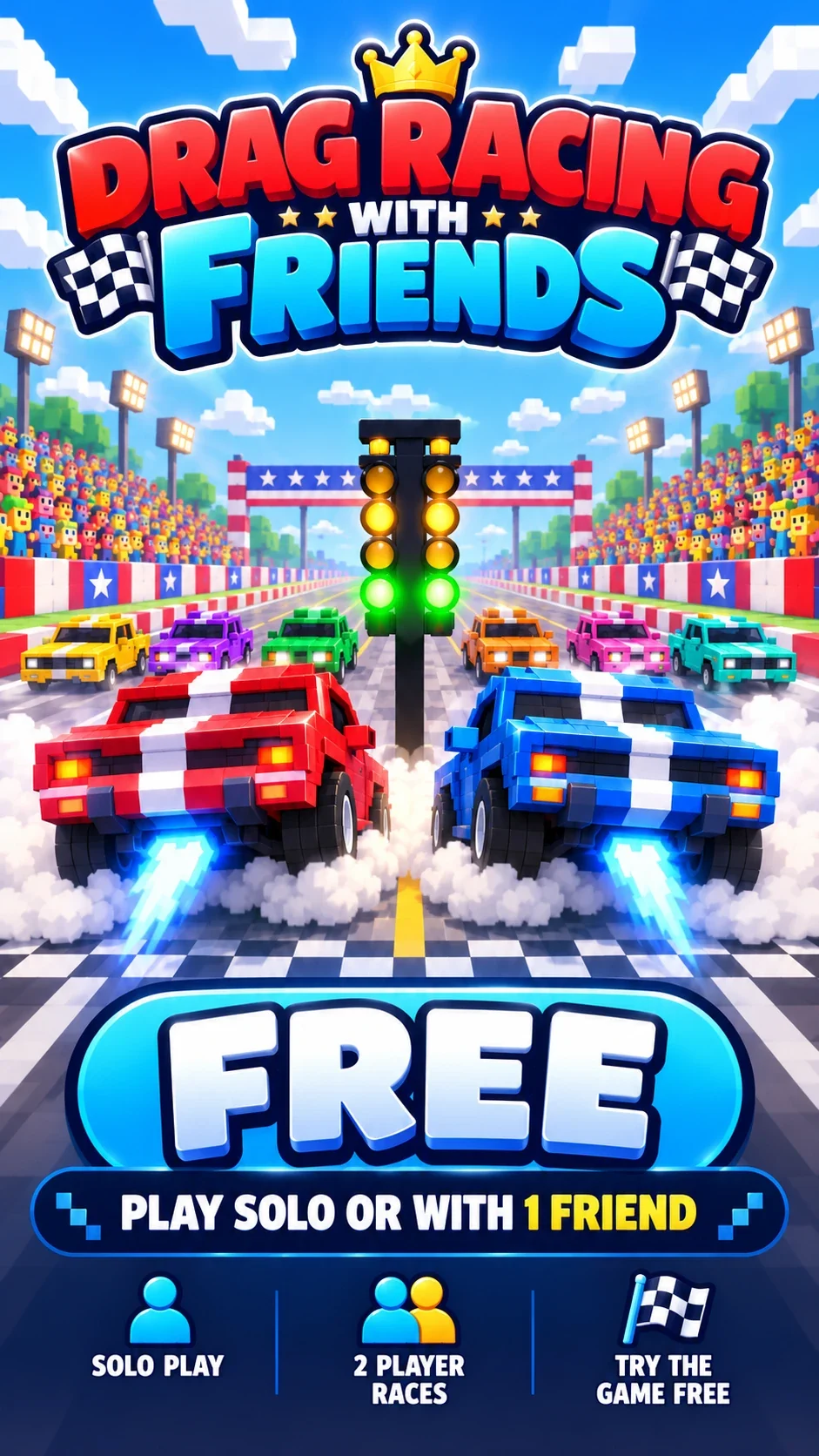
You can play Drag Racing With Friends free in two ways. Start a solo tournament against seven computer drivers, or create a private race and invite up to three friends. Both modes include the tournament bracket, upgrade system, nitrous management, replays, and timing slips.
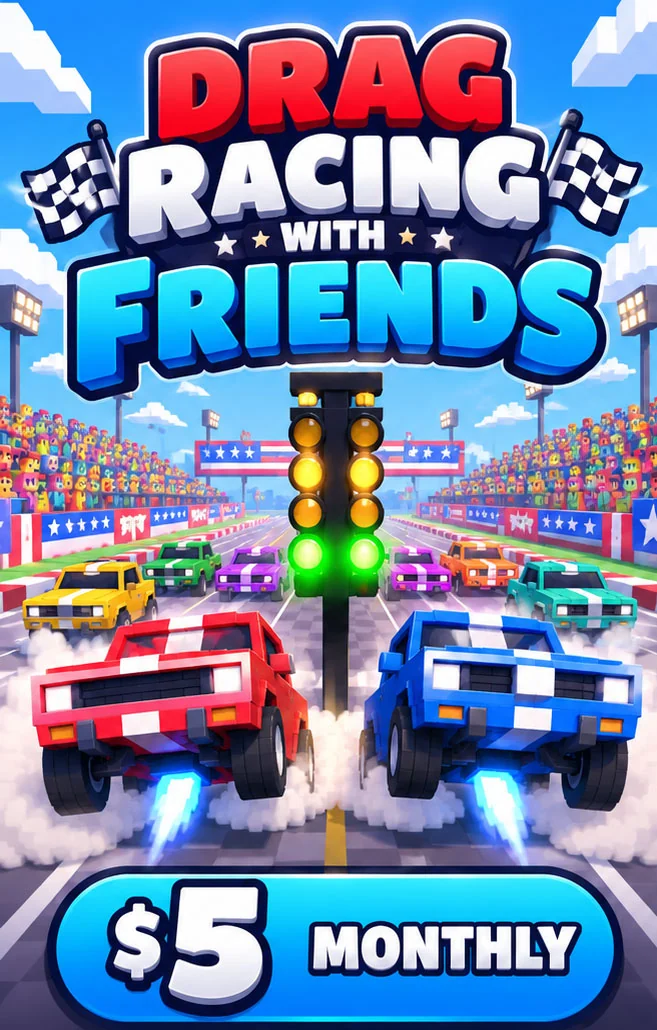
The streamer version supports up to 100 racers in one tournament. A monthly streamer code is available for $5, while a lifetime code costs $50. The code unlocks a permanent invitation link, streamer controls, and the full large-field bracket.
Visit Drag Racing With Friends to race the bots, invite some friends, or host a tournament for your community. I will keep sharing the game's development here, along with the other AI-assisted games that follow it.