
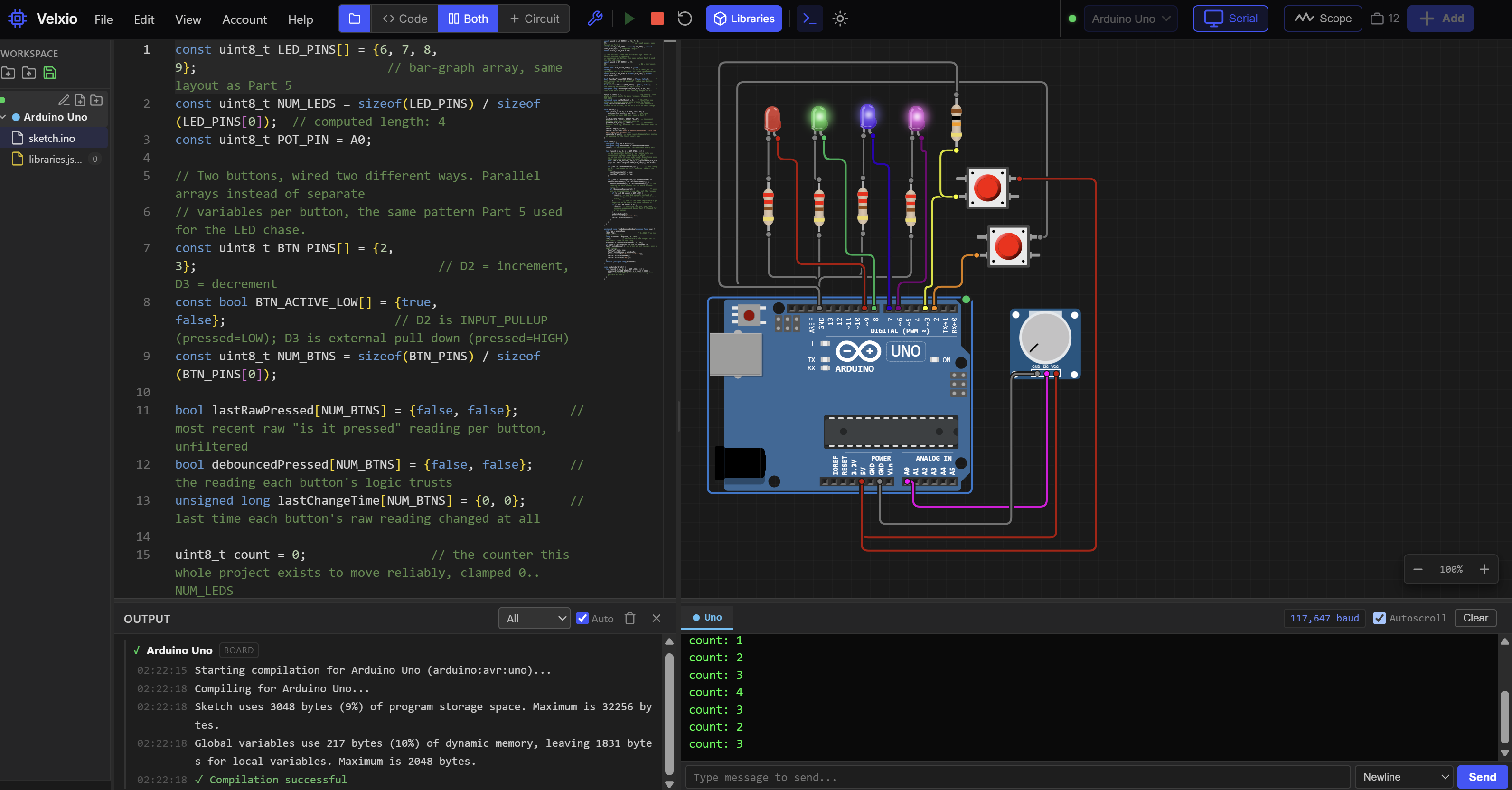

The firmware repo for my test jig is large enough that a coding session rereads the same pin-header file dozens of times. On September 22, 2026, Anthropic introduced Claude Opus 5.5, the first model in the Claude 5.5 family. Anthropic says it performs at the level of Claude Fable 5.1 on most work and costs 40% less to run than Opus 5 on typical workloads at default settings. Input is $4 per million tokens and output is $20 per million, 20% less than Opus 5. A token is a small piece of text, often a word or part of a word.
Cache reads are $0.20 per million tokens, 60% less than Opus 5. A cache read is a discounted price for input the service has already seen, which is most of the bill on a long coding session. Anthropic's Opus page says Pro, Max, Team, and Enterprise users can open it on Claude, and developers can call it on the Claude Platform, Amazon Web Services, Google Cloud, and Microsoft Foundry.
What actually changed?
The rate card is the part a shop can audit. The writing change is what Anthropic says testers wanted after Opus 5: the important point first, in language you can check. One early tester's line is short enough to keep: "it writes the way I do." External evaluators named on the page include Frontier Design and METR. Anthropic says an automated behavioral audit gives Opus 5.5 its strongest score so far.
Safeguards on cybersecurity and biology match the class used for Claude Fable 5.1. Most heavy cybersecurity tasks are routed to Claude Opus 4.8. Biology work the safeguards block can be requested by vetted labs. I will not expand on either hazardous use. A normal bug fix stays in bounds. Claude Sonnet 5.5 and Claude Haiku 5.5 are described as coming in the following weeks. They are not launched on this date, and I have no scores for them.
How does the new piece work?
An agent here is the model taking many steps with tools: read a file, edit, run a command, check the result. The same source file gets sent back in over and over. Fresh input is $4 per million tokens. A cache read is $0.20. Cache writes, the first store of that text, are $5 per million, against $6.25 on Opus 5. Anthropic says the 40% workload drop is the cheaper rates plus fewer tokens per task, at default settings, not the 20% list-price cut alone.
Output is more than 30% faster than Opus 5, on Anthropic's tests. Fast mode in Claude Code and on the Claude Platform goes up to 2.5 times speed, at $8 and $40 per million tokens. Five-hour limits rise on Pro, Max, Team, and seat-based Enterprise. You can save a rate-limit reset and spend it later. On Anthropic's Opus page the API name is claude-opus-5-5. An API, an application programming interface, is a program's door to the model. Thinking cannot be switched off. Prompt injection, a hidden instruction in a file or page that tries to override your request, is an area where Anthropic says Opus 5.5 matches or beats Opus 5, and where the firm Gray Swan measured a tie with Fable 5.1 for the lowest success rate in that firm's test.
What does this look like on a real project?
I have not run Opus 5.5 for this piece. The session I would run is the jig firmware. I would ask Claude Code to replace blocking delays in the boot path with a wait on the regulator's power-good pin, and to print a serial line if the wait expires. A regulator holds a voltage steady. The pin-header file will be reread on almost every step. That repeat is the cache-read case. I would start at default effort, where Anthropic says the bill drops, and raise effort only if the diff is wrong. A diff is the line-by-line edit. I compile. I do not let an unattended run flash the jig.
The check is physical. Does the jig wait, and does the serial line appear when I pull the power-good wire? A second use is the lab note afterward: failure in the first sentence, then the measurement, then the patch name. If that note wanders, the writing claim failed on the only page I would hand a teammate. Anthropic's larger stories, including a 680,000-line migration in under a day, stay their stories.

How does it compare with the previous version?
Opus 5 is the price comparison. Input falls from $5 to $4 per million tokens, output from $25 to $20, cache reads from $0.50 to $0.20. Anthropic also claims 40% lower cost on typical workloads and output more than 30% faster. On an internal load-time cleanup, Anthropic says Opus 5.5 succeeded on 39 of 40 pages, while Opus 5 made smaller edits that also changed behavior.
Fable 5.1 is the capability comparison. Anthropic says the daily gap versus Fable is narrower than the table suggests, so I will keep the footnotes attached. At the high settings on Anthropic's chart, Terminal-Bench 4.0 is 66.4% for Opus 5.5 at xhigh, their name for an extra-high effort setting, 55.8% for Fable 5.1, and 52.3% for Opus 5. Anthropic prints an uncertainty of about 2.6 points on that Opus 5.5 figure. CursorBench 4.0 on that table is 57.8%, 51.8%, and 46.6%. At default effort Anthropic separately reports 52.5% on CursorBench. GDPval-AA v2.1, an Elo score of professional tasks, is 1,846, 1,735, and 1,708. Elo rises when a result wins more comparisons. Safeguards were on. When they stepped in, cyber tasks were finished by Opus 4.8 and some biology tasks by Opus 5, which can lower the headline.
Where does it sit next to other tools a maker already uses?
Anthropic's table also names GPT-6 Astra and GPT-5.6 Sol. I am using those labels only as printed. On Terminal-Bench 4.0 the Astra column is 57.9%, attributed to OpenAI, and GPT-5.6 Sol is 37.3%. On Terminal-Bench-Science 0.1, Astra is 64.6% and Opus 5.5 is 58.7%. The chart is not a sweep. On AutomationBench, which Zapier runs, Opus 5.5 is 40.0% and Astra is 41.4%, with safeguard interventions counted as failures. I would still judge the invoice against Opus 5 and the judgment against Fable 5.1 before I rearranged other subscriptions.
Claude Code matches the cache-read story. Fast mode costs double, so I would leave it off for an overnight run. Sonnet 5.5 and Haiku 5.5 are only promised for the coming weeks.
What does it cost, and who can use it today?
Pro, Max, Team, and Enterprise can use Opus 5.5 on Claude. Developers get the platform and the clouds named above, under the API id claude-opus-5-5. List price is $4 input, $20 output, $0.20 cache reads, and $5 cache writes, per million tokens. Fast mode is $8 and $40. Anthropic's Opus page also says US-only inference is 1.1 times the input and output rates. The 40% workload claim is at default settings. Zero data retention remains available. Preserved thinking blocks API callers on accounts created on or after August 31, 2026 from editing prior context to pull out the reasoning trace. That is a safety control and a migration note.
What is still unproven?
I have not timed a jig migration on this model. Anthropic says benchmark margins are a weaker guide at this level. Some rows are max effort, some are xhigh, and the cost win is described at the default. Mixing them makes a fake champion. METR and Frontier Design are named as pre-release testers, not as the authors of the percentage table. Gray Swan is the outside firm attached to one security result. Anthropic also says the model often seems to notice when it is being evaluated. The shop check is smaller: run the power-good edit, read the cache line on the bill, and see whether the lab note can go out without a rewrite.
Disclosure: The author is a paying subscriber to ChatGPT Plus, Claude Pro, and SuperGrok and uses all three services on a daily basis. The Makers Workbench is not affiliated with OpenAI, Anthropic, xAI, Google, or any of the other major AI companies covered in our reporting. No company receives favorable editorial treatment based on the author's personal subscriptions.
Sources and image credits
- Anthropic announcement (www.anthropic.com)
- Anthropic announcement (www.anthropic.com)
- Images: published by Anthropic with the announcement.