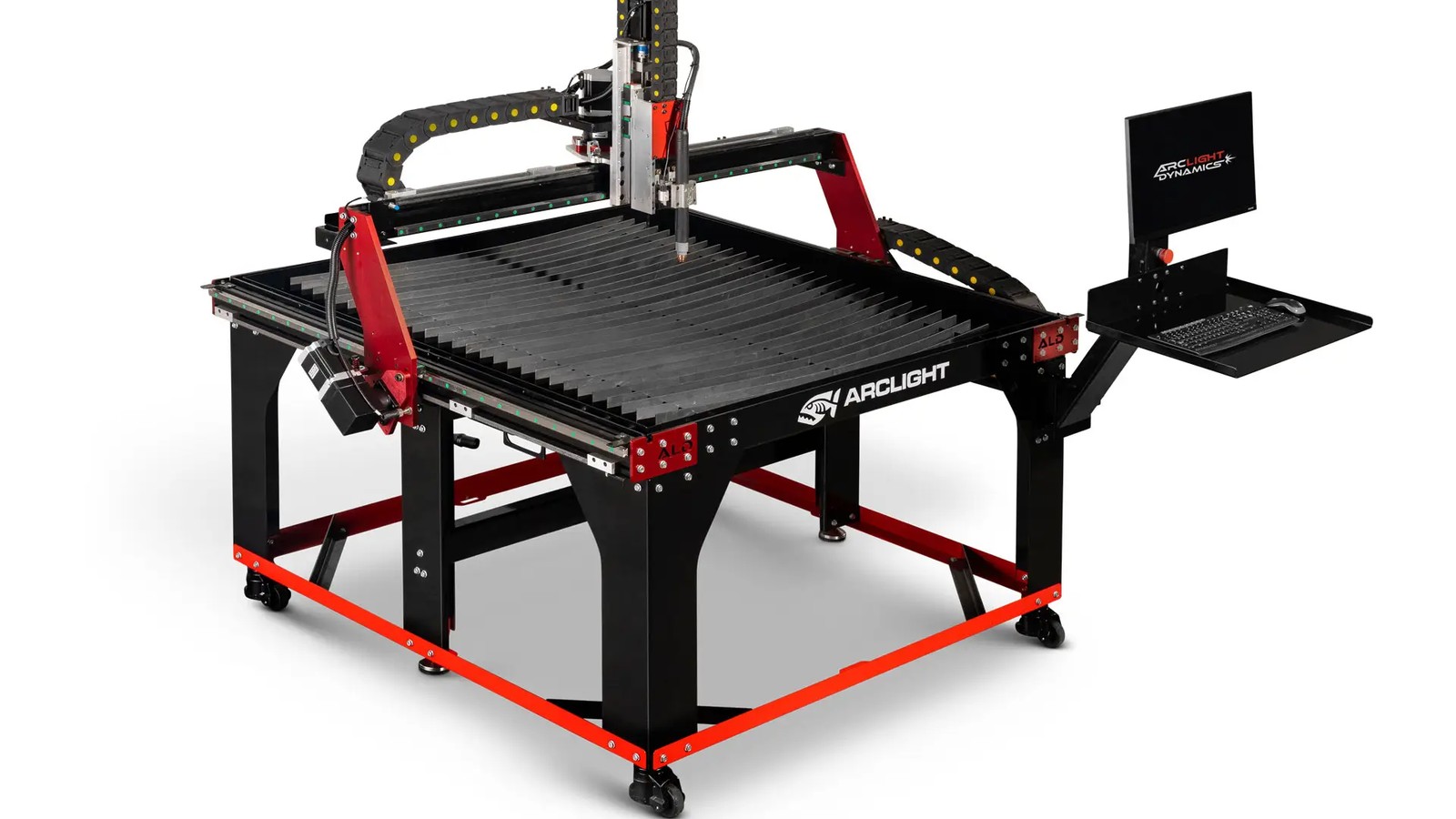
On September 24, 2025, Arclight Dynamics posted a short introduction for the V3 Arc Pro Ultra: new look, new features, and the same Arclight precision. Arclight builds CNC plasma tables in the United States and is part of Piranha Fabrication. A plasma table carries a plasma torch on a gantry (the moving bridge) and cuts sheet metal by blowing an electric arc through the plate.
The Ultra V3 is aimed at fab shops that have outgrown a handheld torch but aren't ready for a six-figure cutting system. The social post doesn't give a price, a cut speed, or a list of motor sizes. The product pages do the real describing, and they were already carrying photographs in August 2025, a month before the introduction.
TMWB has not used this table. This article relies on Arclight's own posts and product pages, and the claims are Arclight's.
Which sizes does the V3 come in?
The sizes read as feet: 4×4, 5×5, 4×8, and 5×10. A 4×8 is a standard full sheet of plate, and a 5×10 is the production size on this menu. The 4×4 is the one Arclight's own page calls the compact shop machine. That page says it uses advanced motion control, NEMA 34 motors, and Arc CNC software, and that it targets shops needing precise cutting in a smaller footprint.
The 5×10 is also where the money leaves a home shop. A 4×4 and a 5×10 are very different purchases even though they share a generation name, so anyone ordering should read the current product page rather than assume one price.
What does the hardware tell us?
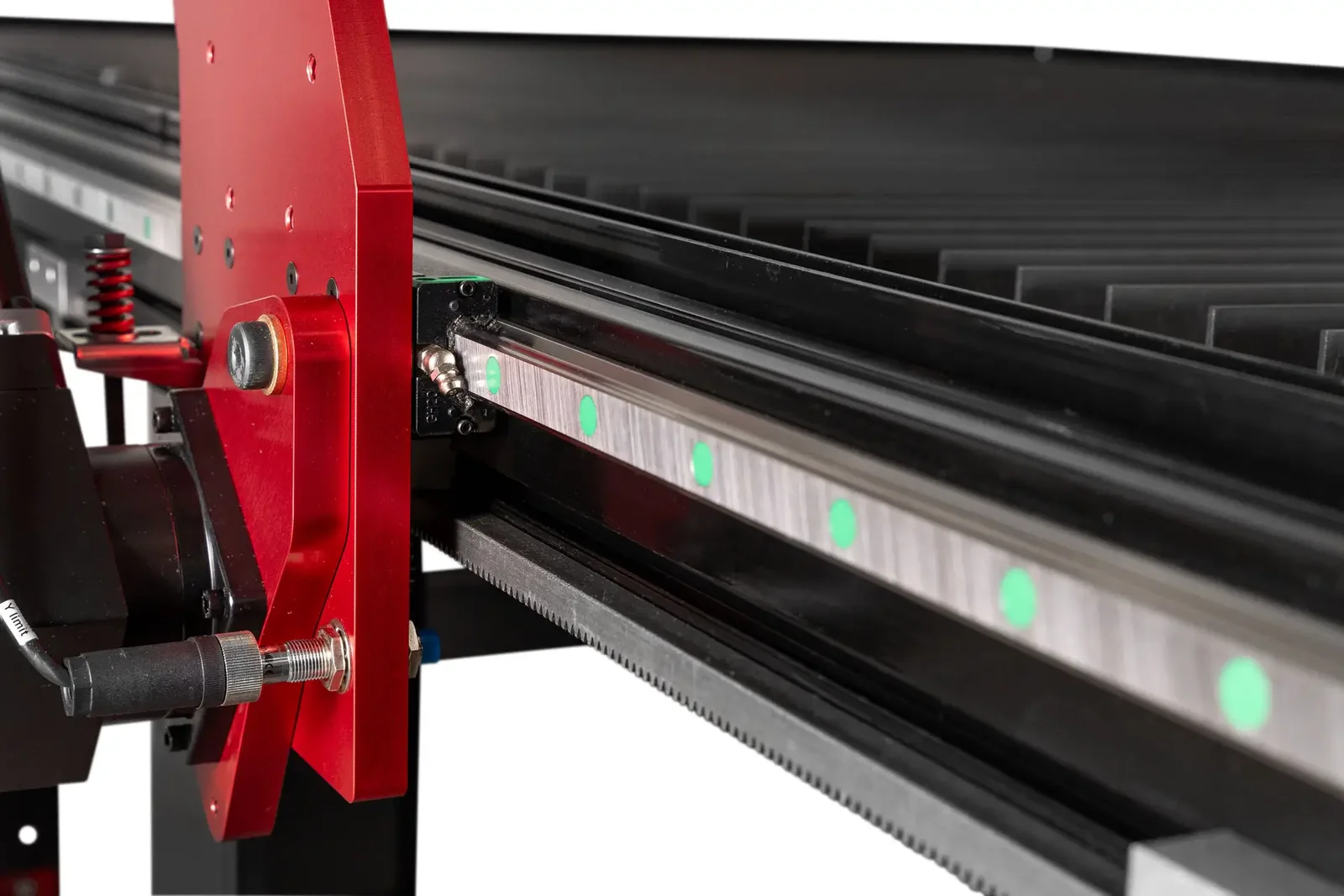
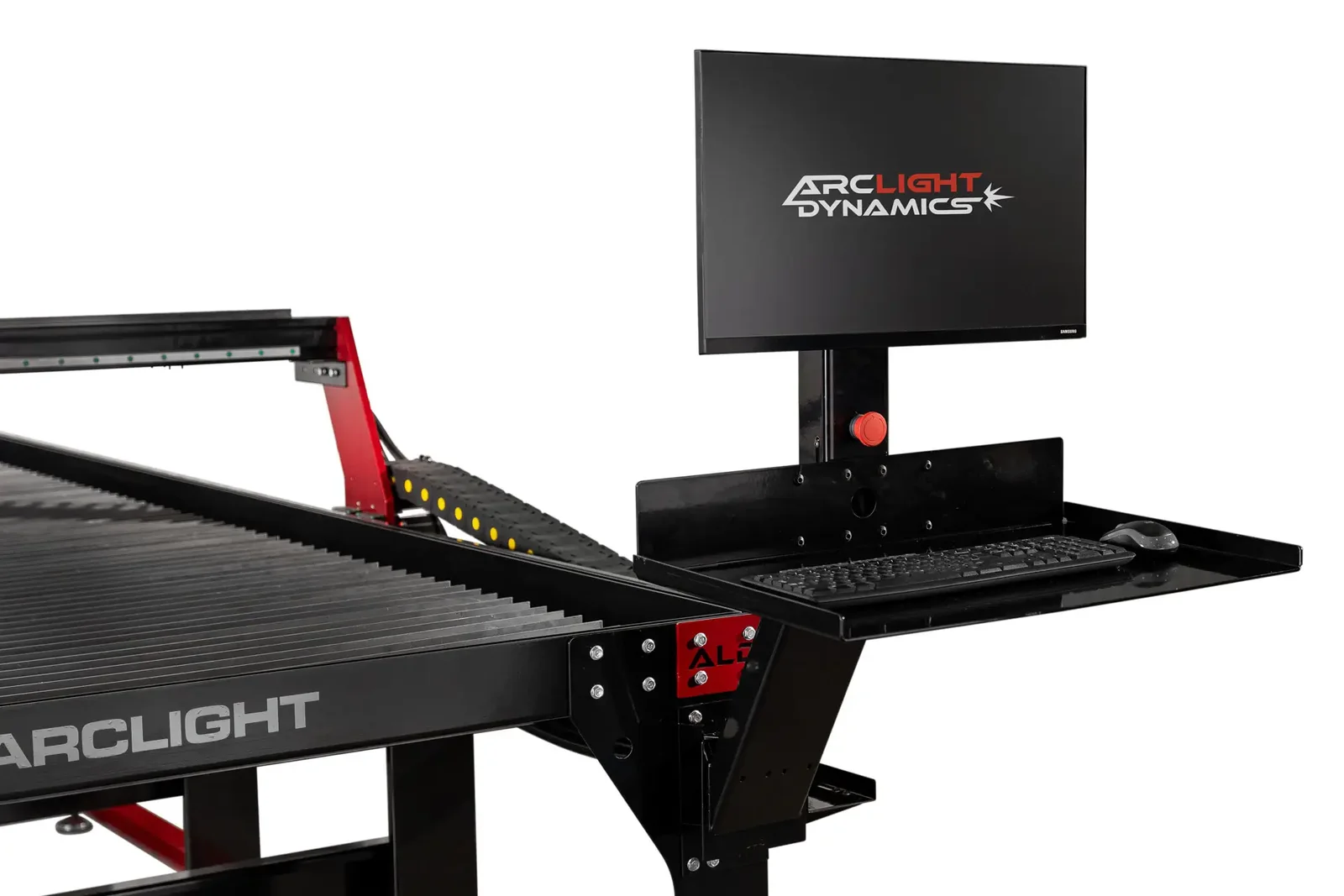
The photographs show the parts that matter on a plasma table: a Z axis on a ball screw, rails captioned as Hiwin, gantry risers, a pedestal, and casters.
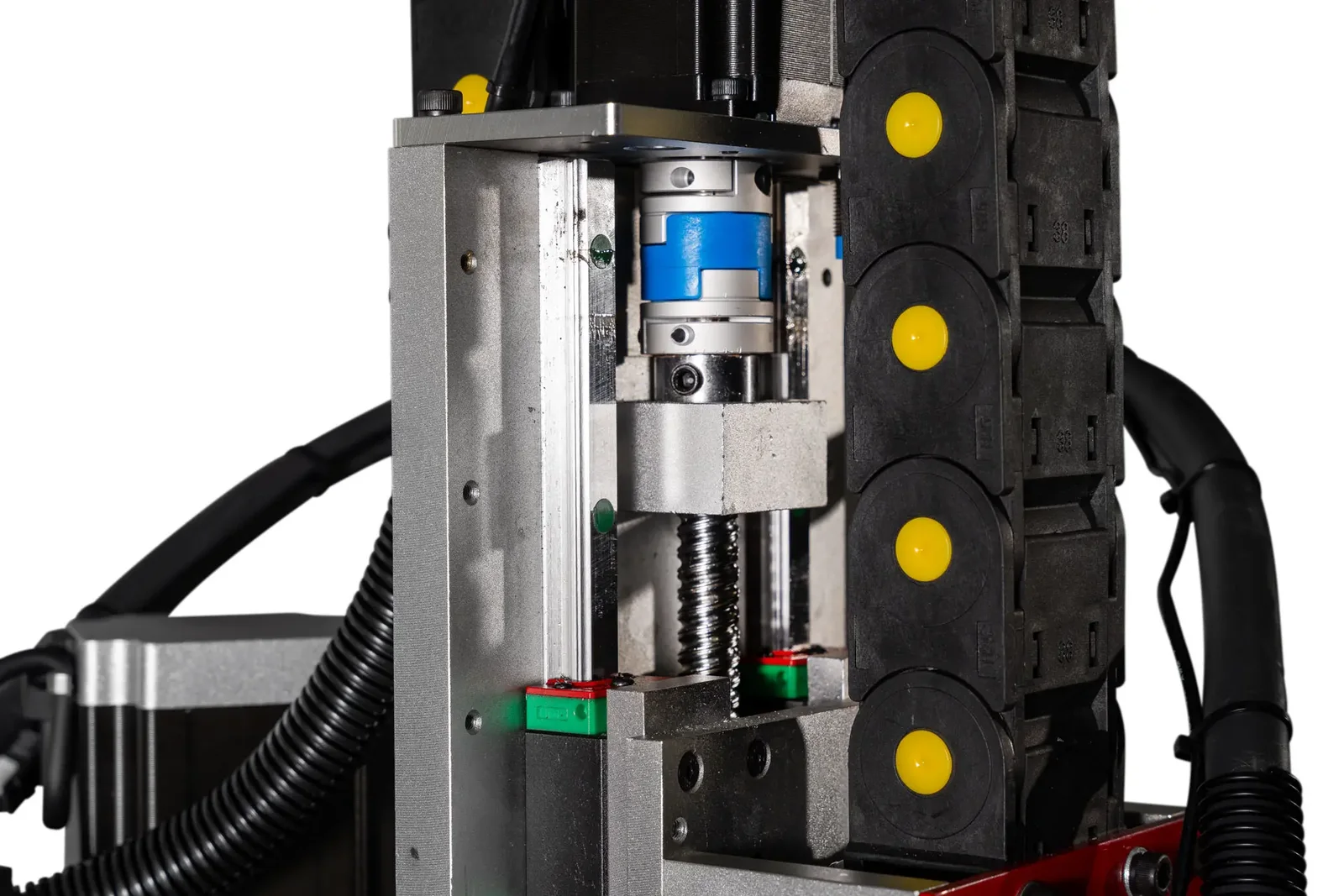
The ball screw on Z lets the torch be set to two heights and repeat them. Pierce height is the gap where the arc punches through the plate while the gantry holds still. Cut height is the lower gap once the torch starts moving. A pierce delay is the short wait that keeps the torch from dragging a half-open hole along the path. The kerf is the width of metal the arc removes.
Hiwin is a rail manufacturer. Naming the rail suggests the gantry rides on profiled linear guideways (steel tracks with bearing blocks), and not a length of box tube with skate wheels on it.
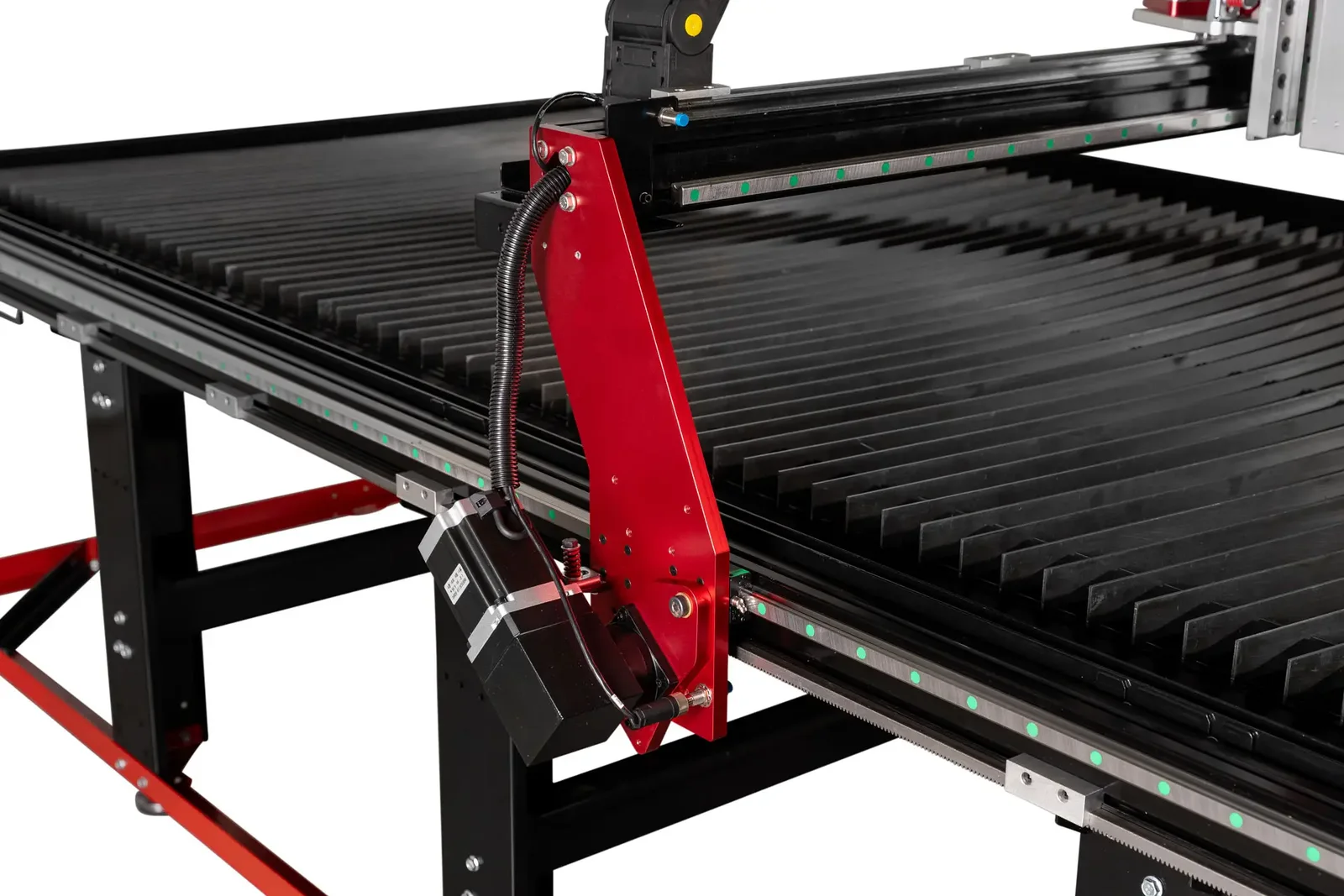
NEMA 34 is a motor frame size, about 3.4 inches across the face, and bigger than the NEMA 23 steppers on most hobby routers. The number sets the bolt pattern and says nothing about torque, which the introduction doesn't print. Plasma table motors drag the torch and its cable bundle across the sheet, so a larger frame is the usual way to fit more iron into the job.
Arclight's category description also mentions a welded frame, planetary gearboxes, and the ball screw Z. A planetary gearbox is a compact set of gears that multiplies torque and lets the motor spin faster than the pinion driving the axis. I'm treating all of that as Arclight's description of the family, not as test results. One gallery filename mentions a servo motor. A servo corrects its position using a feedback device on the motor, but the product text I'm willing to quote says NEMA 34 motors, so that's the phrase I'll use until Arclight puts "servo" in the specification block.
What about the software and torch height control?
Arc CNC is the company's control software. A plasma controller has jobs a router controller doesn't: it has to run pierce delay and cut height, and when you buy it, torch height control (THC). THC follows a warped sheet so the torch doesn't dive into the plate or lift so high that the arc stretches and the cut widens. The September 24 post doesn't say THC is standard on the V3, and I won't assume it.
The pedestal holds a monitor and keyboard, so you can stand at a control console and not lean over a laptop on a sawhorse. The casters mean you can roll the table around the shop.
How does it compare with other plasma options?
Next to the plasma tables a small shop could already buy in September 2025, the Ultra V3 is the heavier American option. Langmuir Systems' CrossFire family, including the 4×8 XR that has been on the market for years, is the usual price-and-forum comparison, with its FireControl software and a big user base. ArcDroid goes the opposite direction with a portable robot you set on the plate, as opposed to a welded table that lives in one bay. Arclight is selling a stationary table with a control pedestal and a size menu running from 4×4 to 5×10.
Who is it for, and what's still unknown?
The post leaves open almost everything a buyer signs for: the dollar figure, the lead time, which plasma cutter is included, whether THC comes on the base machine, and what "more standard features than any table in its class" means on an actual checklist. The photos are specific. The word "precision" isn't.
If you're cutting brackets and signs in a single bay and you want a U.S. builder you can phone, the 4×4 is the size to price out. If you need full 4×8 sheets every day, you're in the larger V3s, and you should expect a very different invoice.
Sources and image credits
- Arc Pro Ultra V3 4×4 product page
- Arc Pro Ultra family page
- Arclight Dynamics Facebook video, September 24, 2025, "Introducing the V3 Arc Pro Ultra"
- Product images: Arclight Dynamics product page