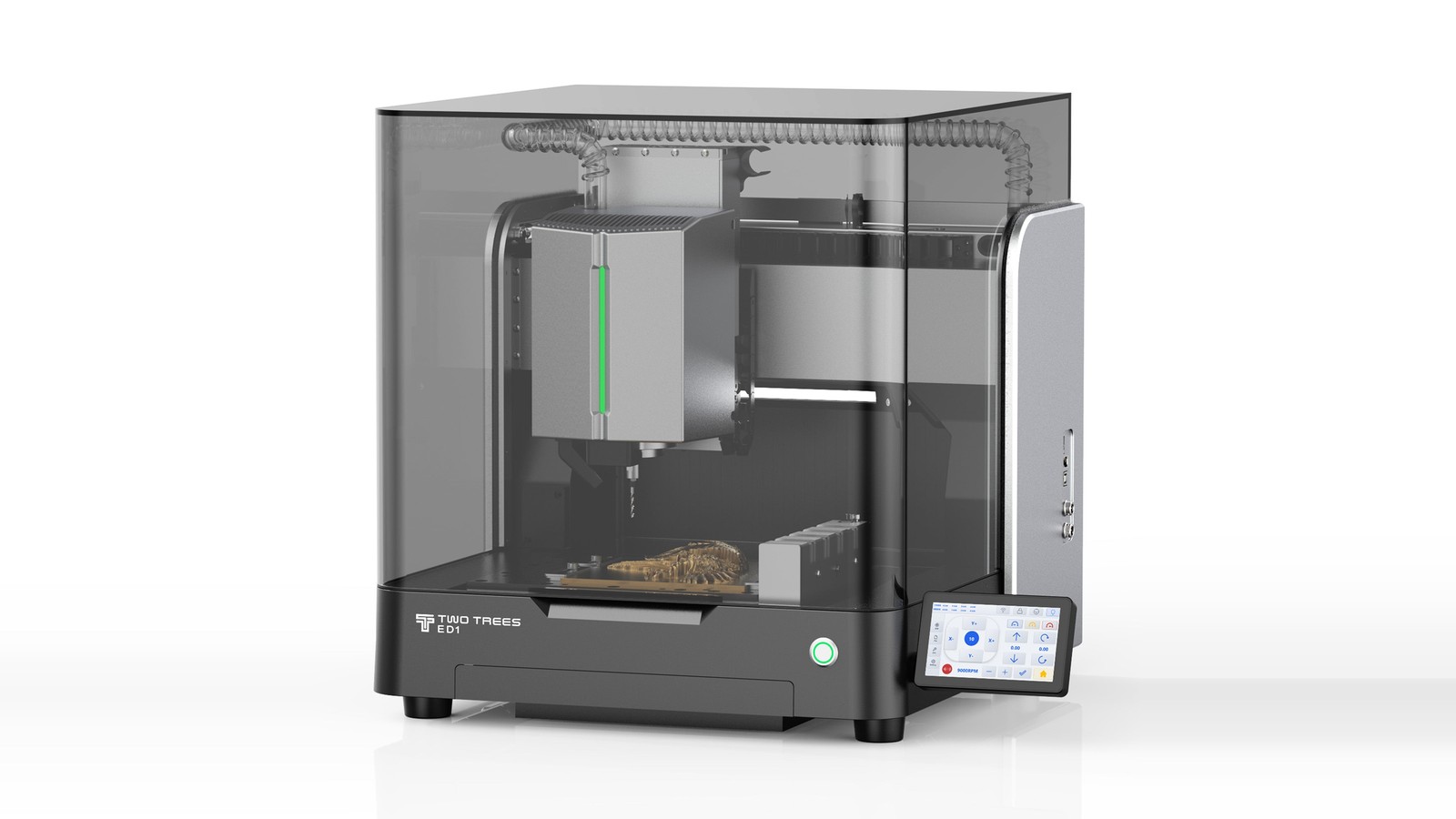
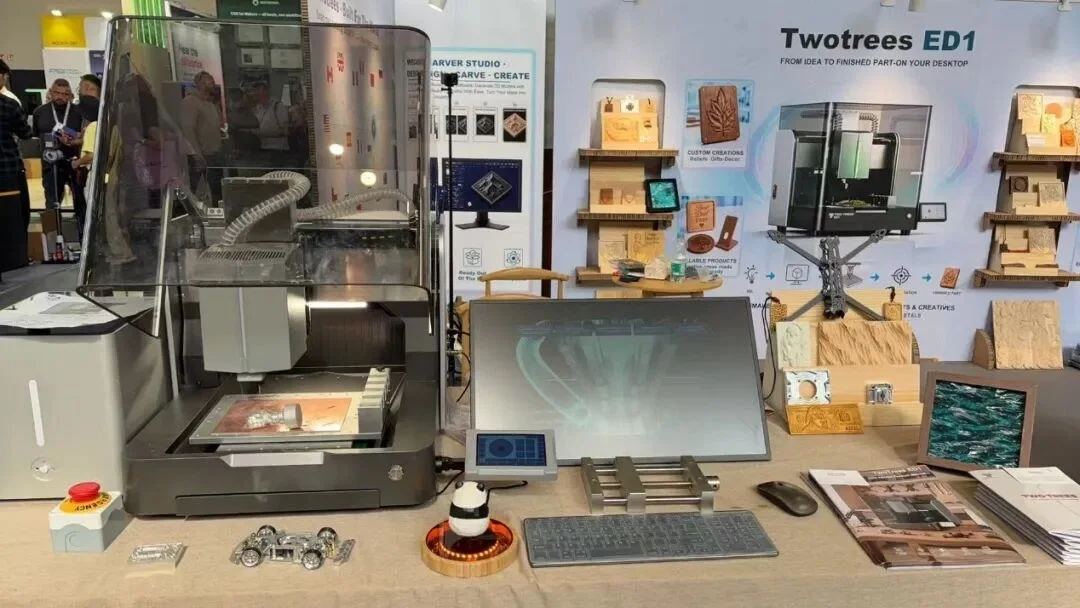
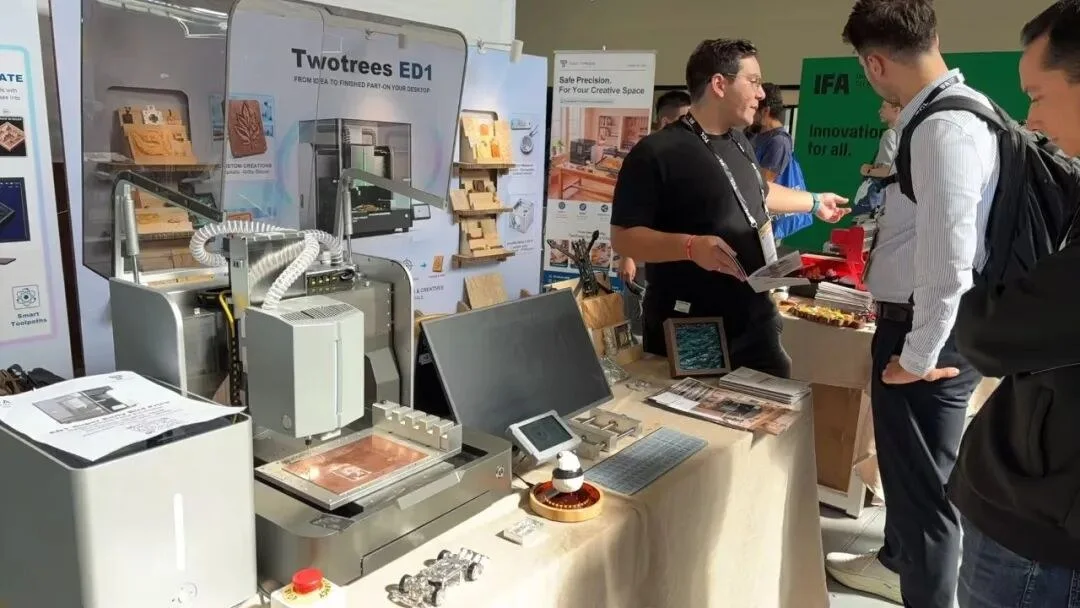
TwoTrees published its IFA recap on September 18, 2026. IFA is the Berlin consumer electronics show, and it ran in the first week of September. The ED1 desktop CNC was on the booth. The post is a show report, and the machine it's reporting on had already opened for pre-sale on September 4.
On September 18, the live tier is the early bird, from $2,299, in a window TwoTrees scheduled from September 10 through September 28. The super early bird (September 4 to 10) had been from $2,099. The next tier, late bird from September 28, is listed from $2,399. If you're reading this on September 18, $2,299 is the number on the table.
TMWB has not tested the ED1. The specifications below come from TwoTrees' pre-sale product page, and the accuracy and capability claims are TwoTrees' own.
Which price is live?
"From" means the published tier starts at that figure. The $2,399 figure is only the next scheduled step, late bird from September 28 through October 12, and it isn't today's price. November, in TwoTrees' pre-sale language, is when early orders are supposed to start moving. That's a reservation, and the ED1 isn't presented as a machine in stock.
What is the ED1?
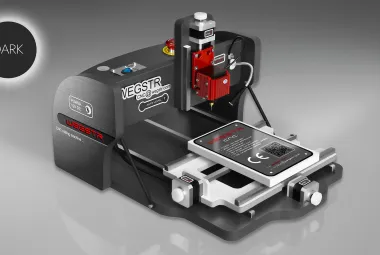
The ED1 is a small enclosed mill. TwoTrees' specification lists a work area of 300 × 200 × 120 mm, about 11.8 × 7.8 × 4.7 inches. Jewelry-scale parts, small fixture plates, and a short vise fit inside that. Cabinet doors don't. The 120 mm of Z is shared with the workholding, and a tall jaw plus a thick blank can spend most of it before the tool has any stroke left.
The spindle is a 600 W variable-frequency unit, 0 to 18,000 rpm. Variable frequency means a drive sets the rpm, instead of the dimmer-style circuit on a basic universal motor. The motion is described as XYZA: X left to right, Y front to back, Z up and down, and A for rotation, so a rotary fourth axis is part of the architecture. I'd still confirm what's in the pre-sale carton, because these pages don't price a fourth-axis kit and I won't treat the $2,299 floor as proof that a rotary is packed inside.
The frame story is die-cast plus aluminum, with ball screws and linear rails. Die-cast pieces are metal poured into a mold. A German version of the product page lists the weight at 38 kg (about 84 pounds) and the body at about 630 × 510 × 525 mm, or 557 mm deep if the screen is folded. That's roughly 24.8 × 20.1 × 20.7 inches. It's a dense little box, and it isn't a sheet router.
How does the tool changer work?
The feature TwoTrees spent the booth on is the automatic tool changer. The magazine holds five tools, and the shanks it accepts are 3 to 6 mm, which is about an eighth to a quarter of an inch. Five tools is enough to face, drill, and finish a small part in one program. It's a desktop magazine with small shanks, so don't picture a 1/2 inch roughing end mill.
TwoTrees also says the machine sets tool length automatically. On a machine this size, that probe is what keeps a tool change from becoming a crash. A long tool stored with a short tool's length drives the flute into the work, and 120 mm of Z leaves little room for that miss.
What do the accuracy and speed claims mean?
Accuracy is the sentence the recap wants remembered: ±0.01 mm, which is about 0.0004 inch. TwoTrees compares that with a human hair, which it calls about 0.08 mm, so the hair is roughly eight times thicker than the tolerance. The comparison is tidy, and it's still a manufacturer claim. ±0.01 mm over a short move in a lab is a different statement from ±0.01 mm on a 600 W spindle cutting aluminum with the enclosure shut. A guarantee would need the travel, the load, and the instrument, and the recap doesn't walk through that test.
The maximum engraving speed on the specification is 3,000 mm/min, about 118 inches per minute, and the maximum acceleration is 200 mm/s². Acceleration limits how fast an axis may gain speed, and 200 is a gentle ramp. Those are modest numbers, and they fit a machine that's selling precision more than hogging rate. The top of the 0 to 18,000 rpm range is a poor default for every cutter, too.
What materials can it cut?
The materials list is where I want a raised eyebrow kept in the room. TwoTrees names plywood, MDF, solid wood, acrylic, carbon fiber, aluminum, copper, plaster, marble, wax, plastic, and, with an explicit note, mild steel and titanium. The note says long jobs in mild steel and titanium aren't recommended, and that note is the responsible part of the claim. A 600 W spindle can scratch steel, but it shouldn't be sold as a way to make steel parts all afternoon.
Carbon fiber wants a dust plan you'll follow. Aluminum and copper are the light-metal case, and the booth was demonstrating aluminum alloy. Plaster, marble, jade, and precious metals read as engraving. Production machining is a different machine.
What did TwoTrees say about the show?
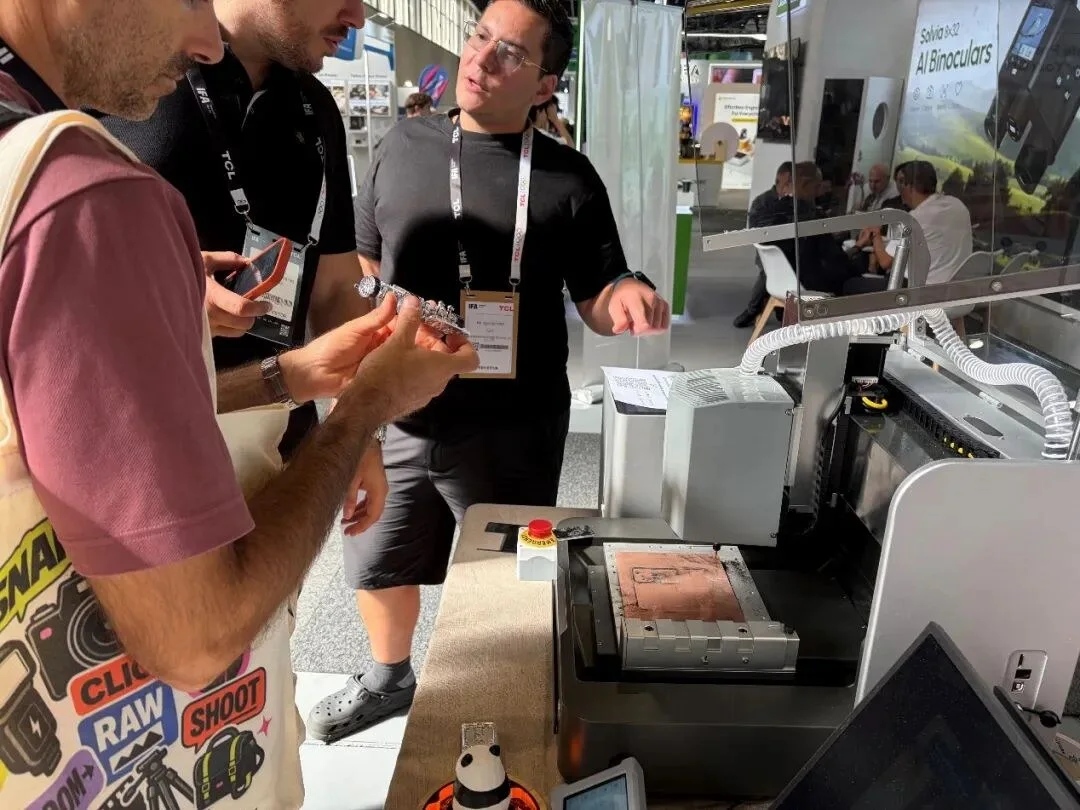
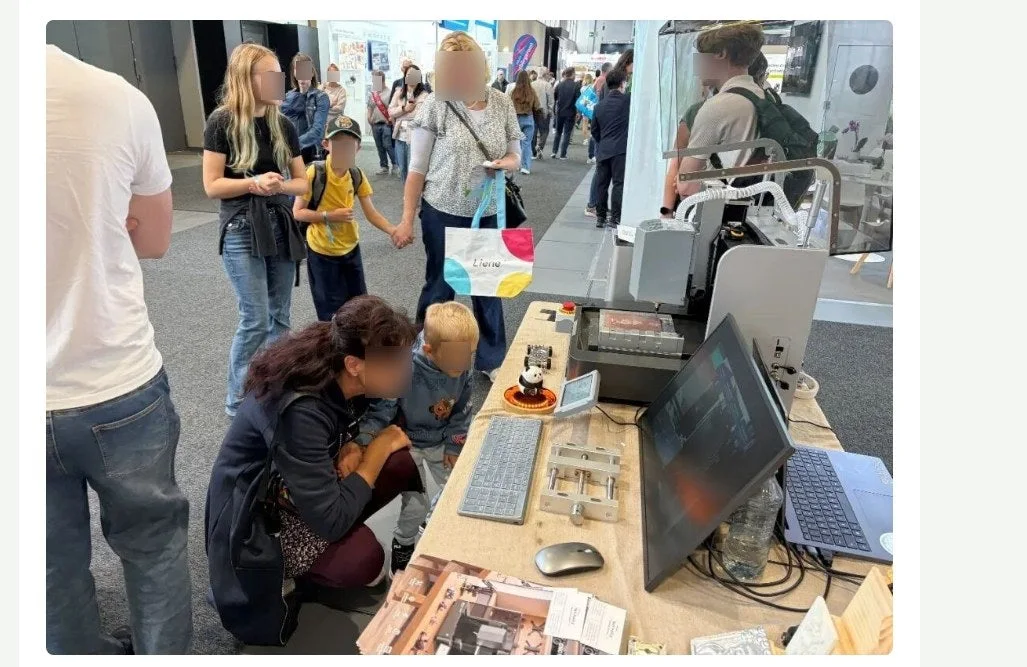
The recap says the spindle was cutting aluminum alloy inside the clear enclosure, and that visitors kept asking about accuracy and about the tool change. TwoTrees mentions interest from a Spanish maker and from distributors, but it doesn't publish their words, so I won't invent any. The company also says it has more than 600,000 users across printers, lasers, and CNC tools. This article is only about the CNC.
How does it fit the market?
In September 2026 the ED1 is trying to be the enclosed, tool-changing desktop that sits above TwoTrees' own TTC 450 Ultra and in the conversation with Makera's smaller mills. The work volume is 300 by 200 by 120 mm.
If your parts fit in that box and you want five small tools and a door that closes, the early-bird price is the one to use this week. If your parts are cabinet doors, nothing about IFA changes the travel. And if someone quotes the ±0.01 mm figure back to you as a guarantee, ask them to show the test, because TwoTrees has published the claim and not the report.
Sources and image credits
- Chinese Innovation Takes the Stage at IFA: ED1 Wraps Up a Successful European Debut (TwoTrees blog)
- ED1 product page
- ED1 European product page
- Product images: TwoTrees IFA recap post