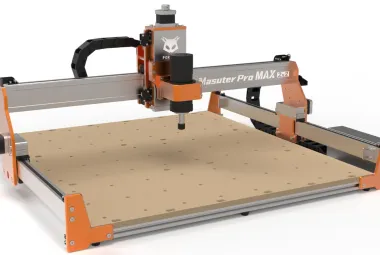
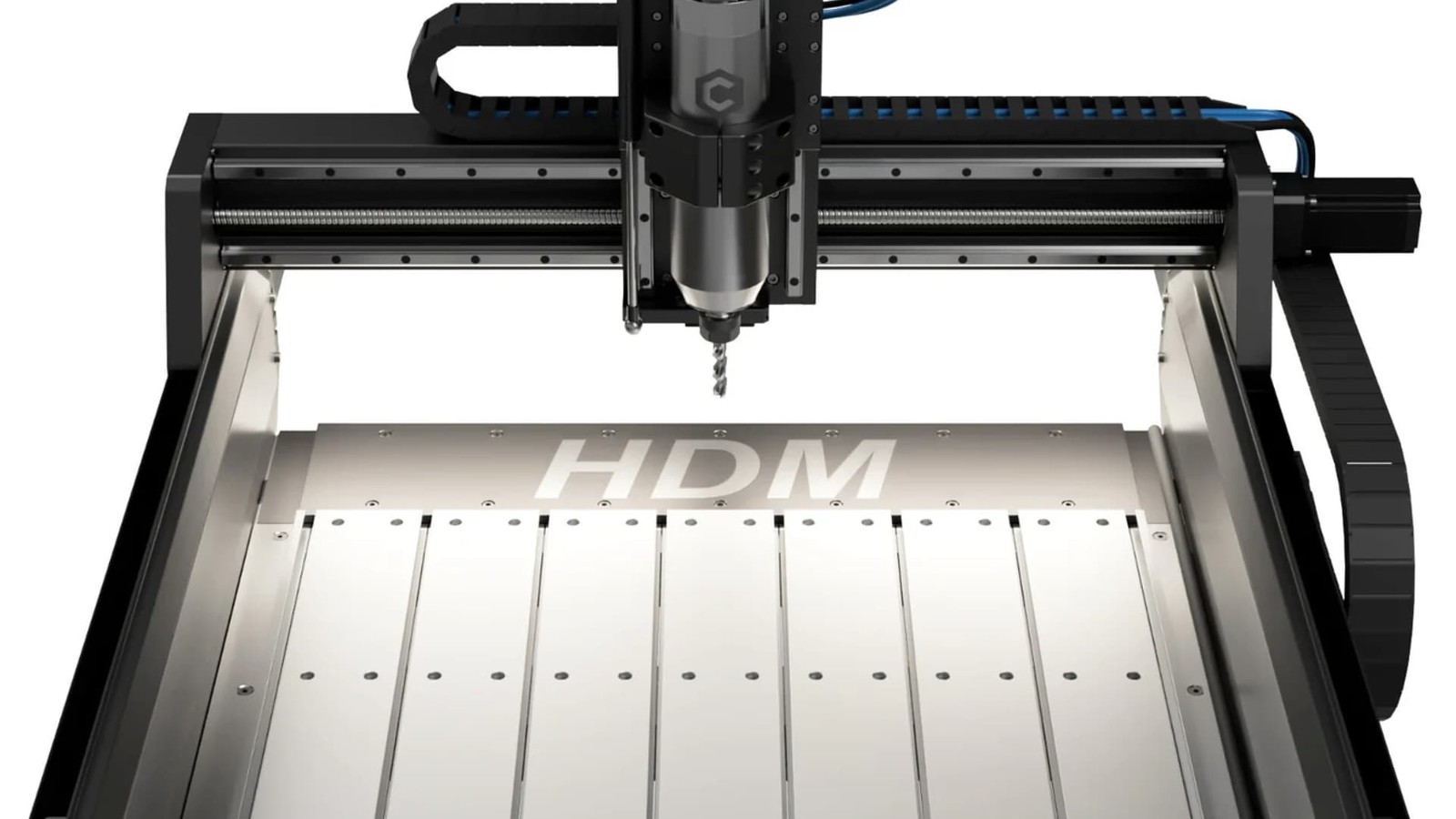
On July 30, 2025, Carbide 3D posted "Meet the new Shapeoko HDM V3" on the company forum. The HDM is Carbide's stiffer machine, built for people who have outgrown a benchtop router and want a hybrid table, real linear rails, and a spindle instead of a trim router. Version 3 keeps that job and changes the business end of the machine.
The post doesn't print a price, a travel envelope, or a weight. It says full specs are in the store and links to the HDM product page, so that's where you'll need to look. I'm not going to invent those numbers here. What the announcement does spell out is the mechanical package, and it reads like a machine meant for a small shop that cuts aluminum as a normal Tuesday.
TMWB has not tested the HDM V3. The details below come from Carbide's forum post, and the claims are Carbide's.
What changed in the motion system?
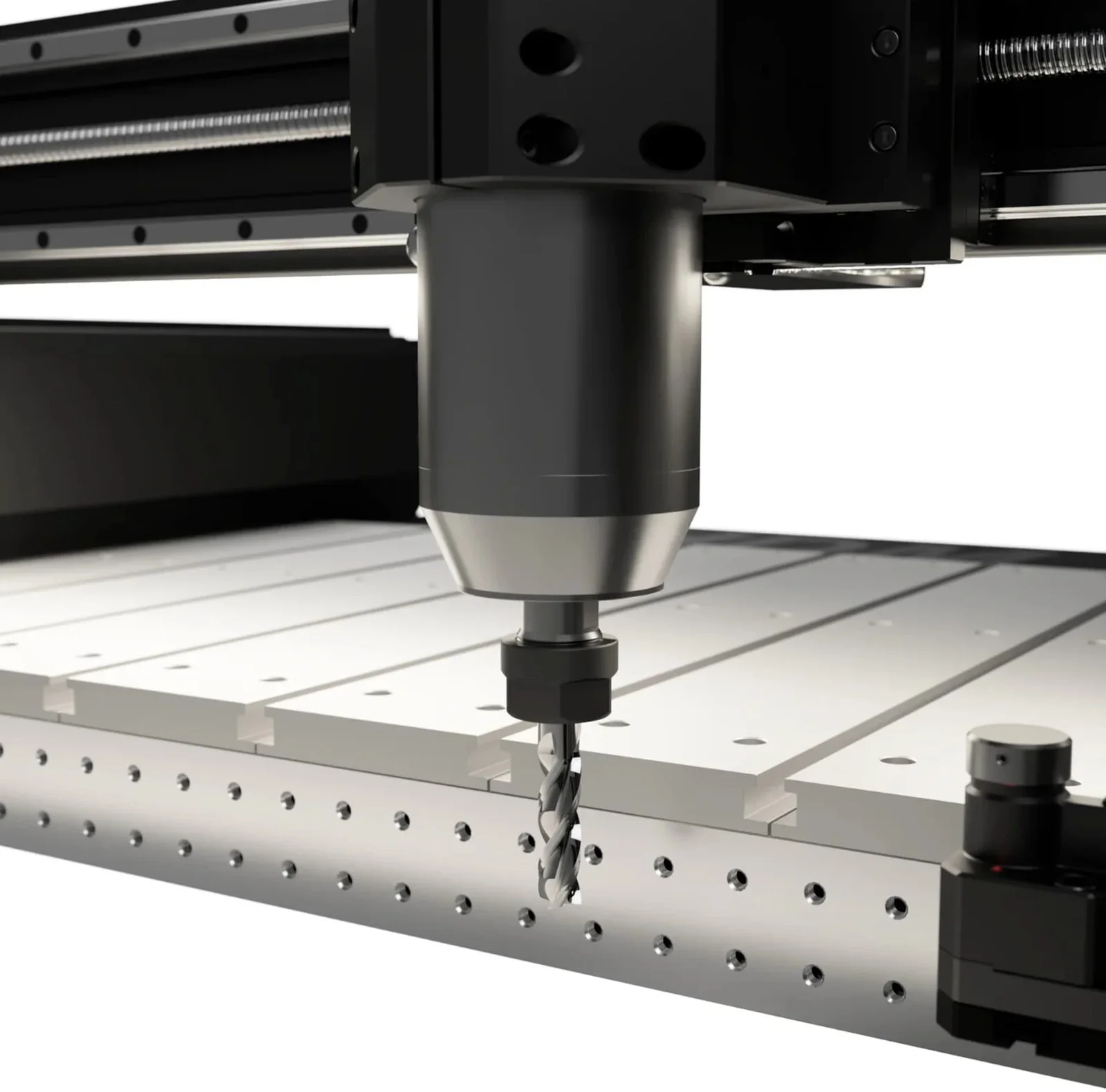
All three axes ride on HG15 linear rails. HG15 is a common size of profiled steel rail (the 15 is a width class), with bearing blocks that wrap the rail and resist twisting far better than a wheel rolling on a V-shaped track. That matters because of racking, which is one side of the gantry (the bridge that carries the spindle) leading the other. Racking is how wheel-based machines drift off the line you programmed.
Motion comes from 16 mm ball screws. A ball screw moves the axis through a nut full of recirculating balls, which gives repeatable positioning without the stretch you get from a belt. Carbide says the screws are supported by dual angular-contact bearings. Those are bearings built to take a push along the screw's length, and a pair of them keeps the screw from shuffling when the axis changes direction. X and Y also get custom ball screw wipers, which scrape chips off the screw before they reach the nut. A chip packed into a ball nut is how a precise screw turns into a noisy, inaccurate one.
The frame is described as heavy-duty and machined in-house, meaning Carbide cuts the frame parts itself. The table is the aluminum hybrid table Carbide uses to separate the HDM from the Shapeoko 5 Pro.
How do you hold a part on the HDM?
The hybrid table takes M6 threaded holes (M6 is a 6 mm metric thread) and vertical clamping. You can bolt a fixture down, or grab the part from the side so the top face stays clear. A fixture is just whatever keeps the work from moving: a vise, a clamp, or a plate.
I'm spending time on this because aluminum punishes loose workholding. If the part shifts, the next pass cuts the wrong place. A tool that rubs instead of cutting packs the flutes (the chip grooves along the bit) and then snaps. The announcement is really tying a day of aluminum work to honest clamping, an ER-20 collet, and the spindle's power. Don't expect an automatic tool changer here. The post doesn't mention one, so changing cutters means stopping the machine, swapping the bit, and checking stick-out again before you resume.
What does the new spindle bring?
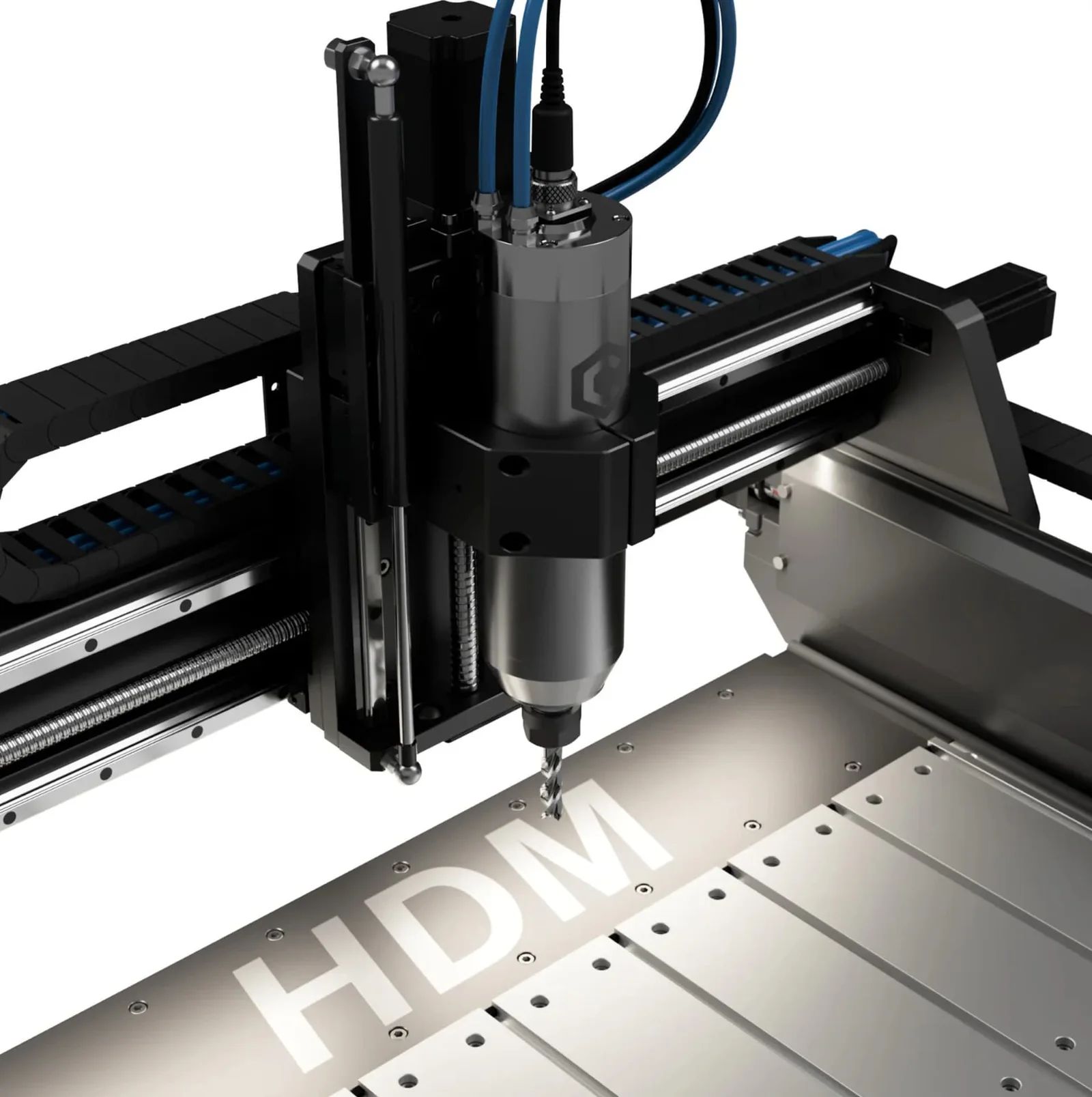
The spindle is an 80 mm, 4-pole, water-cooled unit that runs from 8,000 to 24,000 rpm. Power is listed as 1.5 kW on 110 V or 2.2 kW on 220 V, and a kilowatt is 1,000 watts. The collet system is ER-20, a series of slotted sleeves that grips shanks up to 1/2 inch.
Spindle speed is set from G-code, so the program calls the rpm and you don't twist a dial and hope you remember. Cooling comes from a CW-3000 chiller, a small recirculating unit that sits beside the machine and pumps water through the spindle's jacket. Many air-cooled spindles need to run fast just so their own fan keeps the motor alive. Water cooling is quieter and handles lower rpm better, which helps when you're taking light cuts in aluminum with a small tool. The controller is Carbide's Warthog board, though the post gives no feature list for it.
What about shipping?
A same-day note from Carbide's Will Adams covers the unglamorous part. The HDM ships on a pallet, which means a freight truck and a lift. Overseas shipping, including the UK, wasn't set up at a price Carbide considered reasonable. He contrasted that with the Shapeoko 5 Pro, which ships in two boxes. If you're outside the U.S., this announcement describes a machine you can read about and not yet one you can land at a sane freight rate.
How does the HDM fit with the rest of Carbide's line?
In late July 2025 the split is clear. The Shapeoko 5 Pro is the woodworking and sign-making router, and it's still the machine most hobby shops should buy if they mostly cut sheet goods. The HDM is the heavier frame with the hybrid table and now a spindle the program can control and a chiller to cool it like a small machine-tool spindle.
It isn't a Tormach mill. There's no enclosure in this announcement, no tool changer, and no claim that it will cut steel. An ER-20 collet and a 2.2 kW spindle will run an aluminum job all afternoon if the workholding is solid. They will also punish a loose fixture.
Who is it for, and what's missing?
Anyone running a Shapeoko who is fighting deflection (the gantry bending so the cutter drifts off the programmed line) in aluminum is the audience. Anyone who wants a quiet machine in an apartment, or a first CNC that cuts coasters, is looking at the wrong Carbide.
What I still can't tell you from the post is the travel, the weight, and the price on July 30. I also don't know when a pallet will leave the building, or when a UK buyer will see a freight quote that makes sense. The mechanical description is specific enough to take seriously, though: HG15 rails, 16 mm screws, wipers, a hybrid table, and a water-cooled spindle with two power ratings depending on the wall plug.
Sources and image credits
- Meet the new Shapeoko HDM V3 (Carbide 3D community forum)
- Shapeoko HDM product page
- Product images: Carbide 3D announcement post