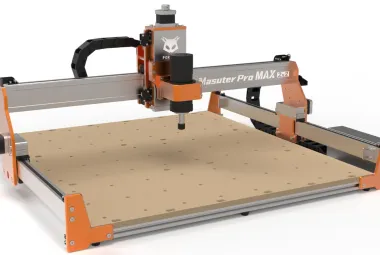
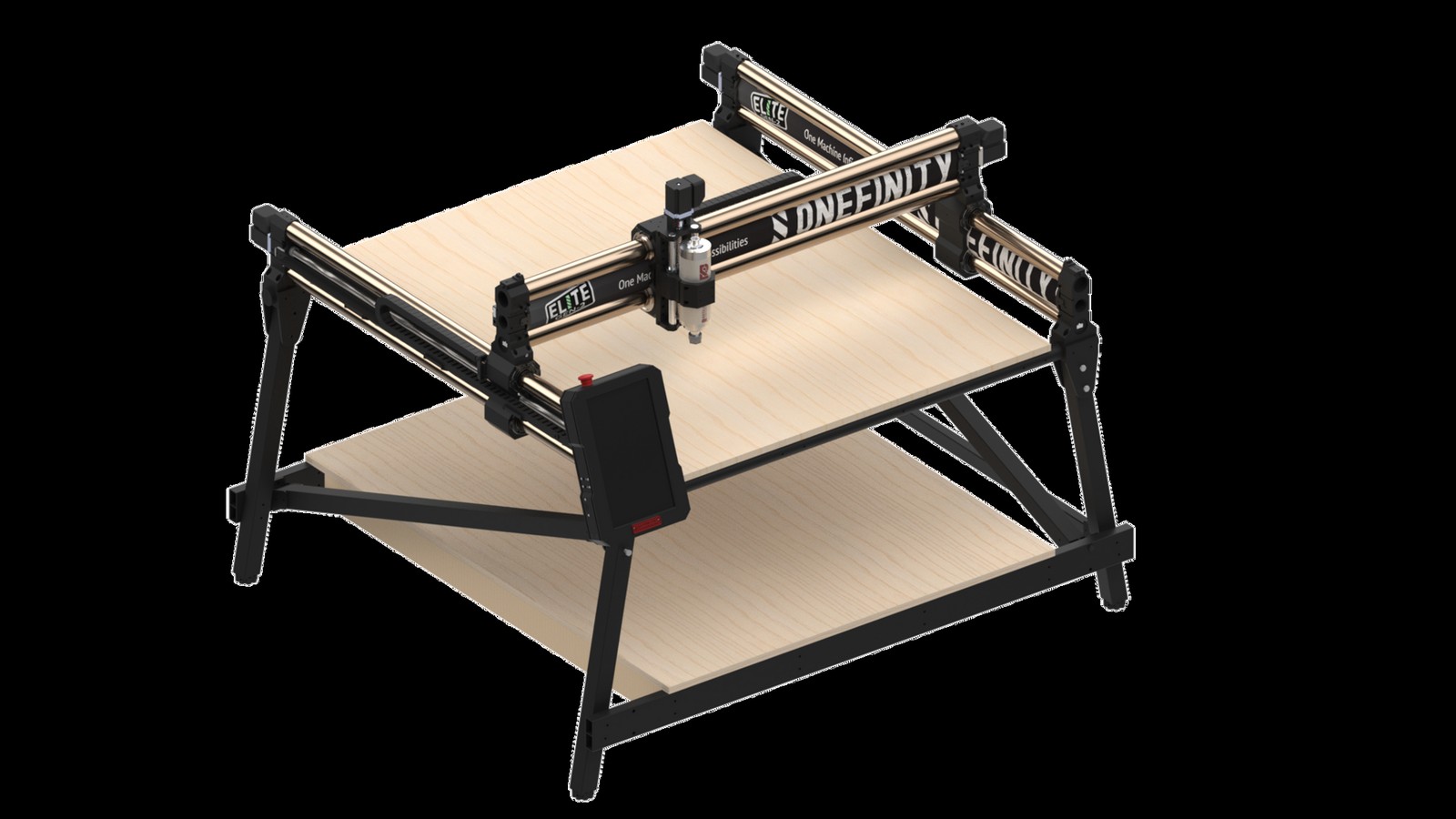
Onefinity published "Introducing The All New Gen 2 Elite Series" on November 21, 2025. The Foreman, the 49 × 49 inch machine, starts at $2,375 for a limited time, and orders open Tuesday, November 25, at 11 a.m. Eastern.
The limited offer includes the Gen 2 Elite in the size you pick, an Easy-Z tool setter, a Suckit SM dust boot in 65 mm or 80 mm, and an XYZ touch probe. TMWB has not tested the Gen 2, so what follows comes from Onefinity's post and same-day video.
What changed in the motion system?
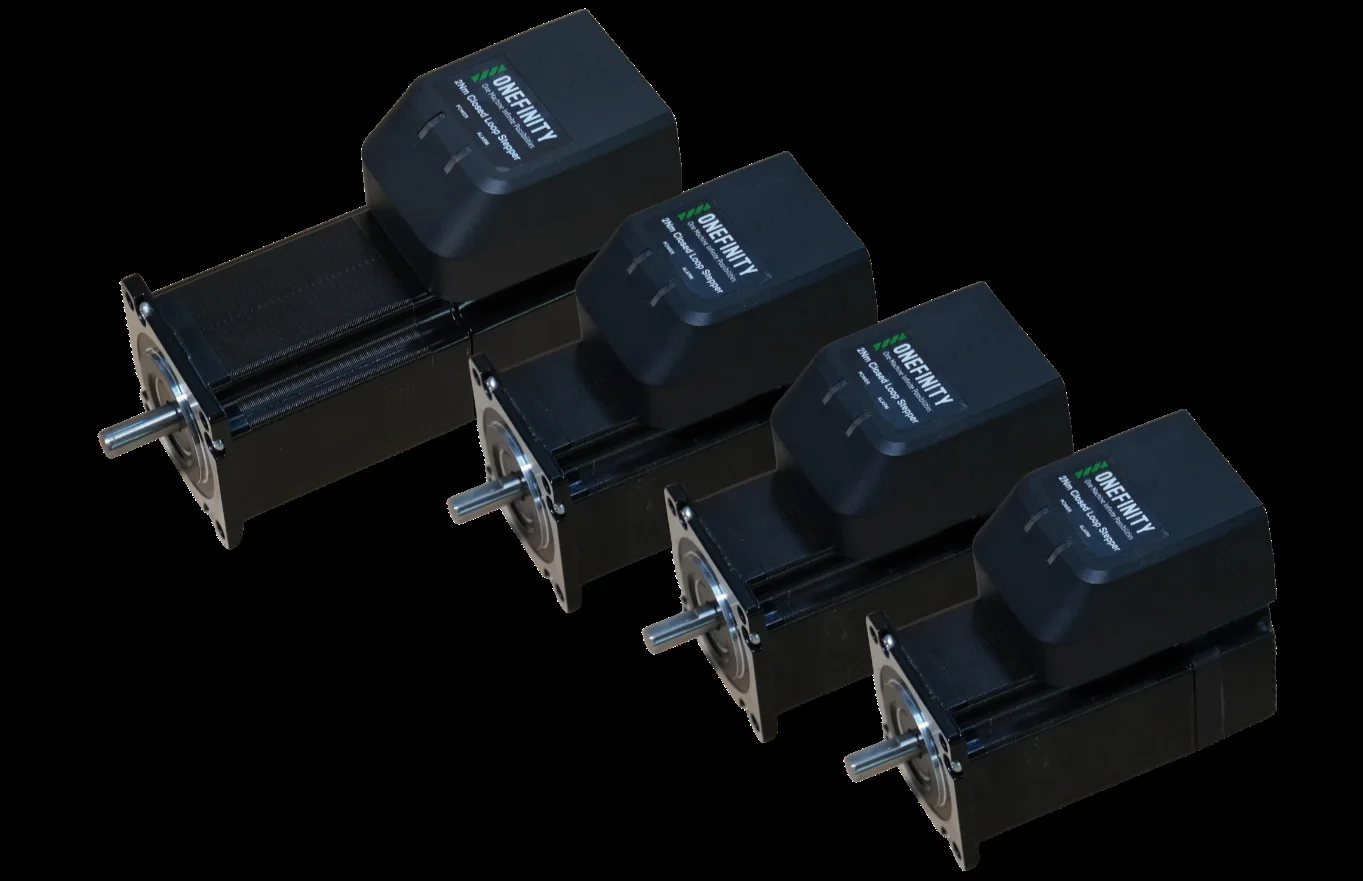
Onefinity says the Gen 2 Elite was engineered for speed and accuracy. The motion package is a 2 N·m "anti-skip" closed-loop stepper on the axes, 16 mm ball screws, and a 600 W power supply.
A stepper motor turns in discrete steps. Closed loop means a sensor checks that each step happened, so a stall can be caught instead of becoming a mystery gouge. An open-loop motor only records the steps it was told to take, so if the shaft jams, every move after that point is offset. The 2 N·m figure is torque (newton-meters, a measure of twisting force). A ball screw moves the gantry on recirculating balls, and 16 mm is a stout diameter for a hobby machine. It's Onefinity's main argument against belt-drive routers, where a toothed belt can stretch as the cutter load climbs.
The 600 W figure covers motors and control. The Redline spindle is optional, and a spindle wattage isn't part of the $2,375.
What does the structure look like?
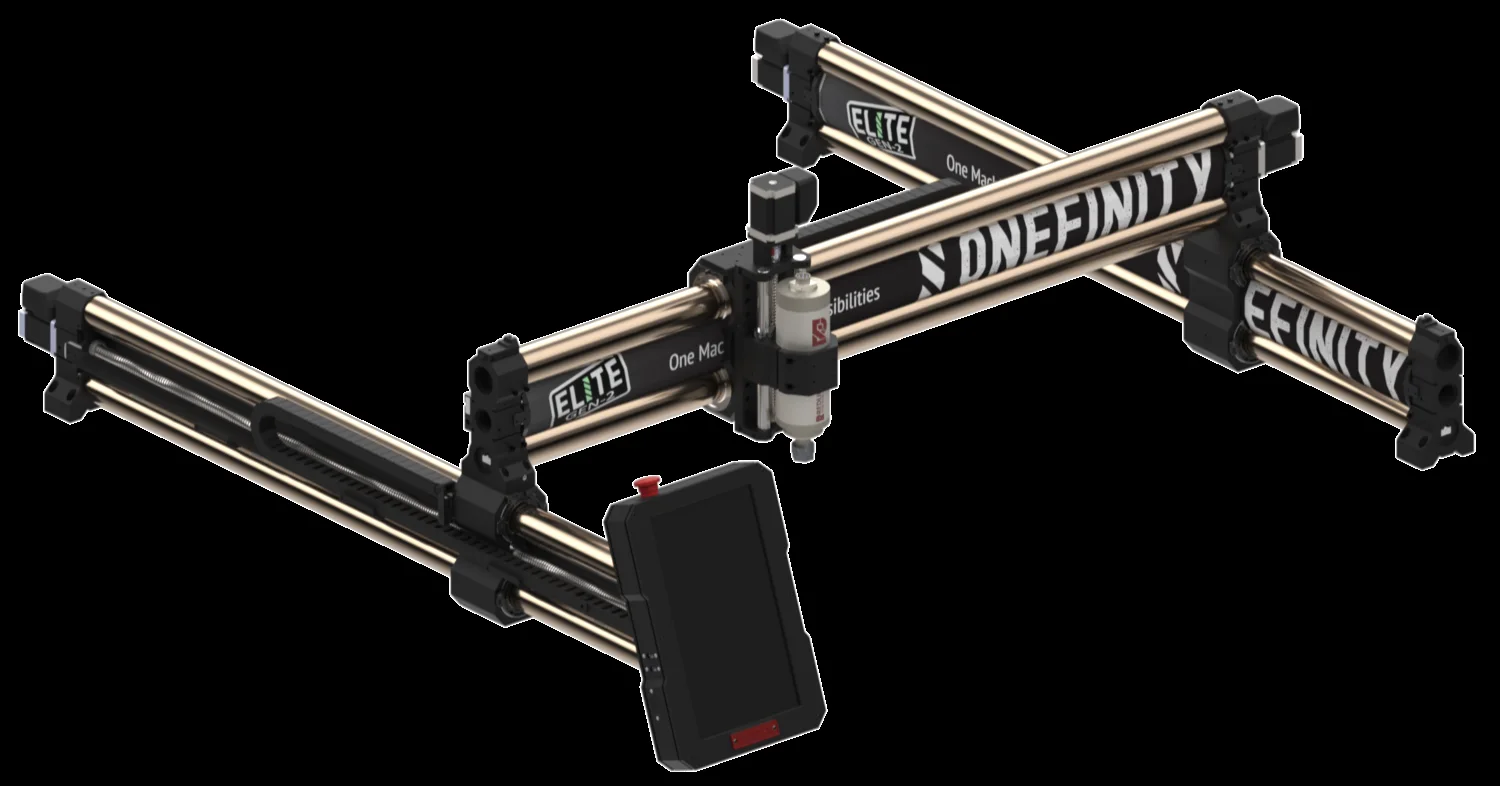
The Foreman's cutting area is listed as 49 inches on X and 49 3/8 inches on Y. That's cutting reach, meaning the area the tool can touch. The frame takes more floor than that, and the footprint isn't published. The X shafts are described as 60 mm hardened steel, which means the metal is treated to resist wear where the bearings ride.
Onefinity says the Gen 2 is twice as stiff as earlier Elites and "one of the most ridged machines in its class." The spelling is theirs, and so is the stiffness multiple. Stiffness is how little the structure yields when the cutter pushes, so a "twice as stiff" machine would bend half as far under the same load. I'll wait for a side-by-side indicator test before repeating "twice" as a measurement.
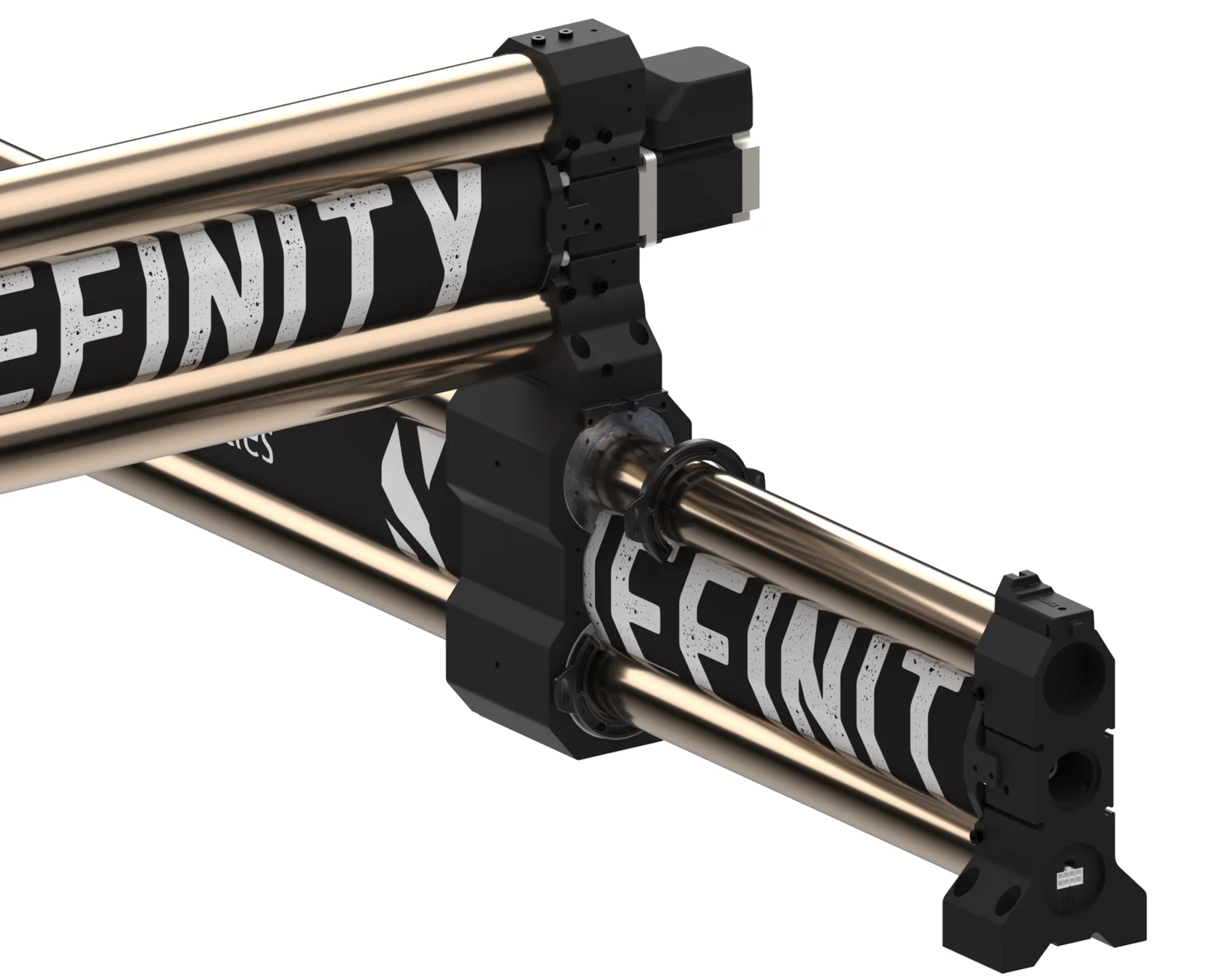
The structure Onefinity describes does at least tell a coherent story about where the stiffness comes from: aerospace-grade aluminum blocks, sealed bearings, and a Z axis made of 5/8 inch aluminum plate with 20 mm shafts.
What's different about maintenance?
The post spends real time on maintenance, which is unusual and welcome. The Gen 2 has what Onefinity calls gap-free ball screw covers, patent pending, that snap on so dust doesn't pack the screw. Round linear shafts, Onefinity says, let dust roll off, and the bearings are sealed. An "Easy Oil" path leads into the bearing raceway, the groove the bearing balls roll in.
The Z axis is a Z-20 heavy slider with a braking motor. A brake on Z sounds like a footnote until you've watched a heavy spindle coast down into a finished tabletop once the power is off.
What is the Redline controller?
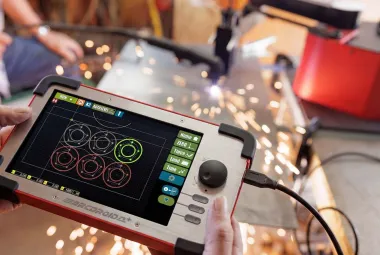
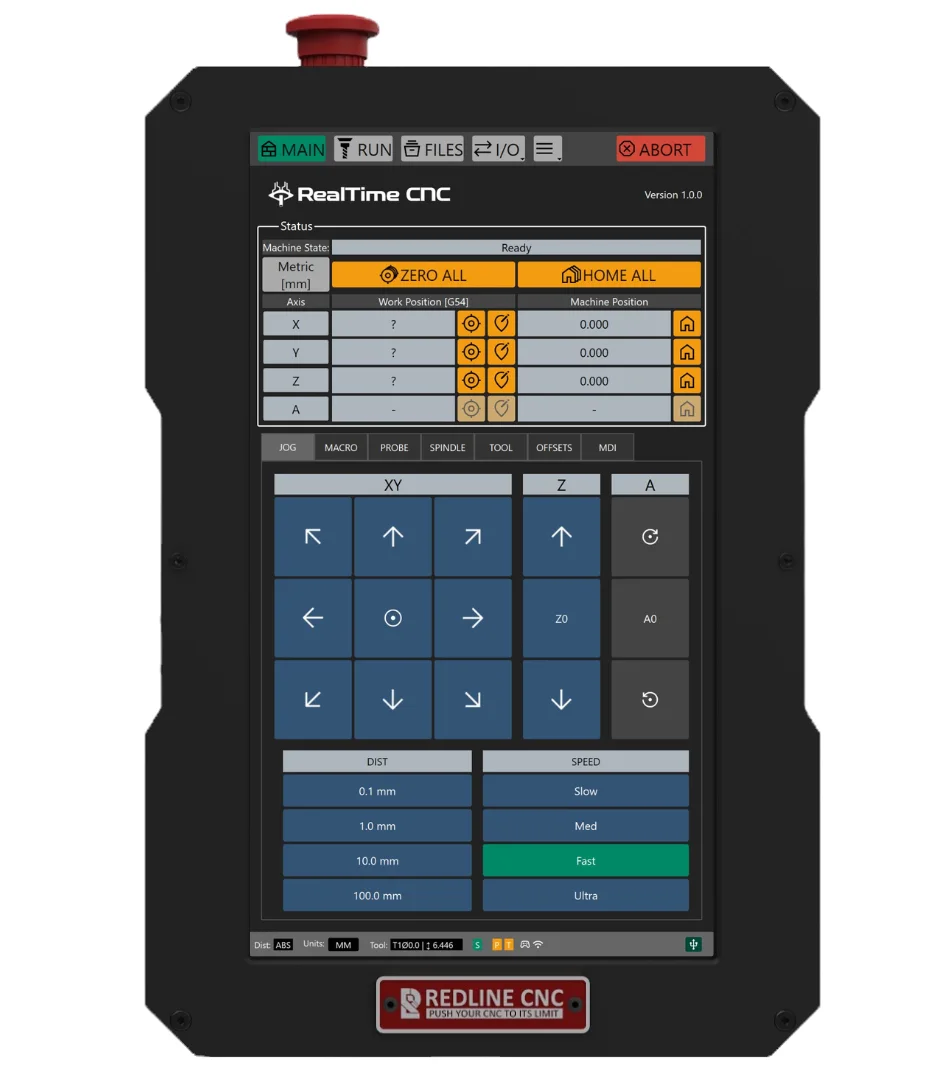
The controller is the Redline, with a 15-inch capacitive touchscreen (a glass panel that senses a finger like a phone does) in the all-in-one version. Onefinity's video explains the $2,375 price. You can order the motion controller alone and run the same interface from a laptop, and that's how the Foreman starts at $2,375. The 15-inch screen is the option that spends the money.
Redline is a standalone controller. Files live on the machine, there's power-loss recovery (the ability to resume a file after an outage), and you can jump to a chosen line of G-code in a long carve, which can skip wood the tool has already cleared. G-code is the text program of moves. The post says it has ports for an Easy ATC (an automatic tool changer), a tool setter, a probe, a laser, and a fourth axis, plus gamepad and rotary support.
The Easy-Z tool setter in the offer measures stick-out, how far the cutter projects, so a tool change starts from a fresh length. The Suckit boot is a dust shroud, and you choose 65 mm or 80 mm to fit the spindle body you'll mount. The XYZ probe finds an edge or the top face so that origin can be set on all three axes.
What does the warranty cover?
The warranty is five years on mechanical components, which Onefinity calls best in class. The wording covers mechanical parts, and it doesn't state a term for the controller. Each machine, the company says, is inspected and test-carved before it ships. Gen 1 upgrade kits are "coming soon." A 4×8 isn't part of this launch.
How does it compare with other machines?
Onefinity is built in Canada and has spent five years selling the idea that linear motion and ball screws could be a maker price. In November 2025 that argument is no longer lonely. Sienci's AltMill, Carbide's HDM, and FoxAlien's XE-Ultra all show up in a ball screw conversation.
The Gen 2's specific offer is the cover system, the brake on Z, the five-year mechanical warranty, and a 4×4 Foreman whose limited-time starting price is $2,375 before the spindle. That starting price isn't a turnkey cutting system.
What's still unknown?
Nobody has published how the Gen 2 cuts compared with a Gen 1 Elite on the same file, or what the spindle and touchscreen do to the invoice once the limited-time machine price expires. The post was updated on December 4, and a later block on the same page shows a package figure of $2,357. I'm using the November 21 number, $2,375, which is also what Onefinity said in its video that day.
If you want a 4×4 with screws, covers, and a long mechanical warranty, November 25 at 11 a.m. Eastern is the moment Onefinity set. If you need an 8-foot sheet, this launch doesn't have your machine.
Sources and image credits
- Introducing The All New Gen 2 Elite Series (Onefinity)
- Gen 2 Elite product page
- Onefinity launch video
- Product images: Onefinity announcement post