Makera's press release went out on October 27, 2025, at 8:47 a.m. Eastern, under the headline "Makera Z1: Bringing Professional-Grade Manufacturing Back to Every Desk." The Kickstarter opens the next day, October 28, at 11 a.m. Eastern, which is 8 a.m. Pacific or 4 p.m. in Central Europe. This is a launch announcement. It isn't a ship date.
TMWB has not tested the Z1. The details below come from Makera's release, and the specifications are Makera's claims.
What does the Z1 cost?
The prices in the release are specific, but they're easy to mix up.
- $799 is the VIP price, and it requires a $39 refundable deposit before the campaign opens.
- About $899 is an entry price the release also quotes for the U.S., with roughly £700 to £900 quoted for the UK.
- $1,199 is the MSRP (manufacturer's suggested retail price), the list figure left once the early tiers close.
First-day backers also get a free set of five bits. If you've watched desktop CNC campaigns before, you already know the MSRP and the first-day price are different numbers on purpose, so notice which one you actually click. Remember too that a Kickstarter pledge is a payment for a reward tier, taken before the hardware exists.

What is the Z1?
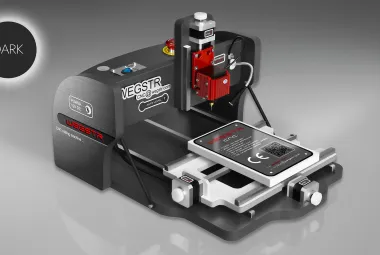
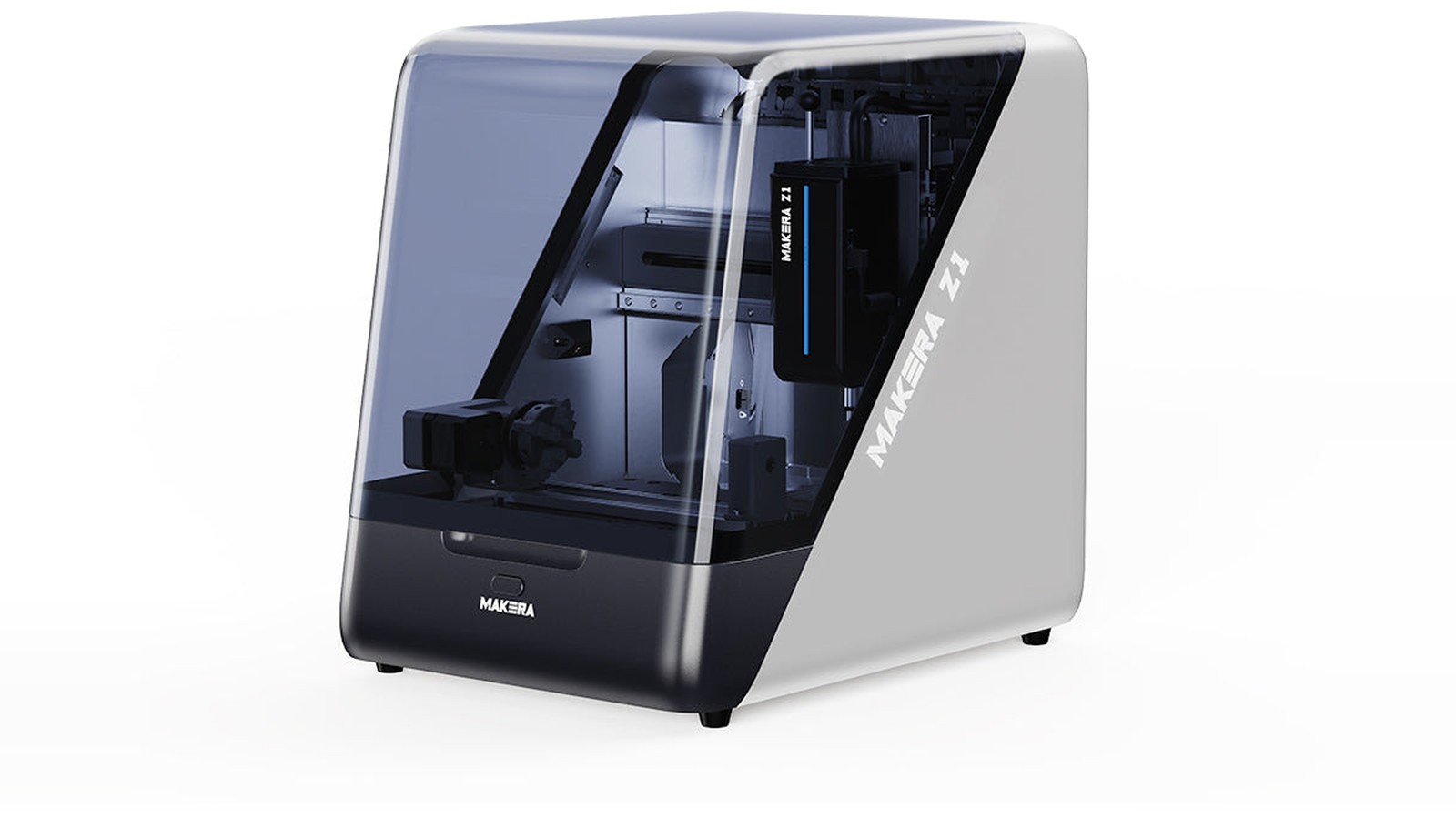
Makera describes the Z1 as barely larger than a coffee machine. The company says it's a 4-axis machine with 0.02 mm accuracy, smart auto-leveling, and one-click tool calibration. The frame is described as one-piece die-cast. Die-cast means the structure is cast as a single metal shell, not assembled from extrusions and brackets, which is how a small machine tries to buy rigidity without growing a big gantry.
A press release saying 0.02 mm doesn't make it true on a Tuesday afternoon with a dull bit. Accuracy here means closeness to the programmed position, and 0.02 mm is two hundredths of a millimeter. No measured sample accompanies the claim.
Auto-leveling in this class usually means the machine probes the top of the work and builds a height map, a grid of measured Z values, so a warped board doesn't produce a tapered cut. One-click calibration finds the length of the cutter so that a tool change doesn't bury the bit in the fixture.
A fourth axis is a rotary that turns the work while the other three axes move. On a machine this small I'd expect jewelry, handles, stamps, and the odd custom knob, and not furniture legs.
Makera also names AeroDust, its dust handling, but gives no hose diameter, filter type, or vacuum rating. On a desk, chips and fine dust share the room with the operator, so that omission matters in a machine pitched at classrooms and studios.
What about the software?
Studio is the plug-and-play half of the pitch. CAD (computer-aided design) produces the drawing, and CAM (computer-aided manufacturing) produces the toolpath from it. Makera's Studio includes what the company calls an Intelligent Machining Wizard, a guided route between those two steps. It also lists an AI image-to-3D path, where a picture becomes the model, and Makerables, a library of projects you can open.
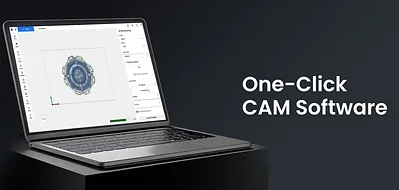
I'll treat the wizard and the AI feature as claims until a Z1 is on a classroom bench.

Who is it for?
Qiuxi Zhang, Makera's CEO, says the goal is "to strip away the fear factor." The release continues, in Zhang's words: "By combining industrial accuracy with a plug-and-play experience, we're opening manufacturing to classrooms, studios and homes worldwide."
Plug-and-play is the whole pitch. Makera already sells the Carvera, a more expensive enclosed desktop mill that makers compare with a small Tormach. The Z1 is the cheaper, smaller sibling, for people who won't assemble a 3018 kit (the very small, inexpensive hobby routers) and don't want to spend four figures on day one.
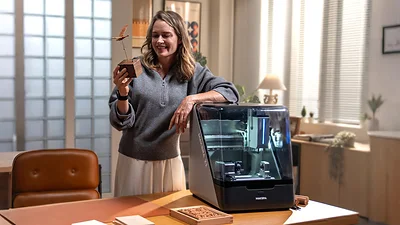
Nameplates, circuit boards, and wax are the jobs this announcement can support. Wax is a soft block for practice cuts and simple molds. The release doesn't describe a rack of end mills or a tool changer.
How does it compare with other machines?
In October 2025, the Z1 is trying to sit under the Carvera and under machines like the TwoTrees TTC450 Ultra, and well under an enclosed education router such as Tormach's xsTECH Pro, introduced just weeks earlier. It's closer in spirit to a polished 3018 that somebody else assembled and enclosed in software. The die-cast frame and the calibration story are Makera's argument for a finished machine.
What's still unknown?
The release doesn't publish a work envelope, a spindle wattage, or a weight. "Coffee machine" is a size joke, not a dimension. It also doesn't say when a backer receives a machine. Crowdfunding campaigns slip, so anyone pledging on October 28 is buying a promise and a set of bits. The most useful next document is the Kickstarter page itself.
One note on dates: an October 14 wire item said the campaign was already live, but Makera's own October 27 release puts the opening at October 28, and that's the date I'm following.
If you teach a class, or you want a small 4-axis mill for nameplates, circuit boards, and wax, the VIP price is the number to look at before 11 a.m. on October 28. If you need a meter of travel or a tool changer with a rack of real end mills, nothing in this release describes that machine. The accuracy, the ship date, and the actual millimeters of travel are all still ahead of us.
Sources and image credits
- Makera Z1 press release (PR Newswire)
- Makera Z1 product page
- Makera Z1 on Kickstarter
- Product images: Makera press release media