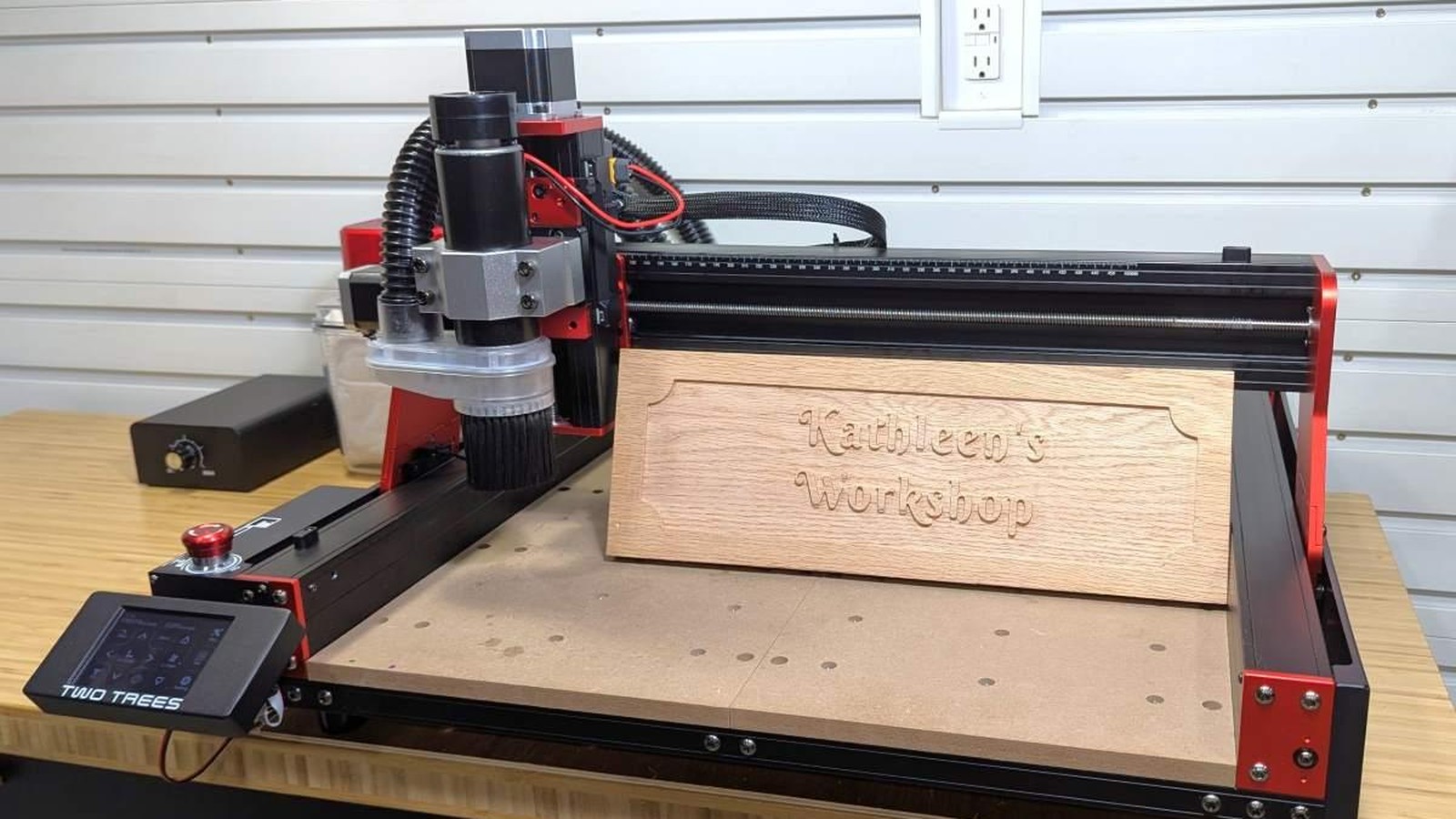
On December 1, 2025, TwoTrees published a buying guide that does something companies rarely do in public. It marks the original TTC 450 as deprecated, lists a clearance price of $349 while stock lasts, and says the company won't restock it. The machines that remain are the TTC 450 Pro at $439, the TTC 450 Ultra at $699, and, as the step up, the TTC 6050 at $1,499. TwoTrees says those prices are references, and that the product pages carry the live promotions.
TMWB has not tested any of these machines. Prices, specifications, and accuracy figures below are TwoTrees' own, so read them as company claims.
What's the original TTC 450 like?
The original TTC 450 is a 460 × 460 × 80 mm desktop router. TwoTrees lists an 8,000 rpm spindle on a 120 W, 24 V power supply, a top speed of 800 mm/min (about 31 inches per minute), and a metal frame built from aluminum profile. Running accuracy is given as ±0.1 mm, and repositioning accuracy as ±0.0025 mm. I'd treat those as separate tests: the first is how closely it cuts while moving, and the second is how well it returns to a spot.
The leadscrew is a T8. A leadscrew is a plain screw that pushes a sliding nut, and it has some play (the slack before the axis responds). A ball screw, which rolls on steel balls, is the usual cure for that slack. The machine also has limit switches on X, Y, and Z (sensors that mark the end of travel) and an emergency stop.
TwoTrees says it's for learning G-code and for light plywood, MDF, and plastic. The company also says it's the wrong machine if you plan to mill aluminum or stainless as a habit. At $349, while the last ones sit in a warehouse, it's a starter, and it's one with an end date. The 80 mm of Z is also short. The bit has to stick out of the collet (the sleeve that grips the shank), and a spoilboard (the sacrificial sheet under the work) spends more. What's left is a small window that suits learning.
What does the TTC 450 Pro offer?
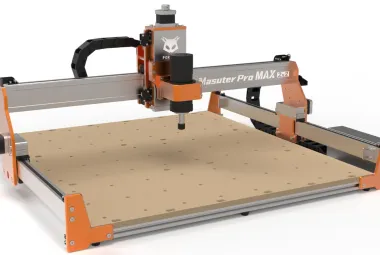
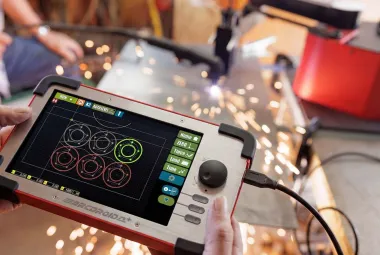
The Pro is the one TwoTrees tells most people to buy. The working area is 600 × 500 × 100 mm. The spindle is 500 W at 12,000 rpm, and the maximum milling speed is listed at 5,000 mm/min. The frame is heavy aluminum with a net weight of 35.9 kg (about 79 pounds). It has a 3.5 inch resistive touchscreen, 480 × 320, and GRBL firmware that can also run a laser module. GRBL is the open-source motion firmware most of these desktops use. A resistive screen responds to pressure, so it works with a fingernail or a gloved finger.
The collet is ER11, which grips shanks from 0.5 to 7 mm, so a 6 mm end mill fits and a half-inch shank doesn't. TwoTrees lists plywood, MDF, solid wood, acrylic, carbon fiber, aluminum, copper, and stainless steel as compatible. It also gives a cutting depth hint: 0.1 to 20 mm in non-metals, and only 0.1 to 0.2 mm in metals. That second number is the honest one. Stainless on a 500 W desktop spindle is a scratch-and-spring-pass material, and it's no use for roughing.
What does the TTC 450 Ultra change?
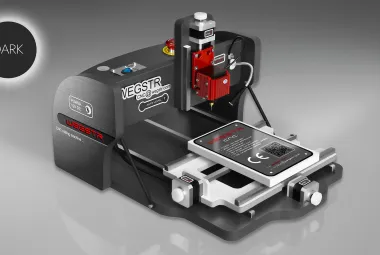
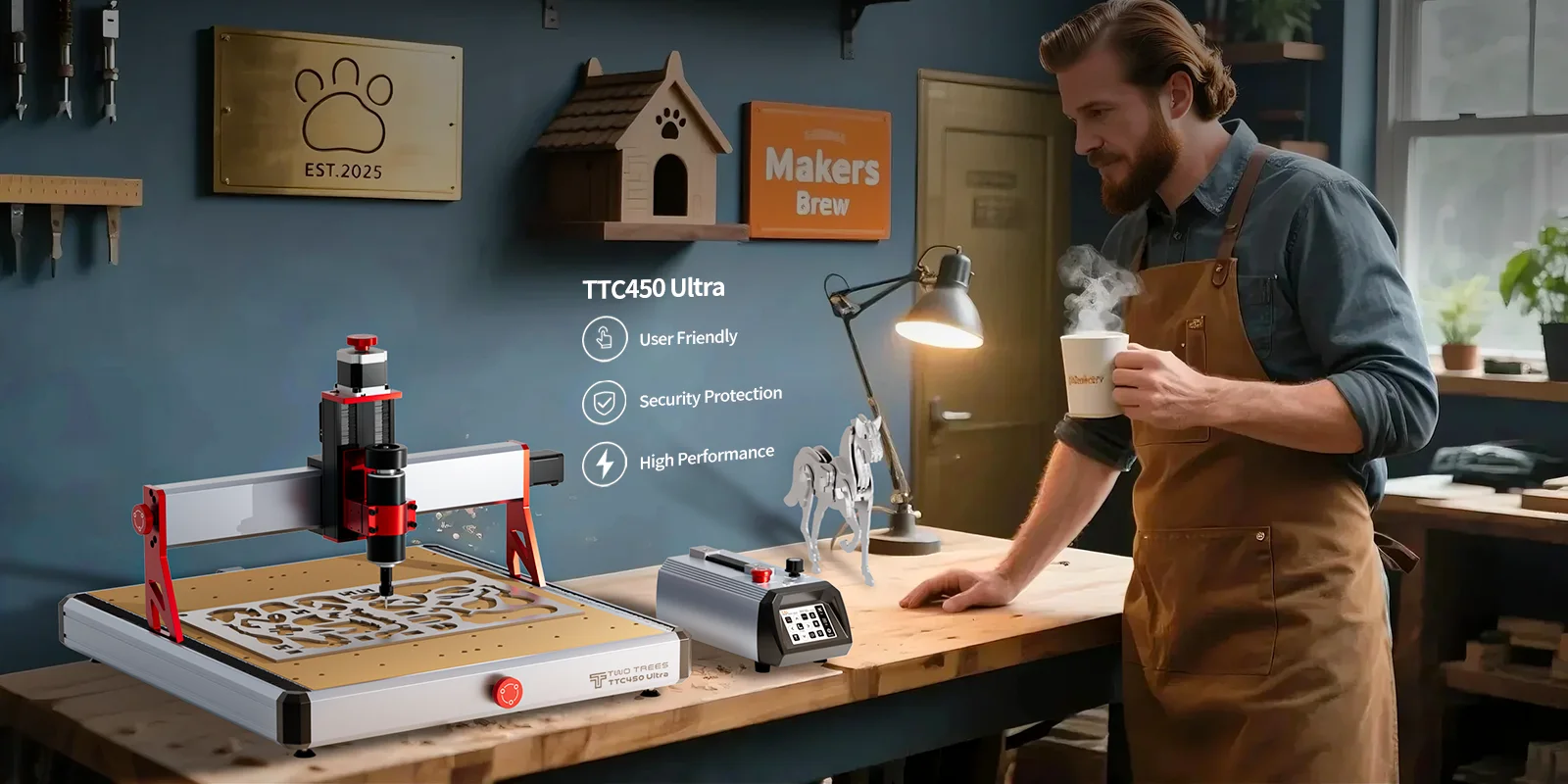
The Ultra keeps the original 460 × 460 footprint and adds 20 mm of Z, for 100 mm of height. TwoTrees lists aluminum, stainless, and injection-molded parts in the structure, a weight of 19 kg, and a 500 W spindle that runs from 8,000 to 30,000 rpm depending on setup. It lists a top engraving speed of 3,000 mm/min.
Positioning accuracy is stated as 0.01 mm in X and Y and 0.0025 mm in Z, with engraving accuracy of ±0.05 mm over 100 mm. Those are company figures. The screen is a 3.5 inch capacitive panel (the kind that works like a phone screen), and the power supply is described as a 216 W dual-channel unit with 80 W maximum consumption. Certifications listed are CE and FCC. The software list is long: VCarve, Fusion 360, Easel, Carveco Maker, and plain .nc or .gcode files.
The split is straightforward, and TwoTrees says so directly. The Ultra is the precision pitch, and the Pro is the larger bed. The Ultra costs more and cuts a smaller rectangle. A higher spindle speed range lets a small bit spin fast, which suits fine work.
What about the TTC 6050?
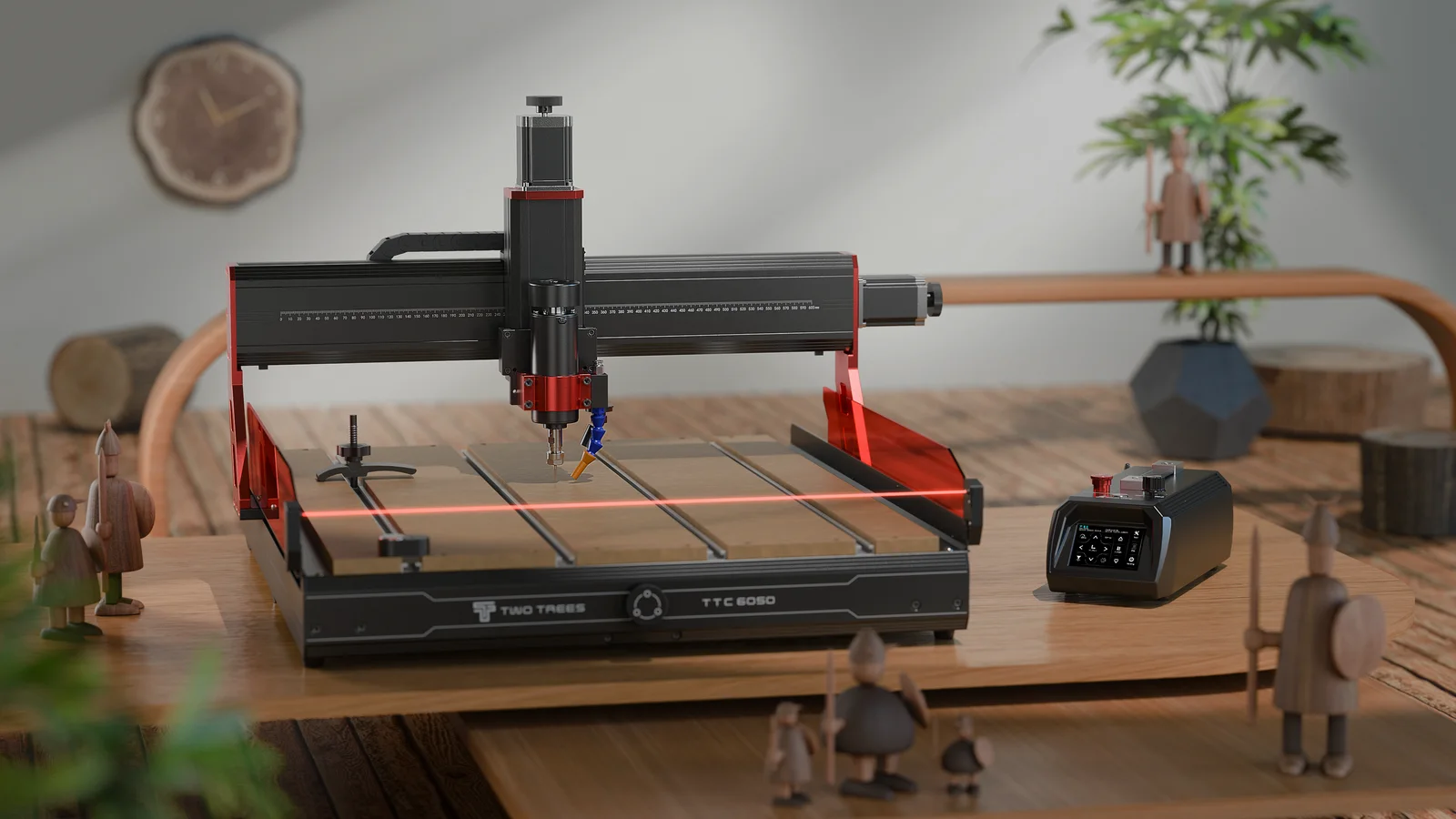
At $1,499, the 6050 repeats the Pro's 600 × 500 × 100 mm area, the 35.9 kg aluminum frame, the 500 W spindle at 12,000 rpm, and the 5,000 mm/min speed. TwoTrees calls it the machine for people who'll run it every day. On the specification block it looks a lot like a Pro with a different badge and a higher price. I'd read the product page before paying the difference, and I'd ask what, besides duty-cycle language (how many hours a day the machine is meant to run), I'm actually buying.
How does it fit the market?
In December 2025 this family sits in the crowded desktop aisle with Genmitsu's 3018 and 3020 kits, FoxAlien's Masuter machines, and the lower end of anything with a real spindle.
The useful news is the discontinuation. A $349 TTC 450 is a fine first machine if you understand that 800 mm/min and an 80 mm Z will feel small in a month. The Pro at $439 is the rational buy in TwoTrees' own chart if you want a 500 W spindle and a 600 mm bed. The Ultra is the buy if your parts are small and you care about the screen, the rpm range, and the accuracy line they printed.
What's missing from the guide?
The guide gives no measured cut, no spindle runout number (how much the spinning tool wobbles), and no date when the $349 stock hits zero. Stainless and aluminum are on the materials list, and the depth-of-cut note is the caveat that should travel with them.
If you're starting out and can spend an extra ninety dollars, TwoTrees just told you to skip the machine it's about to stop building.
Sources and image credits
- How to choose the best TwoTrees CNC router: TTC 450 vs 450 Pro vs 450 Ultra (TwoTrees blog)
- TTC 450 Ultra product page
- TTC 450 Pro product page
- Product images: TwoTrees buying guide