
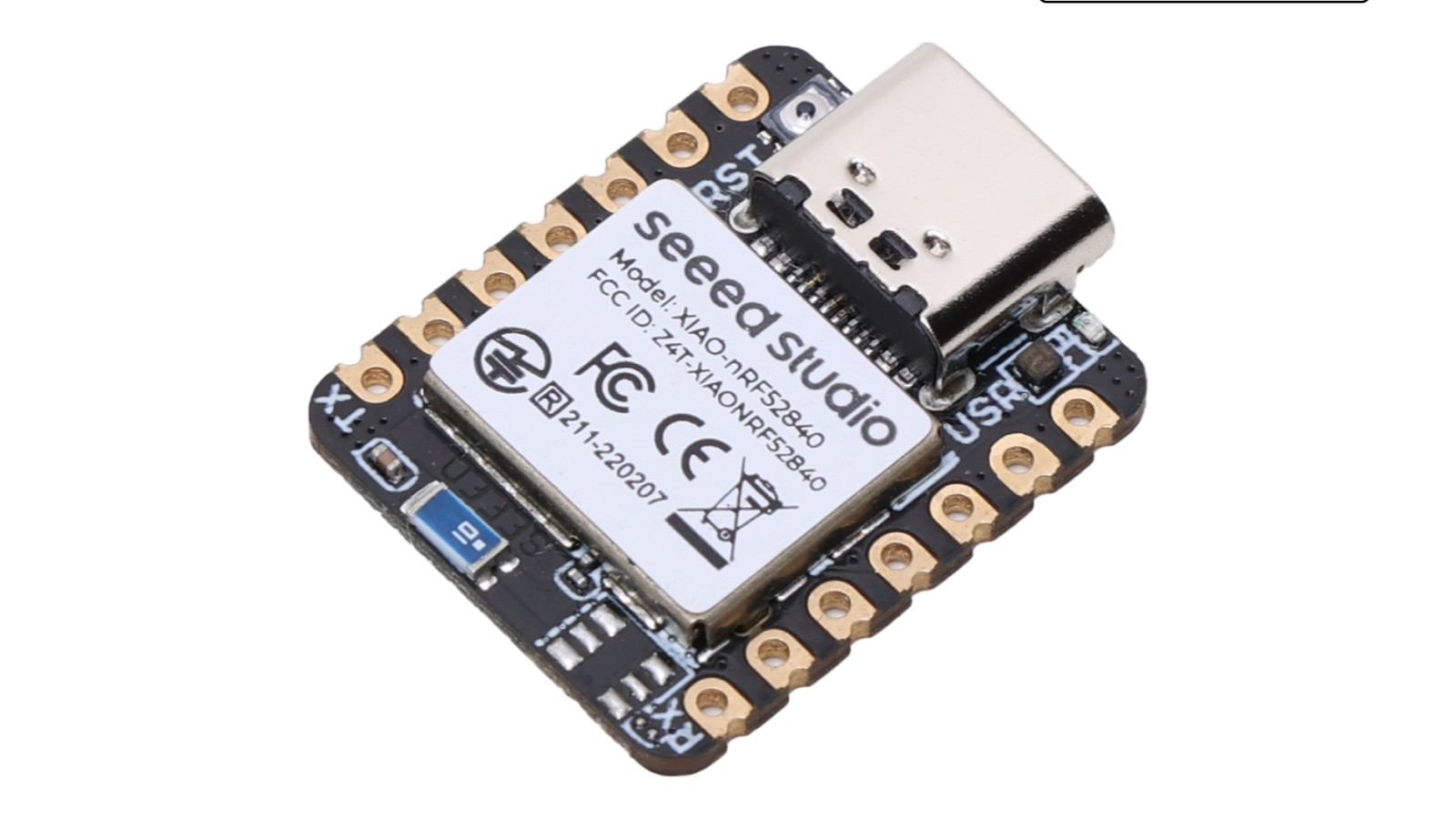
Seeed Studio announced on August 29, 2023, that its XIAO nRF52840 module had been integrated and certified for Amazon Sidewalk. The development gave makers and product designers a compact route to build low-power Bluetooth devices that could reach cloud services beyond the boundaries of one home's Wi-Fi network.
Amazon Sidewalk is a shared, low-bandwidth network supported by compatible bridge devices, including selected Amazon products. Nearby endpoints can send small encrypted packets through those bridges to the Sidewalk network and an application backend.
That model suits trackers, outdoor lights, motion sensors, appliance monitors, and other devices that exchange status rather than media. It does not turn the XIAO into a general-purpose internet modem, and deployment depends on regional Sidewalk availability and compatible infrastructure.
Sidewalk extends the edge of the home
A conventional Wi-Fi sensor connects to one access point using credentials for that network. Once it moves out of range, it loses its route to the internet. A Bluetooth accessory generally relies on a nearby phone or dedicated gateway.
Sidewalk creates another path. A supported bridge forwards small messages from an endpoint, potentially allowing a pet tracker or mailbox sensor to communicate beyond its owner's immediate network. The endpoint does not gain unrestricted access to the bridge owner's home LAN.
The architecture separates the endpoint, bridge, Sidewalk network, and application server. That separation is important for privacy and security. Device makers still have to provision identities, manage application data, and follow Amazon's qualification process.
Coverage should never be assumed from a map or product count. Building materials, bridge placement, terrain, radio configuration, and participation all affect service. A critical device needs field tests and a clear behavior for periods without a connection.
The nRF52840 is a capable foundation
The module uses Nordic Semiconductor's nRF52840, a 64MHz Arm Cortex-M4F wireless system-on-chip. The F in Cortex-M4F indicates hardware floating-point support, which helps some signal-processing and sensor-fusion workloads.
It supports Bluetooth 5 and is known for low-power operation. Seeed cited deep-sleep current as low as 5 microamps under appropriate conditions. Real product current includes regulators, sensors, pull-ups, battery monitoring, wake sources, and radio activity.
The XIAO module measures about 21 by 17.5 millimeters and includes lithium-battery charge management. It also carries a digital microphone and six-axis inertial measurement unit. An IMU combines motion sensors, normally an accelerometer and gyroscope, to measure movement and rotation.
Those features fit Sidewalk use cases well. A compact tracker can detect motion before requesting a network update. A machine monitor can extract a vibration feature locally and transmit an alert rather than raw samples. A wearable can collect short audio or motion events without continuously streaming private data.
Low bandwidth is a design constraint
Sidewalk is intended for small, infrequent messages. It is not the network for camera feeds, firmware images sent constantly, or live audio. Applications should encode only the state needed by the service.
A useful message might contain a device identifier, battery level, event type, timestamp, and a few sensor values. Compact binary formats use airtime efficiently, but they need careful versioning. Include a schema version so the cloud can interpret older devices after firmware changes.
Plan for delayed delivery and duplicates. Wireless systems retry, gateways go offline, and messages can arrive after the state has changed. Sequence numbers and timestamps let the application recognize old or repeated events.
Cloud cost and data retention also belong in the design. A sensor that reports every minute produces more than half a million messages per year. Event-driven reporting can save power and backend resources while delivering more meaningful information.
Certification is valuable but not the whole product
Seeed's certification work gives developers an approved module foundation. It does not automatically certify every enclosure and application built around it. Antenna placement, firmware, regional operation, and the final product category can introduce further requirements.
Amazon Sidewalk development also requires the appropriate accounts, SDKs, credentials, and backend integration. Teams should review current program availability and terms because cloud programs evolve more quickly than hardware.
For a commercial design, preserve module layout guidance and antenna clearance. Metal, batteries, cables, and the user's body can reduce range. Test radiated performance in the final case rather than evaluating a bare board only.
The lithium charging feature simplifies portable prototypes, but battery safety remains the product maker's responsibility. Select a protected cell, verify charging current and temperature range, and design strain relief so the connector cannot damage the battery leads.
Privacy and trust need plain explanations
A community network can sound as though strangers are joining one another's private Wi-Fi. That is not the intended architecture. Sidewalk bridges provide a constrained transport path, while layered encryption and network separation are designed to protect endpoint traffic and bridge owners.
Device makers still need to explain what their product collects, how often it reports, where data is stored, and how users can delete it. A technically secure network does not excuse vague application-level privacy.
Physical possession is another consideration. Trackers and outdoor sensors can be stolen or opened. Credentials should be protected, debug interfaces should be handled deliberately, and firmware updates should be authenticated.
What makers should prototype first
Begin with Seeed's supported Sidewalk example and verify endpoint registration before adding sensors. Confirm that messages travel from the XIAO through a bridge to the intended backend. Log timestamps at each stage to understand latency.
Next, test power in states: deep sleep, sensor sampling, local processing, Bluetooth activity, Sidewalk transmission, and retry. A single average number hides the radio peaks and time spent awake. Battery estimates should include weak-coverage behavior.
Then walk the device through the expected environment. Test inside the enclosure, near walls, at property boundaries, and in places without bridge coverage. The application should buffer important events locally and communicate its offline state when possible.
Finally, decide whether Sidewalk is the only transport or one option among Bluetooth, a phone, Wi-Fi, or another long-range network. Multiple paths increase complexity, but they can improve commissioning and resilience.
Seeed's XIAO nRF52840 integration makes Sidewalk accessible in a small, sensor-rich board familiar to makers. Its importance is not raw bandwidth. It offers a way for tiny battery devices to send modest, useful messages beyond a single home, while preserving the local processing and low-power behavior that make the nRF52840 practical.
I'd walk the finished device through its real surroundings before trusting Sidewalk coverage, because a coverage map can't tell you what your walls and bridges will do.
Sources and image credits
- Official Seeed Studio blog post, Seeed Studio, August 29, 2023.
- Official product image from Seeed Studio: Seeed Studio XIAO nRF52840.
- Square and vertical crops are edited from the same source image.


