A laser cutter and a 3D printer solve opposite halves of the same workshop problem. One removes material from a sheet. The other builds a part one layer at a time. Makers have combined those processes for years, but usually with two large machines, two software workflows, and two carefully planned spots on the workbench.
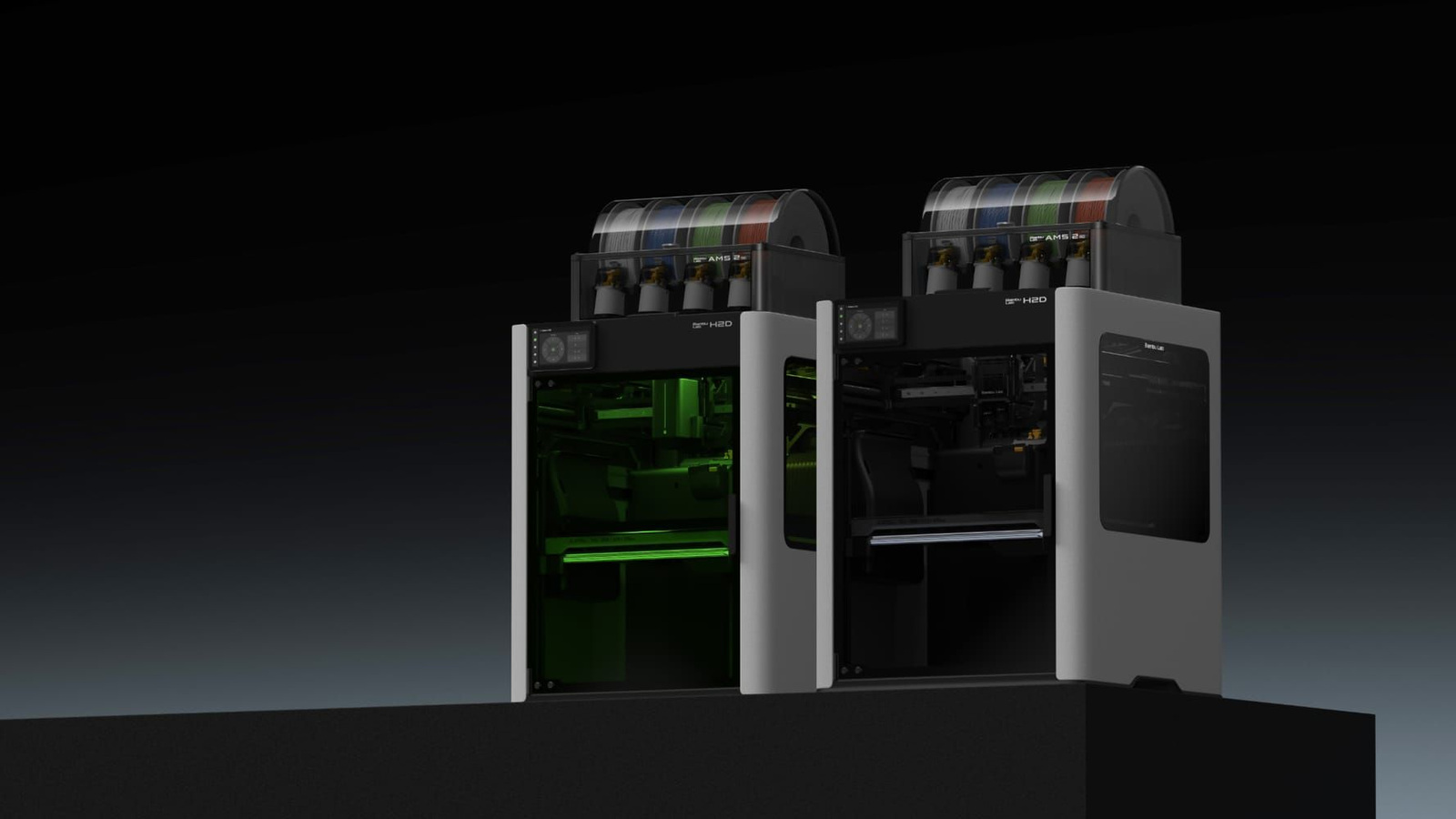
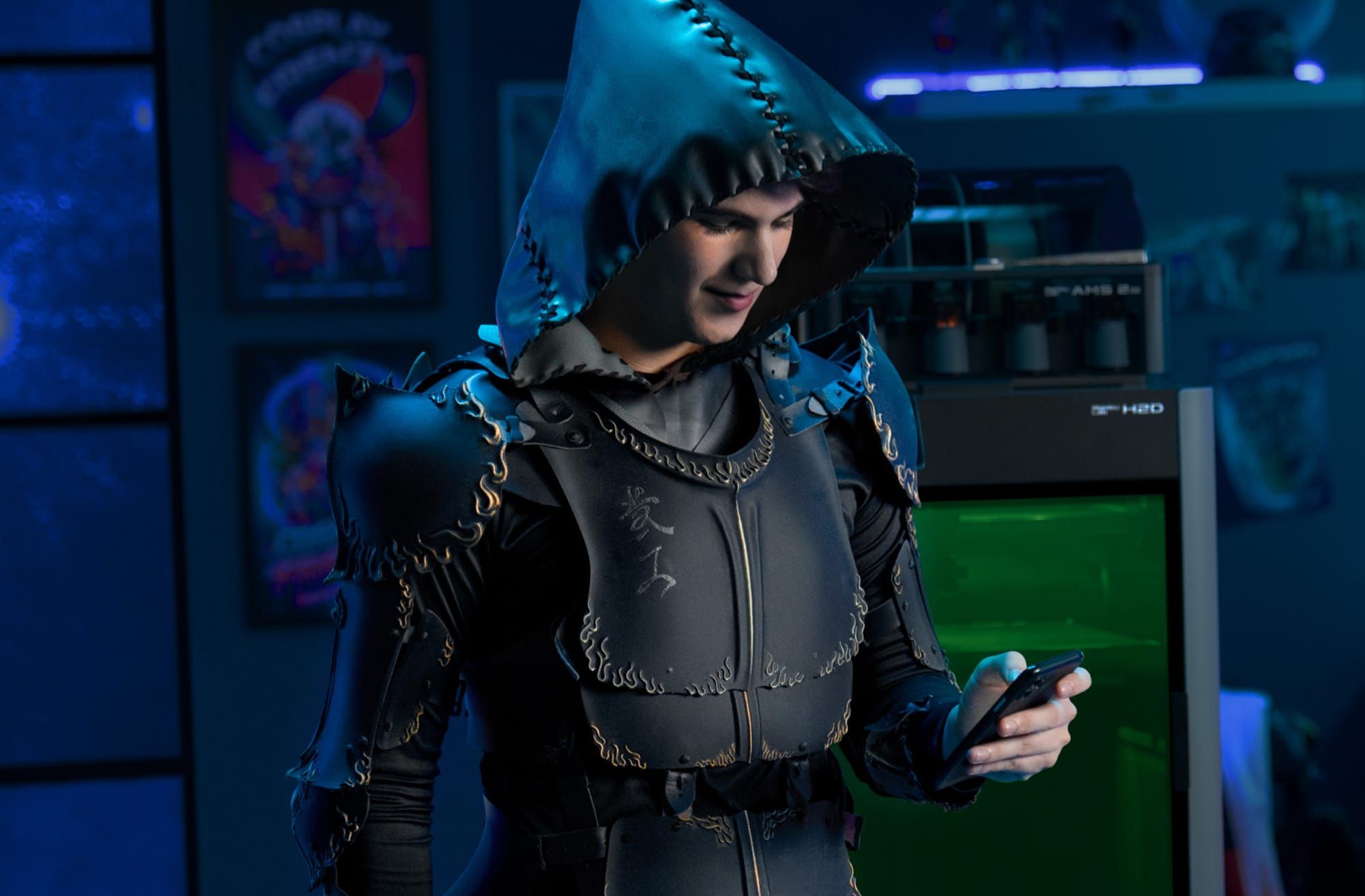
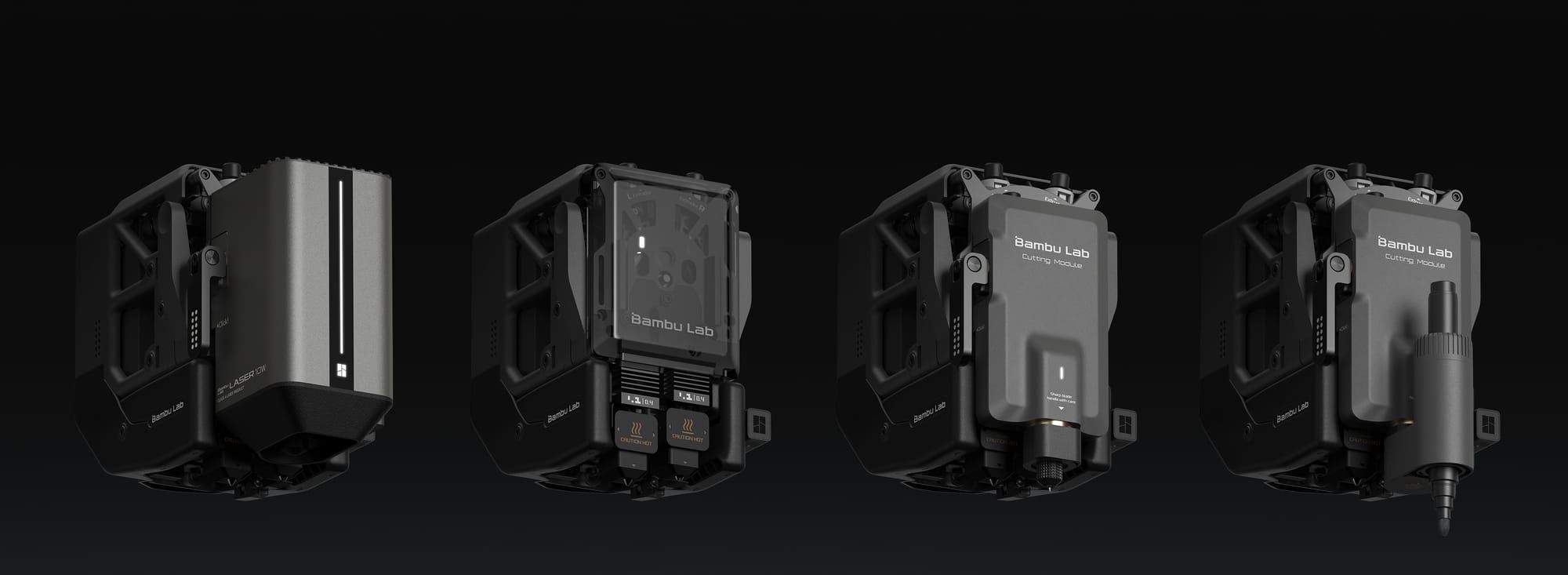
Bambu Lab's H2D brings those jobs into one enclosed system. Announced on March 25, 2025, the H2D is first a large dual-nozzle 3D printer. The Laser Edition adds a 10-watt or 40-watt diode laser for engraving and cutting, plus a blade cutter and pen holder. Bambu calls the whole arrangement a personal manufacturing hub.
That description is ambitious, and it needs a little unpacking. The H2D is not a laser attachment clipped onto an ordinary printer. Laser-ready versions use protective windows, an integrated air-assist system, a camera mounted above the work area, flame sensors, and an emergency-stop button. Buyers also receive separate work platforms for laser and blade jobs.
TMWB has not tested the H2D, so performance figures and safety claims in this article come from Bambu Lab. They should be treated as manufacturer specifications, not independent test results.
What does the laser add to the H2D?
A diode laser uses semiconductor components to produce a focused beam of light. It is the same broad type of technology used in many desktop engravers. Bambu offers two optical-power levels. The 10W module is intended for engraving and lighter cutting, while the 40W module supplies more energy for thicker material and faster cutting.
The useful part is not simply the wattage. A laser has to place a design on the real sheet lying inside the machine. The H2D uses a top-mounted BirdsEye camera to show the work area in Bambu Suite, the company's design and machine-control software. Bambu says its Live Spatial Alignment system can position work within 0.3 millimeter. In plain language, the software is meant to help you drag a design onto a camera view instead of measuring from the corner and hoping the material is square.
An integrated air-assist pump directs a stream of air at the cut. Air assist clears smoke and loose particles from the beam path. It can also reduce scorching and help prevent a small flame from growing while the laser remains over one area.
Those features make the Laser Edition look more like a purpose-built enclosed cutter than a casual add-on. The distinction matters because a laser changes both the workflow and the risks of the machine.
Why combine additive and subtractive tools?
Additive manufacturing creates an object by adding material. Fused-filament 3D printing, the process used by the H2D, melts plastic filament and places it in layers. Subtractive manufacturing starts with material and removes the parts that are not needed. Laser cutting is subtractive because the beam burns or vaporizes a narrow path through a sheet.
Neither method replaces the other. A laser can cut a flat acrylic panel quickly, but it cannot print a curved bracket with internal ribs. A printer can make that bracket, but producing a broad, flat wooden panel would be slow and wasteful.
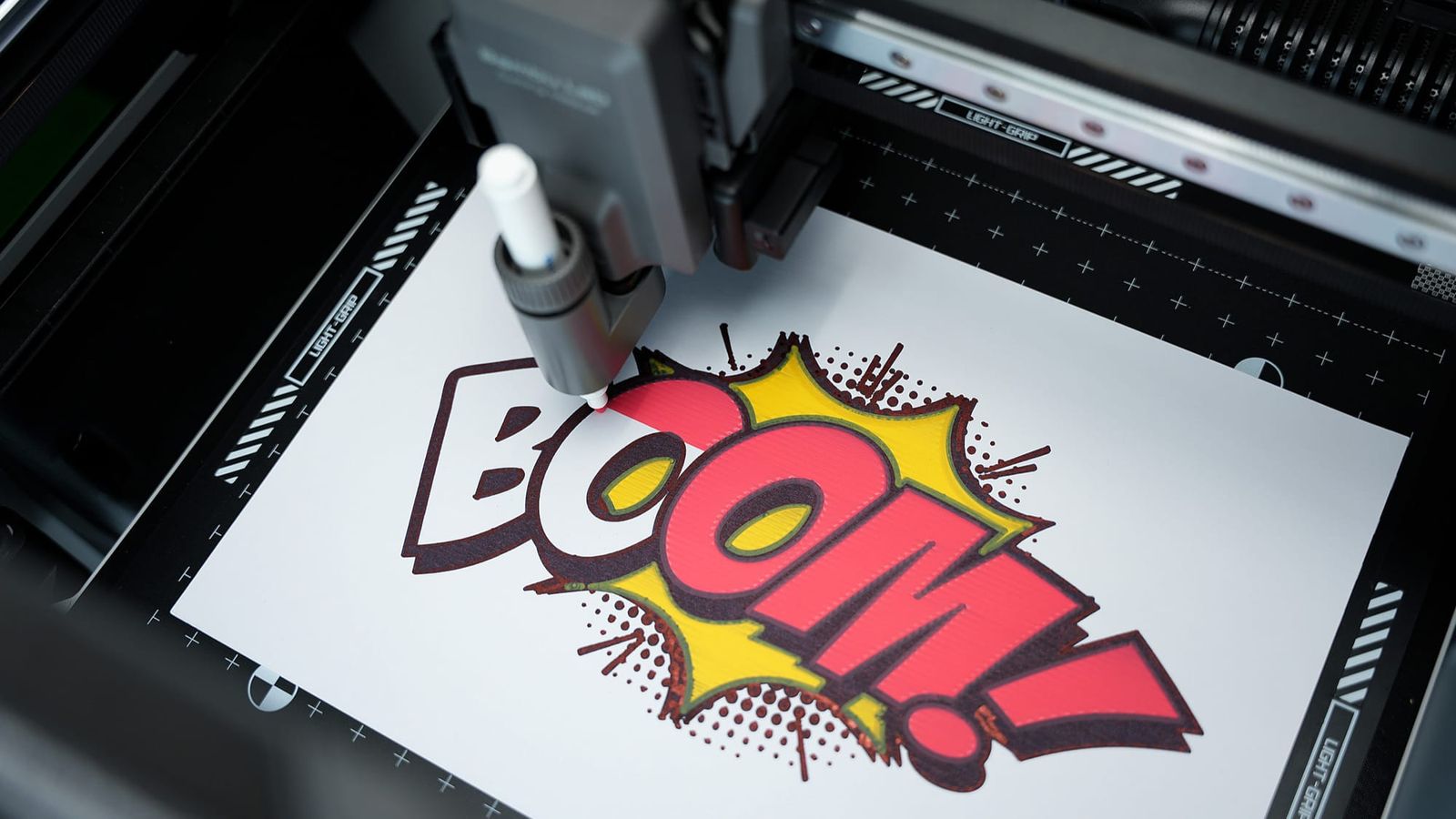
The H2D's appeal is the ability to use both processes in one project. A maker could print an enclosure, cut a wooden faceplate, engrave the control labels, and use the pen attachment to draw an assembly guide. Camera alignment may also help place engraved details on a printed component, although the real repeatability of a multi-stage job is something TMWB would want to test before recommending it.
The tradeoff is scheduling. One machine can perform several jobs, but it still performs them one at a time. A workshop running a long print cannot cut a panel until that print finishes and the bed is changed over. Separate machines take more room, yet they can work simultaneously.

What is the H2D as a 3D printer?
The underlying printer is a substantial part of the story. It has a 350 by 320 by 325 millimeter build volume and two nozzles. A dual-nozzle printer can keep two materials ready without feeding both through the same hotend. That can reduce material waste during color changes and makes it practical to pair a model material with a separate support material.
Bambu specifies a maximum hotend temperature of 350 degrees Celsius and a heated chamber that can reach 65 degrees Celsius. The chamber keeps the air around the part warm, which can reduce warping in engineering plastics. Bambu also introduced its AMS 2 Pro and AMS HT material systems alongside the H2D. AMS stands for Automatic Material System. It stores and feeds filament, while the newer versions add active drying for moisture-sensitive materials.
Those capabilities push the H2D well beyond an entry-level printer. They also make the laser configuration a serious investment. At launch, Bambu listed the 10W Laser Full Combo at $2,799 and the 40W version at $3,499 in the United States. Prices and bundle contents can change, so readers should confirm the current package before buying.
What should a home workshop plan for?
An enclosure prevents normal access to the beam, but it does not make smoke disappear. Cutting wood, leather, and acrylic produces fumes and fine particles. The H2D includes an exhaust connection, and Bambu sells a smoke purifier. A proper plan still needs either safe outdoor venting or filtration suitable for the exact materials being processed.
Material choice is just as important. Some plastics release corrosive or toxic gases when heated. PVC, short for polyvinyl chloride, is a familiar example that should not be laser cut. A camera and material preset cannot identify every unknown sheet placed in the machine. The operator remains responsible for knowing what the material is.
Bambu lists five flame sensors and camera-based fire detection, but laser work should never be treated like an unattended overnight print. The beam creates heat on combustible material. The work area must stay clean, ventilation must be running, and someone who can stop the job should remain nearby.
There is another purchasing gotcha. A standard H2D and a Laser Edition are not identical out of the box. Bambu said it planned an upgrade kit for non-laser units, but availability, included parts, and regional certification need to be checked at the time of purchase. Anyone who knows they want the laser should compare the complete Laser Edition against upgrading later.
Where does the H2D fit?
The H2D makes the most sense for a workshop that values flexibility and has limited room for equipment. It is also appealing to designers who build mixed-material prototypes and want a common camera-assisted workflow for printed, cut, and drawn parts.
It is less convincing as a replacement for every dedicated tool. A busy laser shop may prefer a machine that can keep cutting while printers run elsewhere. Makers who only engrave wood may get more work area for their money from a dedicated laser. People who only print gain little from buying laser hardware they will rarely install.
The important change is that Bambu Lab has carried the polished, guided workflow associated with its printers into desktop laser work. If the H2D delivers that experience reliably, it could introduce a large group of 3D-printer owners to another kind of digital fabrication. It also means those owners need to learn a new set of material, ventilation, and fire-safety rules before pressing Start.
Sources and image credits
- Bambu Lab launches H2D to rethink personal manufacturing, Bambu Lab, March 25, 2025.
- H2D documentation and laser safety resources, Bambu Lab.
- Images supplied by Bambu Lab on the official launch page. Used for editorial reporting with credit to Bambu Lab.