Laser welding has usually belonged on the industrial side of the workshop wall. The equipment is expensive, the safety requirements are demanding, and a traditional system expects an operator who already understands metal preparation, shielding gas, and process settings.
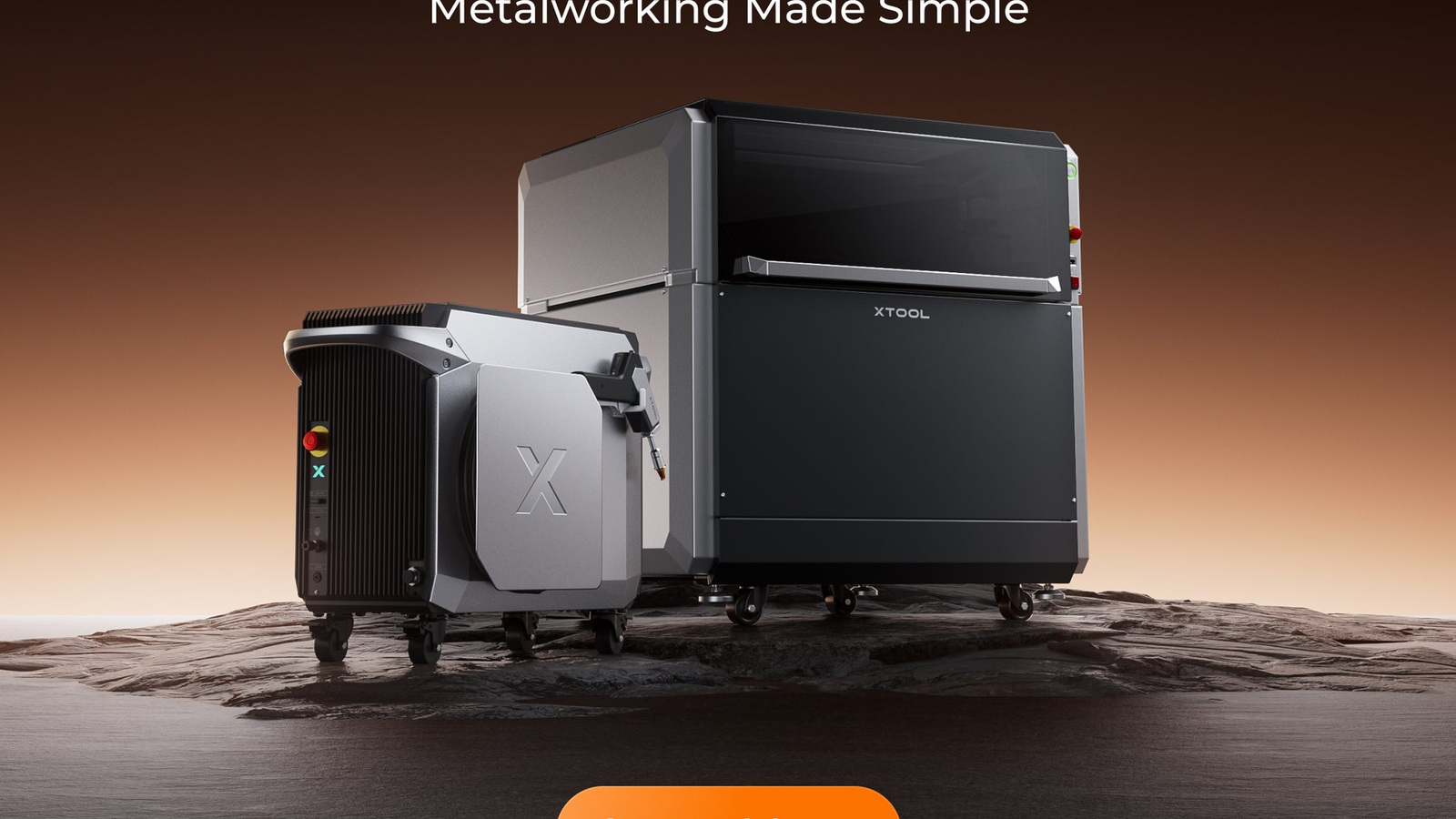
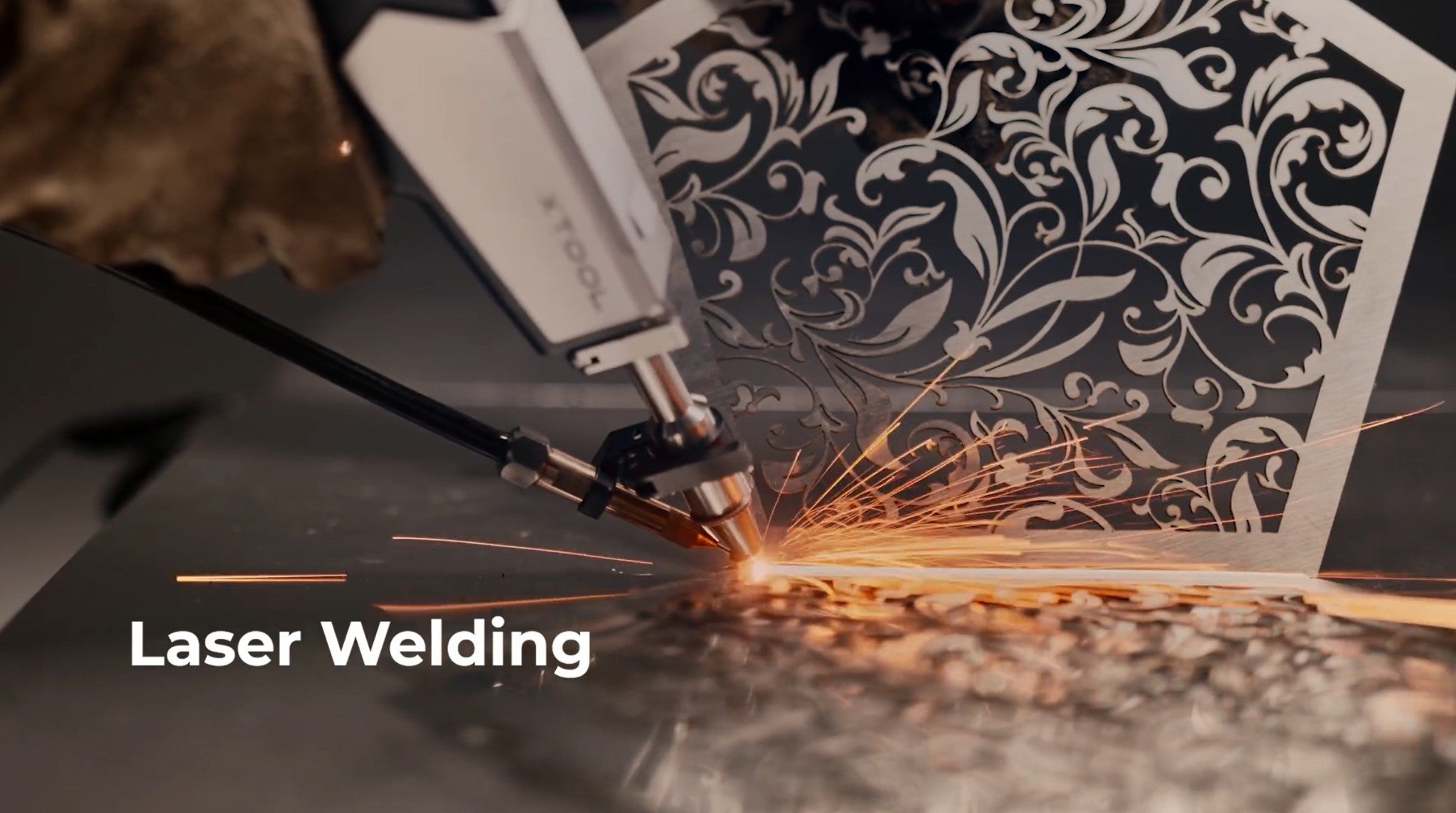
xTool introduced MetalFab on April 15, 2025, with the goal of moving that capability into smaller shops. The system combines a handheld fiber laser welder with a computer-controlled cutting table. xTool offers 800-watt and 1,200-watt welder versions and positions the complete setup for garages, repair businesses, makers, and small fabrication shops.
MetalFab is home-workshop sized, but it is not a casual craft laser. The energy levels, reflected beam risk, electrical load, fumes, hot metal, and gas cylinders require a much more serious workspace than an enclosed desktop engraver. TMWB has not tested the system, so all performance claims in this article are attributed to xTool.
What is laser welding?
Traditional arc welding creates an electric arc between an electrode and the workpiece. The arc melts the joint, and the operator moves the torch while controlling heat, travel speed, angle, and filler material. It is a proven process, but a clean weld takes practice.
A laser welder concentrates light into a small, intensely heated area. The narrow beam can create a deep joint with a smaller heat-affected zone. The heat-affected zone is the surrounding metal whose structure changes because it became hot without fully melting. Keeping that zone smaller can reduce distortion, which matters on thin panels and finished parts.
MetalFab uses a fiber laser operating near 1,080 nanometers. The source sends infrared light through an optical fiber to the handheld gun. xTool lists continuous, spot, and pulsed modes. Continuous mode delivers an uninterrupted beam while the trigger is held. Spot mode places individual welds, and pulsed mode switches the beam on and off rapidly to control how energy reaches the joint.
xTool says the 800W model can weld material up to 4 millimeters thick. The 1,200W version is intended for heavier work. Thickness limits vary with alloy, joint design, fit, travel speed, and whether filler wire is used, so a single maximum number cannot describe every weld.
Why pair the welder with a CNC table?
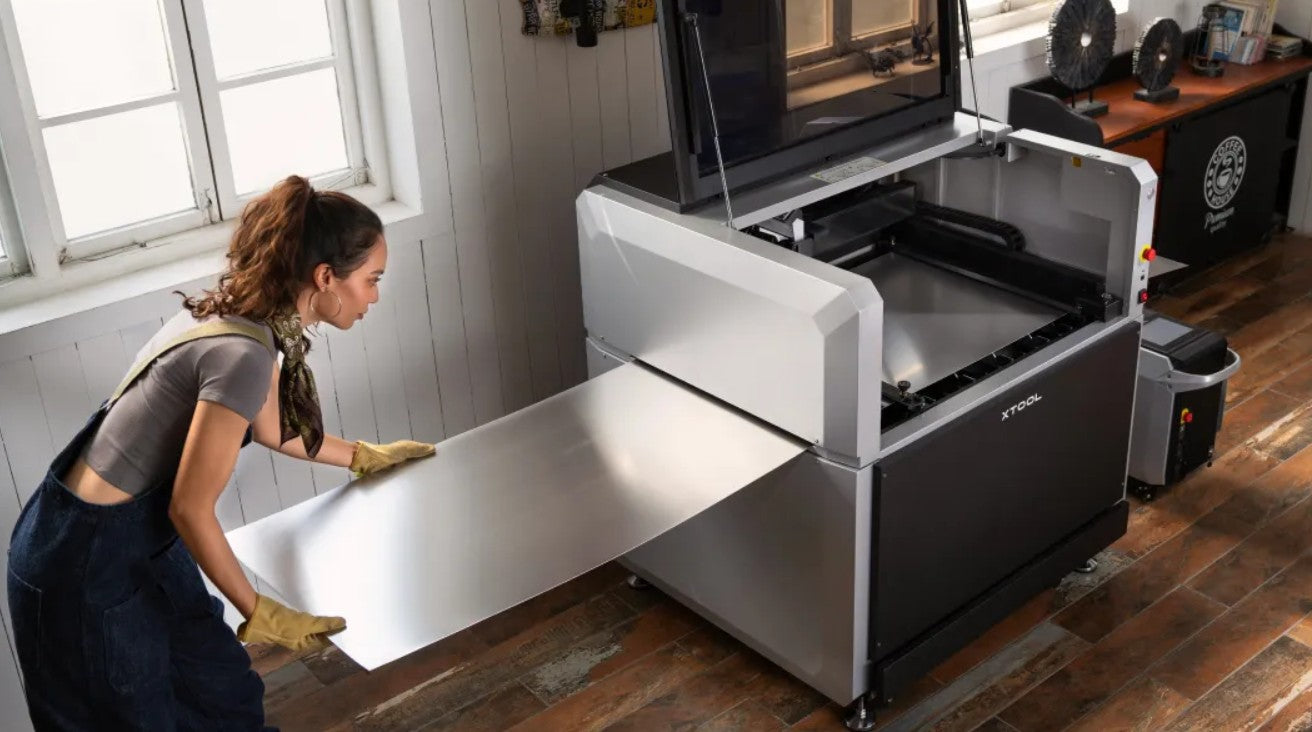
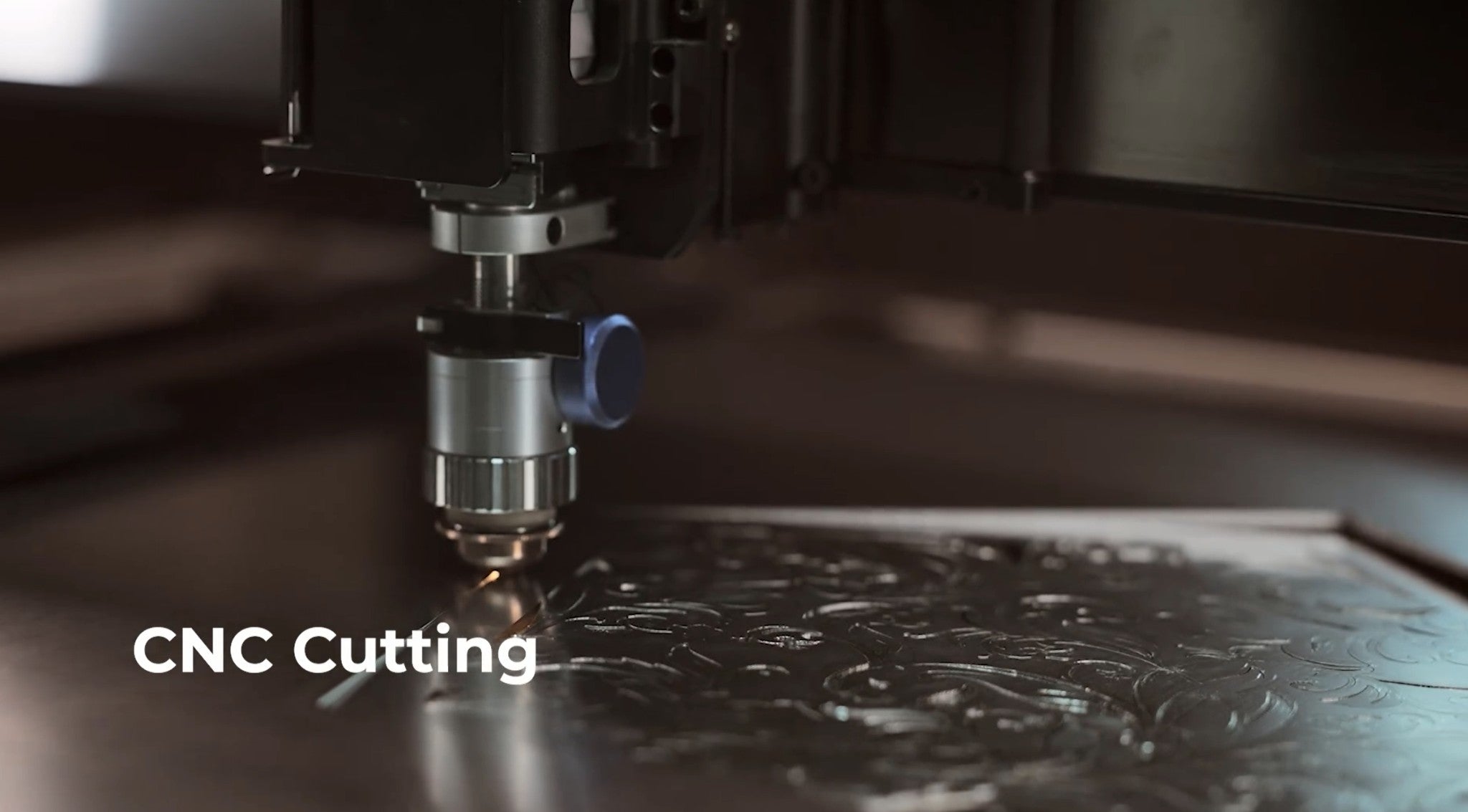
CNC stands for computer numerical control. A CNC machine follows coordinates generated from a digital design. MetalFab's cutting table moves the laser head over sheet metal so the system can cut repeatable parts before they are assembled and welded.
That pairing makes sense for small-batch fabrication. A shop could cut brackets, tabs, enclosure panels, or decorative metal parts and then weld them using the same laser source ecosystem. Camera-assisted positioning and xTool software are intended to reduce the setup work between a drawing and the physical sheet.
The cutting system is not the same as the 20W fiber source in a desktop engraver. Hundreds of watts of optical power move it into real sheet-metal fabrication. xTool's launch material describes stainless steel, carbon steel, aluminum, titanium, nickel alloys, and other metals, but the available thickness depends on the power level and cutting conditions.
There is also a practical difference between cutting a part and producing a finished part. Edges may need deburring, oxide may need removal, and precise assemblies still depend on good tabs, fixtures, and bends. Software can guide a cut path, but it cannot correct poor material preparation after the fact.
Does laser welding remove the skill from welding?
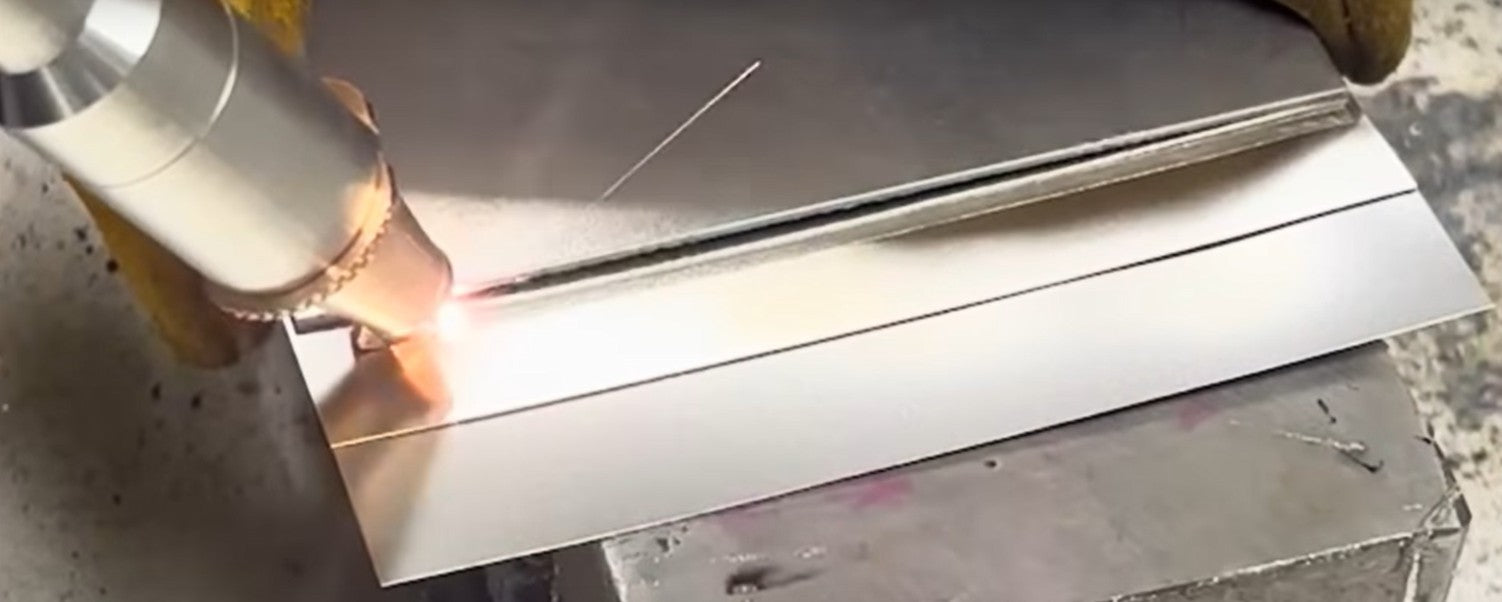
xTool emphasizes easier parameter selection and a shorter learning curve than conventional welding. That does not make the process skill-free. A strong joint still depends on clean surfaces, a suitable joint gap, correct shielding gas, proper travel speed, and settings matched to the alloy and thickness.
Shielding gas protects hot metal from reacting with the surrounding air. xTool specifies inert gases such as argon or nitrogen for its process. Inert means the gas resists chemical reaction under the conditions in the weld area. Which gas is appropriate depends on the material and the result the operator needs.
The handheld gun can be fitted with a wire feeder when a joint needs added metal. Filler wire bridges gaps and contributes material to the weld. That brings another set of choices, including wire alloy and diameter.
The beginner-friendly part is better understood as assistance. Presets can provide a starting point, and a concentrated beam can make a clean seam easier to achieve on suitable joints. The operator still needs test pieces, protective equipment, and an understanding of what a sound weld looks like. A visually smooth bead is not automatic proof of penetration or strength.
What does a safe installation require?
This is the most important part of the MetalFab story. The laser is powerful enough to injure eyes and skin directly or through reflection. Shiny metal can send beam energy in an unexpected direction. A pair of glasses alone is not a complete control plan for an open Class 4 laser process.
A suitable installation normally needs a controlled laser area, wavelength-rated barriers, interlocks or access procedures, warning signs, correct protective eyewear, and training. In a commercial setting, that planning may involve a laser safety officer, the person responsible for assessing laser hazards and maintaining protective controls. Local workplace and fire rules may add requirements beyond the manufacturer's instructions.
The system also needs fume extraction designed for metal processes. Welding and cutting can release fine particles and metal fumes. Galvanized steel, painted parts, plated hardware, and unknown coatings add hazards that are not solved by opening a garage door.
Electrical service is another planning item. xTool lists roughly 3,000 watts of input for the 800W welder and 4,500 watts for the 1,200W version, with maximum current figures of 15 and 23 amperes. Buyers must verify circuit voltage, current capacity, plugs, grounding, and regional specifications before ordering. A 23-ampere load is beyond a typical 15- or 20-ampere North American branch circuit.
Finally, argon and nitrogen cylinders must be secured upright and handled as compressed-gas equipment. Hot parts, sparks, and slag still create an ordinary fire risk even when the heat source is a beam rather than an arc.
Who should consider MetalFab?
MetalFab is most interesting for an experienced home fabricator or small shop that already cuts and joins metal. It could reduce distortion on thin work, speed repetitive seams, and bring cutting and welding into a connected workflow. Repair businesses, automotive fabricators, sign shops, and prototype builders are easier fits than a first-time maker looking for a weekend craft tool.
The complete cost must include more than the machine. Gas, extraction, electrical work, laser barriers, protective equipment, consumables, training, and floor space all belong in the budget. Those additions may still be reasonable compared with an industrial installation, but they cannot be treated as optional accessories.
xTool's announcement is notable because it pushes a consumer-facing maker brand into serious metal fabrication. If MetalFab performs as claimed, a compact shop can gain capabilities that once required a large capital purchase. The responsibility grows with the capability. This is a product to approach like welding equipment and a high-power industrial laser, because it is both.
Sources and image credits
- Introducing xTool MetalFab, xTool, April 15, 2025.
- MetalFab product and safety information, xTool.
- Images supplied by xTool on the official announcement page. Used for editorial reporting with credit to xTool.