Arduino says it has shipped more than 270,000 UNO Q boards in the year since the dual-processor board launched, according to a first-anniversary post published October 8. The figures are dated September 29, 2026. The UNO Q pairs a Qualcomm Dragonwing QRB2210 quad-core microprocessor, with AI acceleration, and an STM32U585 microcontroller on one board.
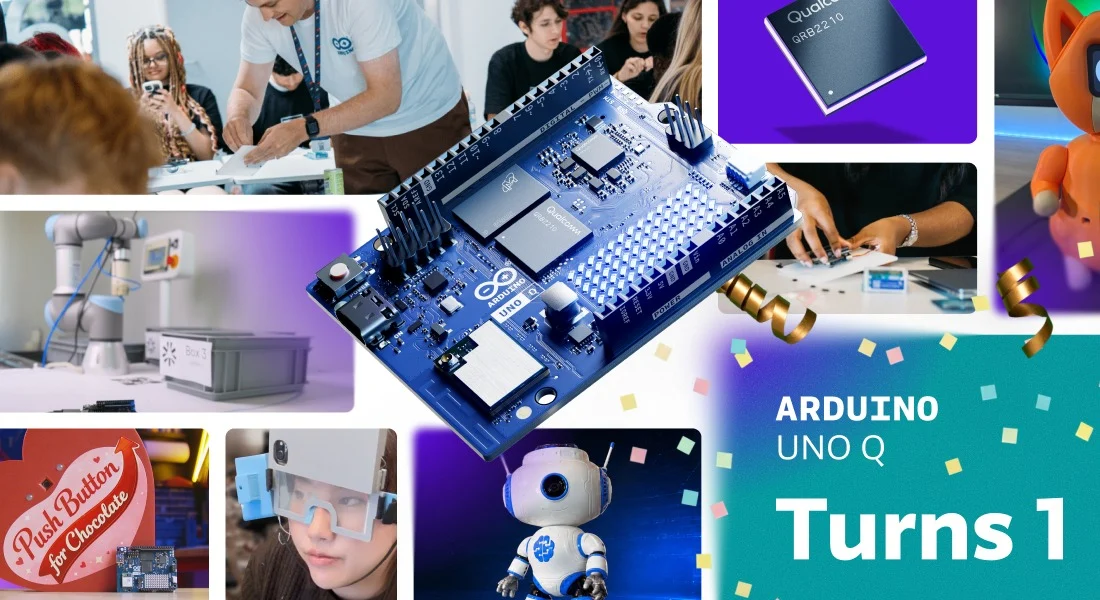
Arduino announced the UNO Q in October 2025 alongside Qualcomm's agreement to acquire the company, and Qualcomm's purchase has since completed. The board's design is the clearest result of that deal: a Linux-capable Qualcomm microprocessor sitting next to the STM32U585 microcontroller that handles real-time work such as reading sensors and driving motors.
Arduino's numbers
Beyond the shipment count, the post reports more than 400 events across the ecosystem, more than 4,000 contest participants who delivered over 250 official builds, and more than 850 UNO Q topics on the Arduino Forum. Project Hub projects nearly doubled year over year. Library downloads grew about 50 percent, to more than 244 million over the last 12 months against more than 165 million the year before, and the Arduino IDE passed 35 million downloads. Some of those figures cover all of Arduino, so they say more about the platform's growth than about UNO Q sales.
What shipped this year
Arduino App Lab launched with the board and lets one application combine a microcontroller sketch with a Python program for the microprocessor side. Debian Linux and Qualcomm Linux were added as operating system options. In August, Agentic Mode brought AI-assisted coding to the desktop Arduino IDE, and Arduino Core on Zephyr reached version 1.0. On the hardware side, the post lists eight new Modulino nodes, the Starter Kit R4, the Nesso N1, and VENTUNO Q, a higher-performance board introduced a couple of months ago. Arduino also highlights Works with Arduino, a certification program for partner System on Modules.
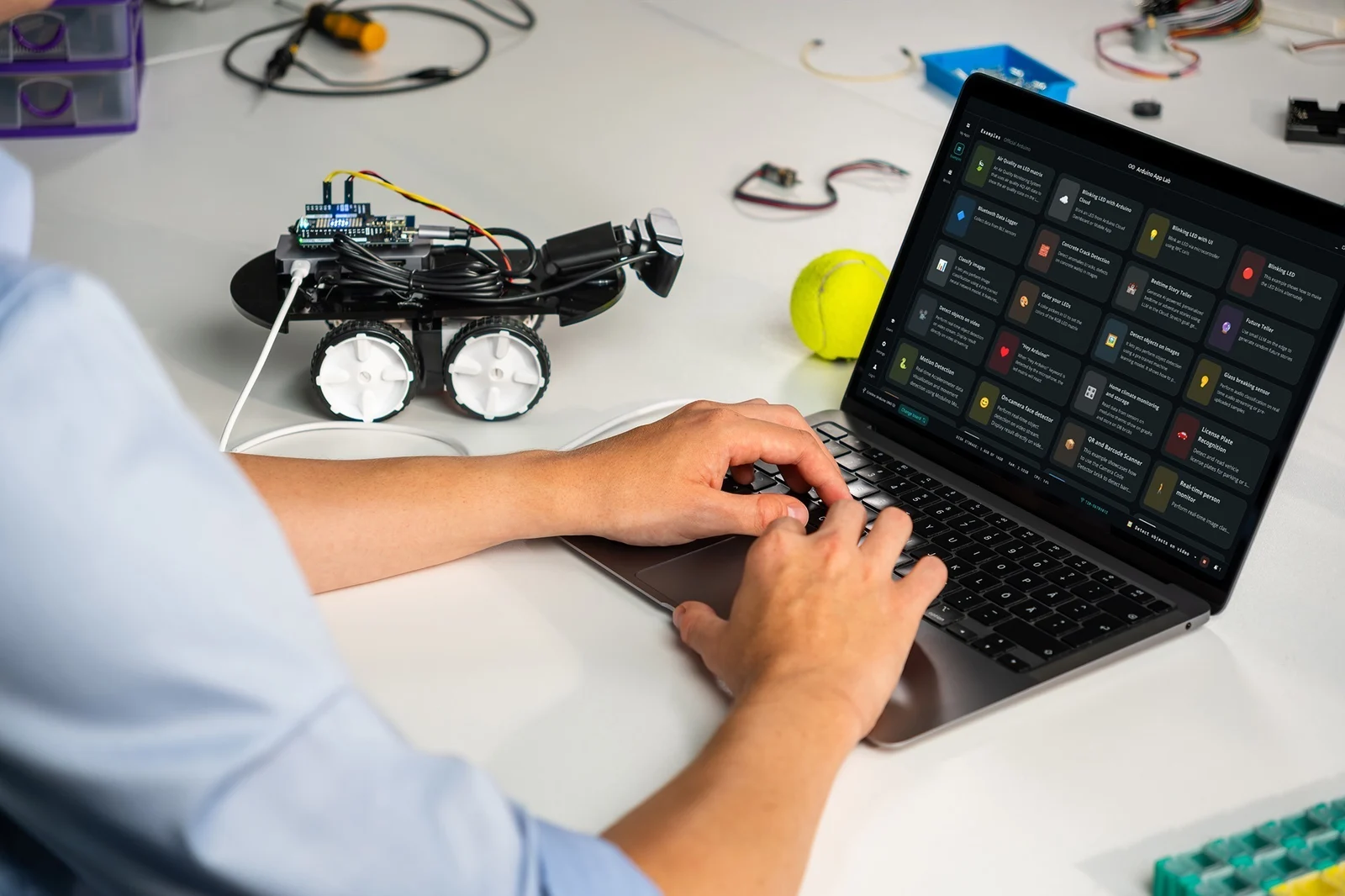
Arduino Core on Zephyr 1.0 means Arduino sketches can run on top of the open-source Zephyr real-time operating system, which is also what Nordic's nRF Connect SDK builds on. The Modulino nodes are Arduino's snap-together sensor and control modules that connect with a single cable, and eight more widens the set of parts a UNO Q project can use without soldering. Works with Arduino is aimed at module makers, who can have their System on Modules certified to run Arduino software.
The two Linux options give developers a choice. Debian is the familiar general-purpose distribution with a broad package ecosystem, and Qualcomm Linux is the chipmaker's own distribution for its processors. App Lab sits on top of either, combining the microcontroller sketch and the Python side into one project, which is the workflow Arduino built the UNO Q around.
The totals work out to roughly 740 boards shipped per day if spread over 12 months, and the ecosystem-wide library figure of 244 million downloads averages about 670,000 a day. Arduino gives no regional split and no revenue figures, and it does not say how many UNO Q boards are in active use.
Community builds and open licensing
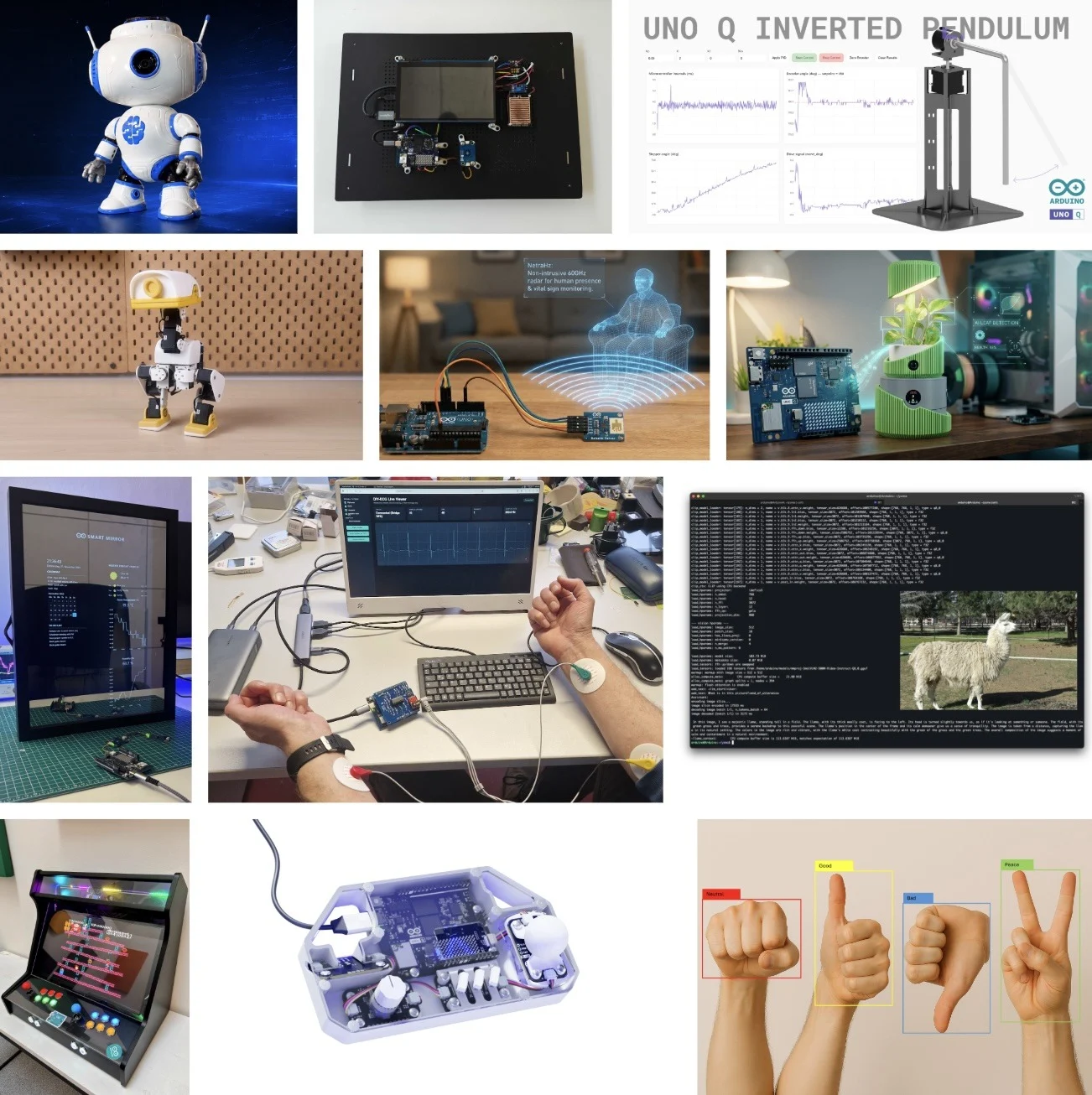
The post singles out 12 community projects, including a desktop companion robot, a DIY ECG, a DIY synth, an arcade cabinet, a smart mirror, an AI plant guardian, and builds running local LLMs and vision-language models on the board. A Hackster contest was due to announce winners on October 9, a result the post does not report.
Arduino also restates that its hardware schematics and software stay open under MPL, AGPL, and GPL licenses, and that App Lab is available on GitHub. MPL, AGPL, and GPL are copyleft licenses, which generally require changes to covered code to be shared under similar terms, so the statement matters to anyone planning to build products on App Lab or the board designs. The post closes by looking ahead to what Arduino calls year two and gives no dates or roadmap.
The post gives no pricing. It points to product pages for the UNO Q and VENTUNO Q, the App Lab documentation, and the Arduino Core on Zephyr 1.0.0 announcement. A quarter of a million boards, a larger sibling in VENTUNO Q, and a software stack that has changed substantially in 12 months suggest Arduino intends to keep building on the two-processor design.