Compiler licensing sounds like an administrative detail until a team needs to add a computer, support another processor family, or reproduce an old firmware build. Then the license can become as important as the source code. If the correct compiler cannot run where it is needed, the project may be difficult to maintain.
Microchip announced unified MPLAB XC compiler licensing on February 24, 2025. The system combined access for the company's XC8, XC16, XC-DSC, and XC32 C compilers and offered several ways to assign that access to individual developers or teams.
At the time, Microchip described the change as a way to reduce the cost and management burden of separate compiler licenses. This was a licensing and administration story, not a new programming language or a single replacement compiler. Each XC tool still targeted particular Microchip processor families.
What does a compiler do?
A microcontroller cannot execute the C statements a developer writes. A compiler translates that source code into machine instructions for a particular processor. The complete toolchain also includes an assembler, linker, libraries, and utilities that prepare the final firmware image.
The linker combines compiled modules and places code and data into the device's memory. This placement matters in embedded systems because flash and random-access memory are limited and may be divided into special regions.
Microchip's XC compilers serve different architectures. XC8 covers 8-bit PIC and AVR devices. XC16 targets 16-bit PIC24 microcontrollers. XC-DSC supports digital signal controllers, which are processors designed for control and signal-processing workloads. XC32 covers 32-bit devices such as PIC32 and supported SAM families.
One company may use several of these architectures. A low-cost sensor might use an 8-bit device, while a control panel uses a 32-bit microcontroller. Under separate licensing, the organization could need different purchases, renewals, and records for each compiler.
What did unified licensing change?
The unified approach gave customers a way to manage access across the XC compiler line rather than treating every compiler as an isolated software product. Microchip offered several license types aimed at different work patterns.
The Workstation License could be installed and used on as many as three host computers by one engineer. A host is the Windows, macOS, or Linux computer running the development tools. This arrangement suited a developer who moved between an office workstation, a laptop, and perhaps a laboratory computer.
The Network Server License was installed on a server and could be checked out by one networked machine at a time. That is often called a floating license because access moves between users as long as only the permitted number uses it simultaneously.
The Subscription License resembled the workstation option but renewed monthly. A subscription can lower the initial commitment for temporary projects, although its total cost depends on duration.
The Multi-Seat Network License allowed several machines or users to access the software at the same time. That model was intended for teams with concurrent development needs.
The right option depended on people, machines, and build systems. A team of ten does not necessarily need ten simultaneous seats, but a continuous-integration server may need license access even when no developer is sitting at it. Continuous integration, or CI, automatically builds and tests a project whenever changes are submitted.
Why do compiler editions matter?
Embedded compilers often offer free and paid modes that differ in optimization. Optimization is the compiler's process of transforming code to run faster, use less memory, or consume less power while preserving its intended behavior.
For a desktop application, a small change in program size may be unimportant. On a microcontroller with nearly full flash memory, a better optimization level can determine whether a build fits at all. Optimization can also change timing, which matters for code that incorrectly relies on instruction duration or exposes a hidden race condition.
A race condition occurs when behavior depends on the unpredictable order or timing of events. Correct embedded code should use documented timing mechanisms and synchronization rather than assuming an unoptimized loop always takes the same time.
Licensing therefore affects more than purchasing. It can affect the exact binary a team ships. A project should record the compiler name, version, optimization settings, device pack, and relevant license mode used for each release.
How did the tools fit together?
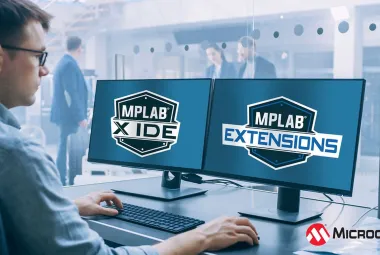
Microchip said the XC compilers integrated with MPLAB X Integrated Development Environment, MPLAB Xpress, MPLAB Integrated Programming Environment, and MPLAB extensions for Visual Studio Code.
An integrated development environment, or IDE, combines editing, building, programming, and debugging. MPLAB X is the full desktop environment. Visual Studio Code uses extensions to connect a more general editor to Microchip's tools. MPLAB Integrated Programming Environment focuses on programming devices in production rather than editing application source.
The compilers supported Windows, macOS, and Linux. Cross-platform availability helps a team, but it does not guarantee byte-for-byte identical builds without control over versions and inputs. A reproducible build is one that produces the same output when repeated from the same source and documented environment.
The unified license made access simpler, while reproducibility still required engineering discipline. Archive installer versions when permitted, record checksums, store command lines, and keep generated configuration files under version control. A license server should also be backed up and documented so a hardware failure does not halt every build.
What should teams have checked in 2025?
The first step was inventory. List every XC compiler and version in active projects, then identify who and what actually invoked each one. Include CI servers, manufacturing stations, contractors, and rarely used maintenance computers.
Next, count concurrent use rather than only named users. A floating license may fit a large group whose builds rarely overlap. It can become a bottleneck when several automated jobs begin at once.
Remote work complicates network licensing. A developer may need a virtual private network, or VPN, to reach the license server. Unreliable connectivity can interrupt a build or prevent work while traveling. Workstation licensing may be more predictable for people who regularly work offline.
Teams also needed to confirm how virtual machines and containers were treated. A container packages software and dependencies in an isolated environment. It is useful for reproducible builds, but license systems may identify hosts in ways that do not map neatly onto short-lived containers.
Finally, test the disaster path. Document how the license is recovered if a computer is replaced, an employee leaves, or the server fails. Administrative simplicity is only real if recovery works during an inconvenient moment.
What makers can learn from the change
Most hobby projects use free compilers without much thought about licensing. The moment a project becomes a product, the toolchain becomes part of its supply chain. It must remain available, legal to use, documented, and reproducible for as long as the device is supported.
Microchip's unified system addresses the operational problem of working across several device families. It does not erase the underlying decision every team still has to make: whether the paid Pro-tier optimizations are worth it for a given project. Unified licensing at least makes that decision easier to manage once it is made, since it no longer has to be made separately for every compiler.
The durable practice is to treat the compiler as a versioned project dependency. Do not rely on whichever tool happens to be installed years later. Record the environment that produced the release, preserve source and configuration, and verify a clean rebuild before the original development computer disappears.
Licensing may be unglamorous, but it decides whether the tools are available when a product needs a security fix years after launch. Microchip's 2025 consolidation makes that management easier for teams working across the XC8, XC16, XC-DSC, and XC32 line.
My habit with any toolchain is to treat the compiler version like a part number: write it down with every release, so the build can be reproduced when you need a fix years later.
Sources and image credits
- Microchip announcement: MPLAB XC Unified Compiler Licenses
- Microchip MPLAB XC compiler overview
- Official application image supplied by Microchip Technology with explicit permission to publish.
- Square and vertical crops are edited from the same source image.