
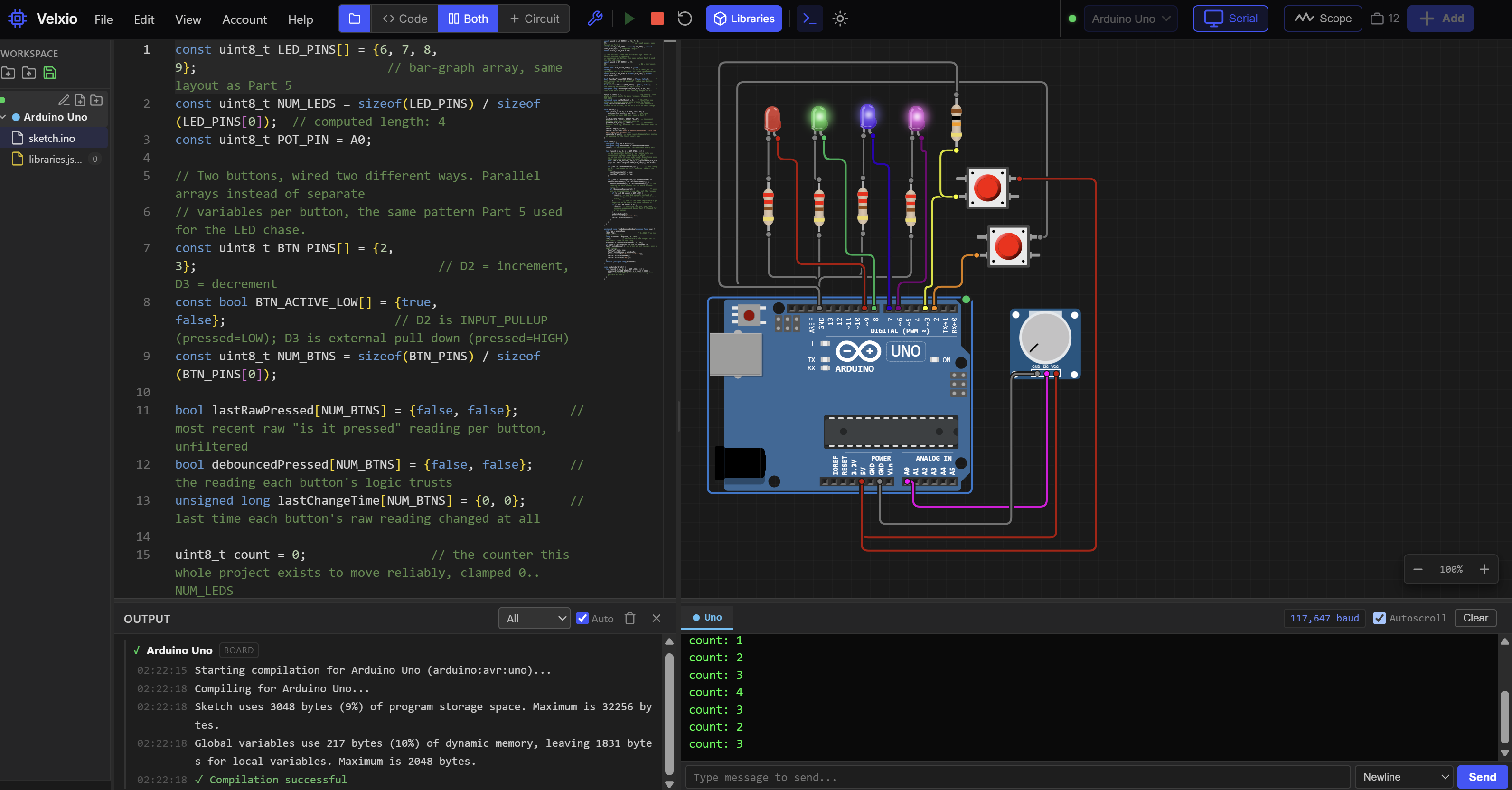
A board photo was open on the bench, silkscreen small, connector names in the corner. That is the picture I care about when a lab says vision got sharper. On April 16, 2026, Anthropic made Claude Opus 4.7 generally available: in Claude's products, in the API as claude-opus-4-7, and on Amazon Bedrock, Google Cloud Vertex AI, and Microsoft Foundry.
The API price matches Opus 4.6, $5 per million input tokens and $25 per million output tokens. A token is a chunk of text the bill counts, often a word or a piece of a word. Anthropic says the model is stronger on the hardest coding, and that it accepts finer images than earlier Claude models.
What actually changed?
A long firmware log still needs a watched plan on the previous model. Anthropic presents Opus 4.7 as the upgrade for that session, with gains on difficult, long-running coding. Early users, they say, are handing over work that used to need close supervision. I did not run it for this article.
Vision is the spec you can point at. Opus 4.7 accepts images up to 2,576 pixels on the long edge, whichever side is longer, about 3.75 megapixels. A pixel is one sample in the picture. A megapixel is a million of them. Anthropic says that is more than three times as many as prior Claude models. Vision resolution here means that limit. The change is in the model. The API has no new resolution switch. Finer images spend more tokens, and Anthropic says you can shrink a page first if you do not need the detail.
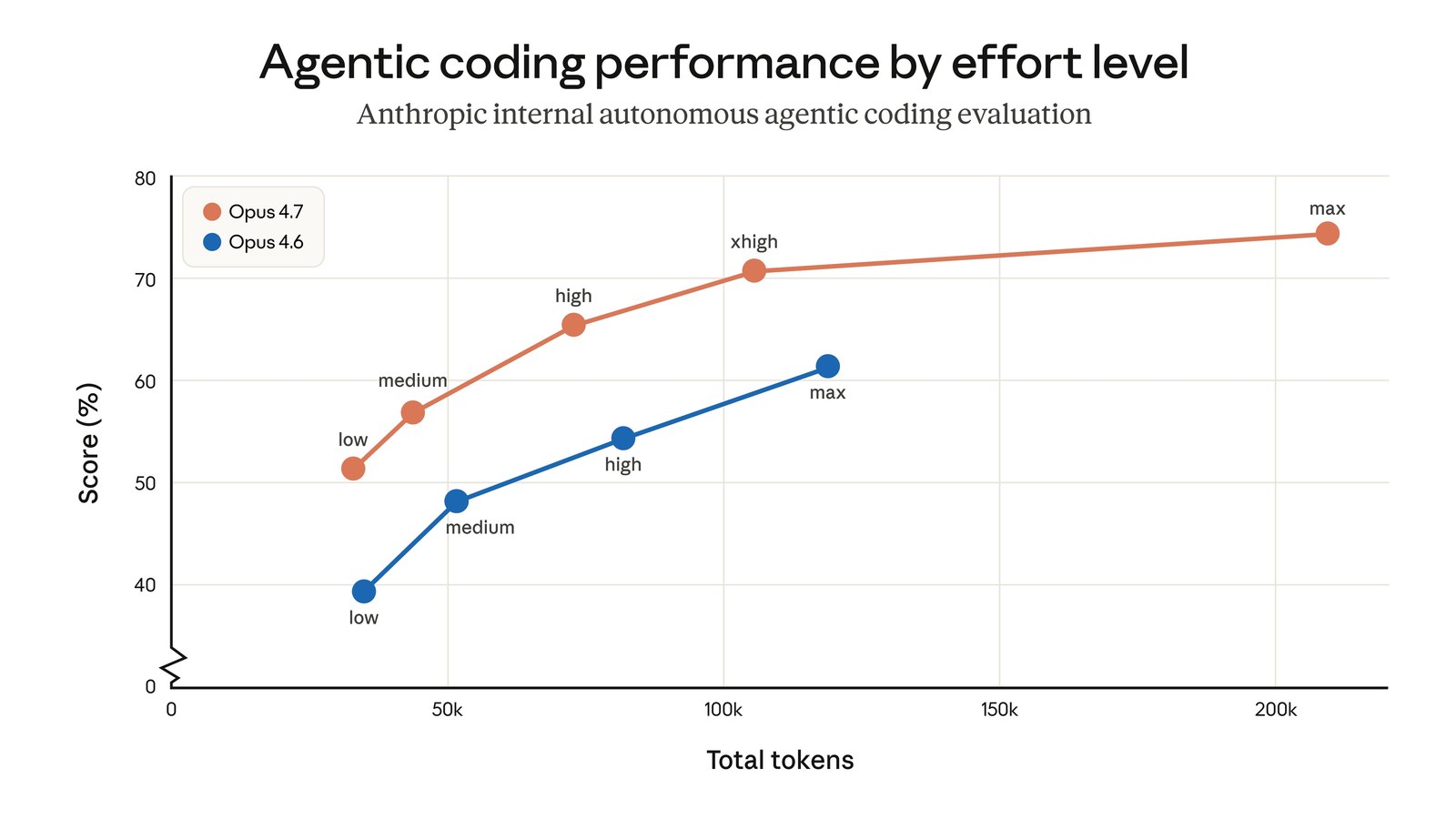
Effort level trades deeper reasoning for a faster reply. Opus 4.7 adds xhigh, extra high, between high and max. Claude Code's default is now xhigh on every plan. For coding and for long tool-using jobs, Anthropic says to start at high or xhigh.
How does the new piece work?
Computer use, in this post, means the model looks at software on a display and acts on what it sees. Extra pixels help a tiny label on a schematic. They do not prove the label was read right.

Context is the working set in one request: prompt, files, images, and the thread.
The price per token is flat. The count can still move. A new tokenizer, the step that chops text into tokens, can turn the same input into roughly 1.0 to 1.35 times as many tokens. Opus 4.7 also thinks more at higher effort, especially later in an agent run, where the model carries a task across steps and tools. That extra thinking is billed as output tokens. The chart above is a single-prompt test, and Anthropic says it may not match an interactive session.
Task budgets, in public beta on the API, steer token spend on a long run. /ultrareview in Claude Code flags bugs and design issues. Pro and Max get three free. Auto mode is a new permissions option, extended to Max with this release: Claude decides some steps, so a long task stops less often, with less risk, Anthropic says, than permissions turned off. I would still read the patch.
Old prompts can misbehave. Opus 4.7 follows instructions more literally. Earlier models sometimes skipped a clause. A harness, the script and settings around the model, may need a rewrite when two lines quietly disagree.
Cyber requests meet a new gate. Safeguards automatically detect and block prohibited or high-risk cybersecurity requests. Anthropic says this model's cyber skill trails Claude Mythos Preview, and Mythos Preview stays limited. They also say training included an experiment aimed at reducing cyber capability relative to other skills. Permitted security work is pointed at their Cyber Verification Program. I am not going to describe the block, or an attack.
What does this look like on a real project?
This is the pass I would run on a sensor board. I did not run it on Opus 4.7. Inputs: a photo of the stuffed board, a schematic screenshot, a serial log. Output I would accept: the pins the firmware should touch, anything in the photo that fights the silkscreen, and a code change I can read before a chip is programmed.
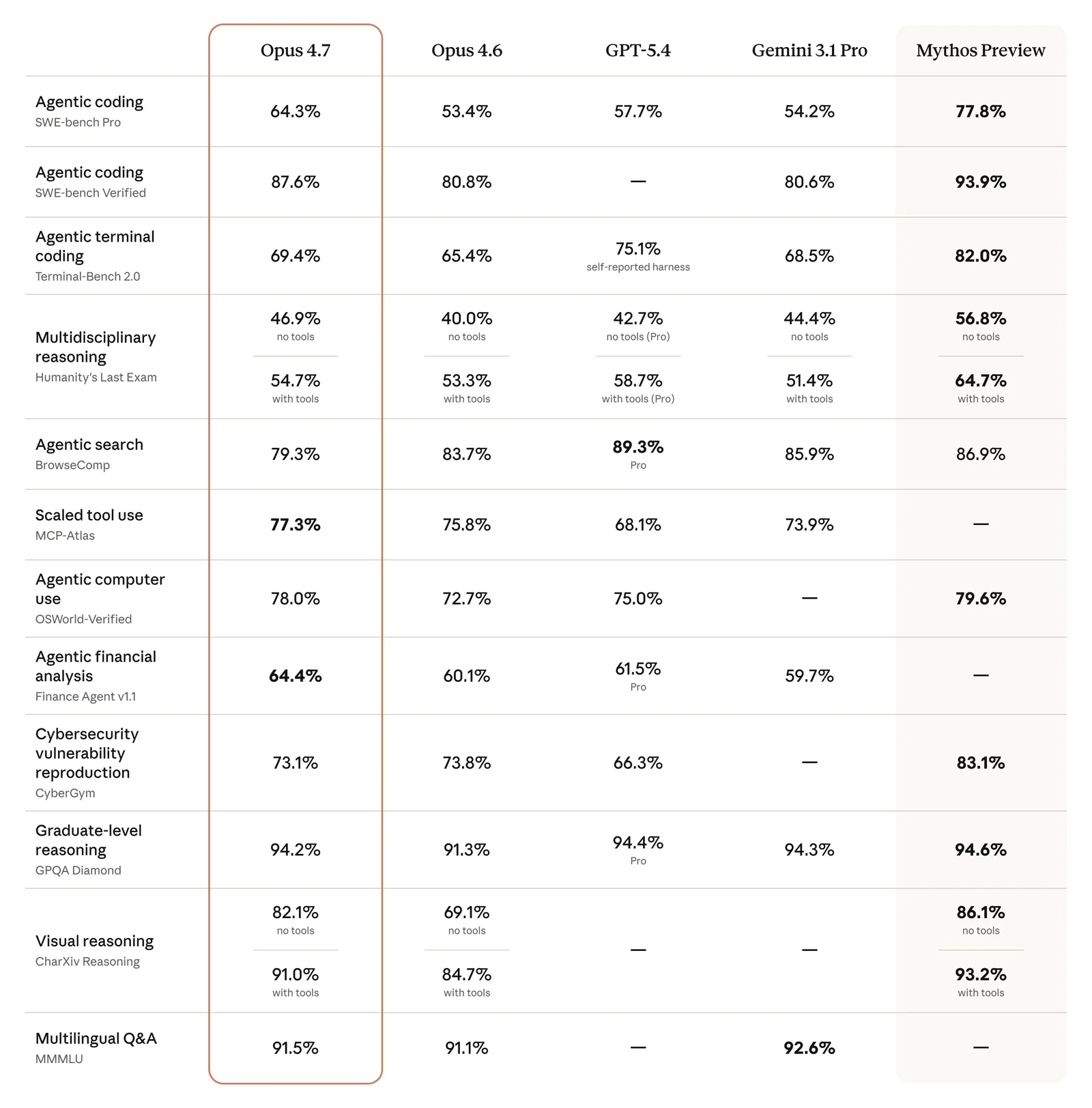
I would send the 2,576-pixel long edge only where a pin name is tiny, and shrink the rest. Effort starts at high. If the plan is sloppy I move to xhigh. Claude Code already defaults there, so I would turn it down if the reply turns into an essay.
The prompt would be new. An old note that says "follow the datasheet" and also "use your judgment if a pin is unclear" can now be obeyed as two orders. I would split it: what must not change, the question, and a rule to stop and ask when the drawing is silent. Then I read the datasheet myself.
On the API the id is claude-opus-4-7, and I would set a task budget. In Claude Code I would spend one free ultrareview, and I would leave auto mode off when the change is saved.
How does it compare with the previous version?
Opus 4.6 is the model this replaces, at the same price per million tokens. Anthropic says the coding lift is largest on the hard tasks, and that Opus 4.7 checks its own output more before it answers.
xhigh is new, and it is the Claude Code default. The tokenizer and the extra thinking can raise the token count on a flat rate. Fewer steps can lower it. Measure your own traffic. The long-edge vision limit above is Anthropic's "more than three times" claim against prior Claude models.
Cursor's figure stays off that chart. Cursor says: "On CursorBench, Opus 4.7 is a meaningful jump in capabilities, clearing 70% versus Opus 4.6 at 58%." That is a partner result. It is not Anthropic's benchmark.
Anthropic says Opus 4.7 is less broadly capable than Claude Mythos Preview, which stays limited. The alignment note calls this model "largely well-aligned and trustworthy, though not fully ideal in its behavior." On their audit, Mythos Preview still shows the least misaligned behavior, and Opus 4.7 is only a modest step past Opus 4.6. They do report better honesty, and better resistance to prompt injection, a hidden instruction planted in text the model will read.
Where does it sit next to other tools a maker already uses?
The serial terminal, the schematic viewer, and the editor stay. Opus 4.7 is the model under Claude Code, under the API id claude-opus-4-7, or on Bedrock, Vertex AI, and Microsoft Foundry. A probe still tells me if a pin is high. Mythos Preview is the stronger cyber model Anthropic is keeping limited.
What does it cost, and who can use it today?
Five dollars per million input tokens, twenty-five per million output tokens, same as Opus 4.6. No separate hobby rate appears in the post. What moves the invoice is volume: about 1.0 to 1.35 times the tokens on the same input, plus more output when effort is high. Task budgets, public beta, are the control they shipped. You can also drop the effort level.
Everyone on Claude products and the API can call it as of April 16, and so can the three clouds named above. Every Claude Code plan defaults to xhigh. Pro and Max get three free ultrareviews. Max gets auto mode. High-risk cyber requests are blocked unless you are on the verification path they describe.
What is still unproven?
I have not run Opus 4.7 on my logs. Cursor's 70% versus 58% is a partner line inside Anthropic's post. The token chart is a single-prompt test. Literal prompts will surprise some old harnesses. A higher pixel cap does not mean a faint designator was understood. Mythos Preview remains the more capable model in their telling, and the cyber gate is on its first wide outing. "Largely well-aligned" still shares a sentence with "not fully ideal."
Disclosure
Disclosure: The author is a paying subscriber to ChatGPT Plus, Claude Pro, and SuperGrok and uses all three services on a daily basis. The Makers Workbench is not affiliated with OpenAI, Anthropic, xAI, Google, or any of the other major AI companies covered in our reporting. No company receives favorable editorial treatment based on the author's personal subscriptions.
Sources and image credits
- Anthropic announcement (www.anthropic.com)
- Images: published by Anthropic with the announcement.


