
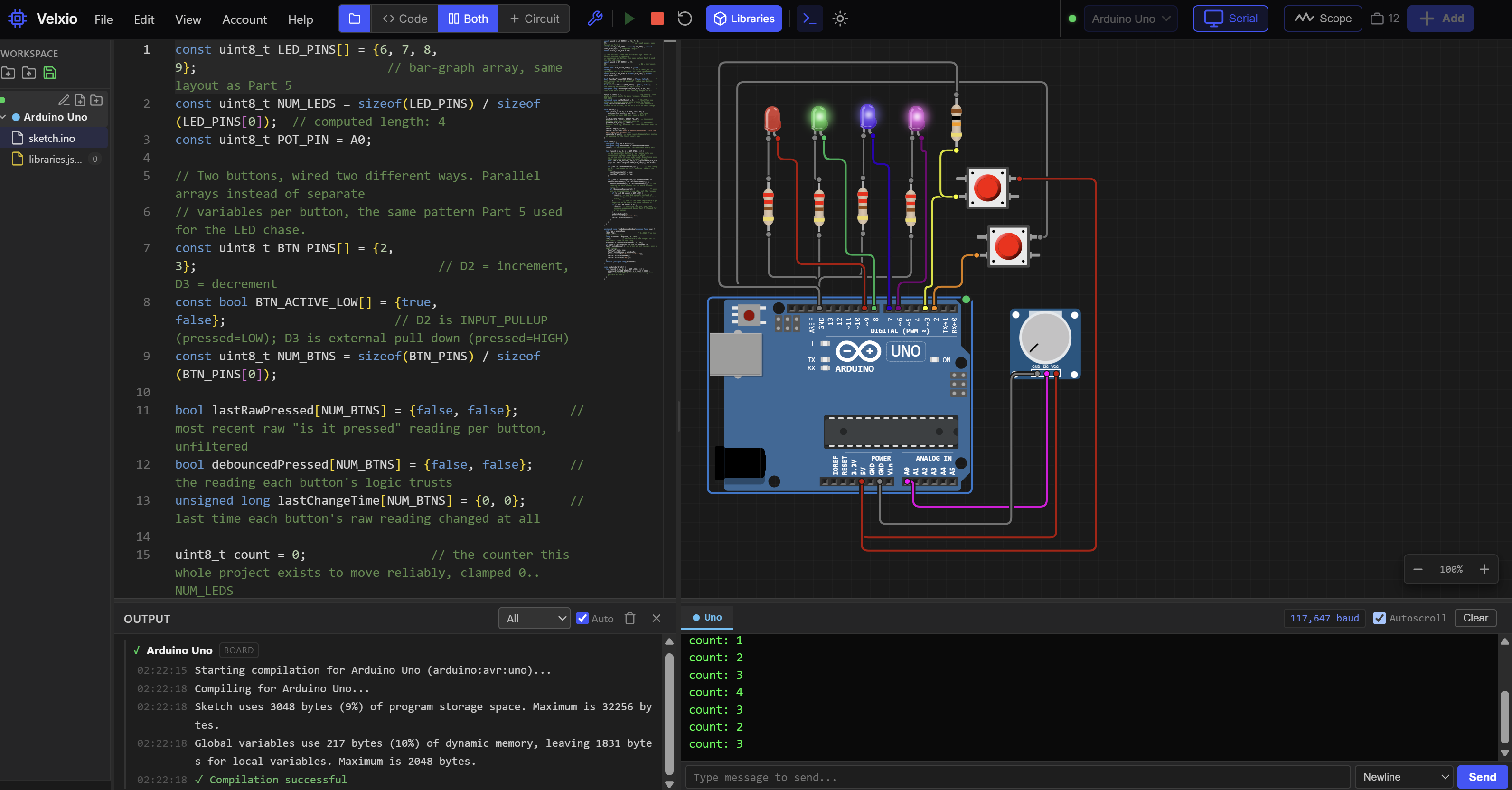
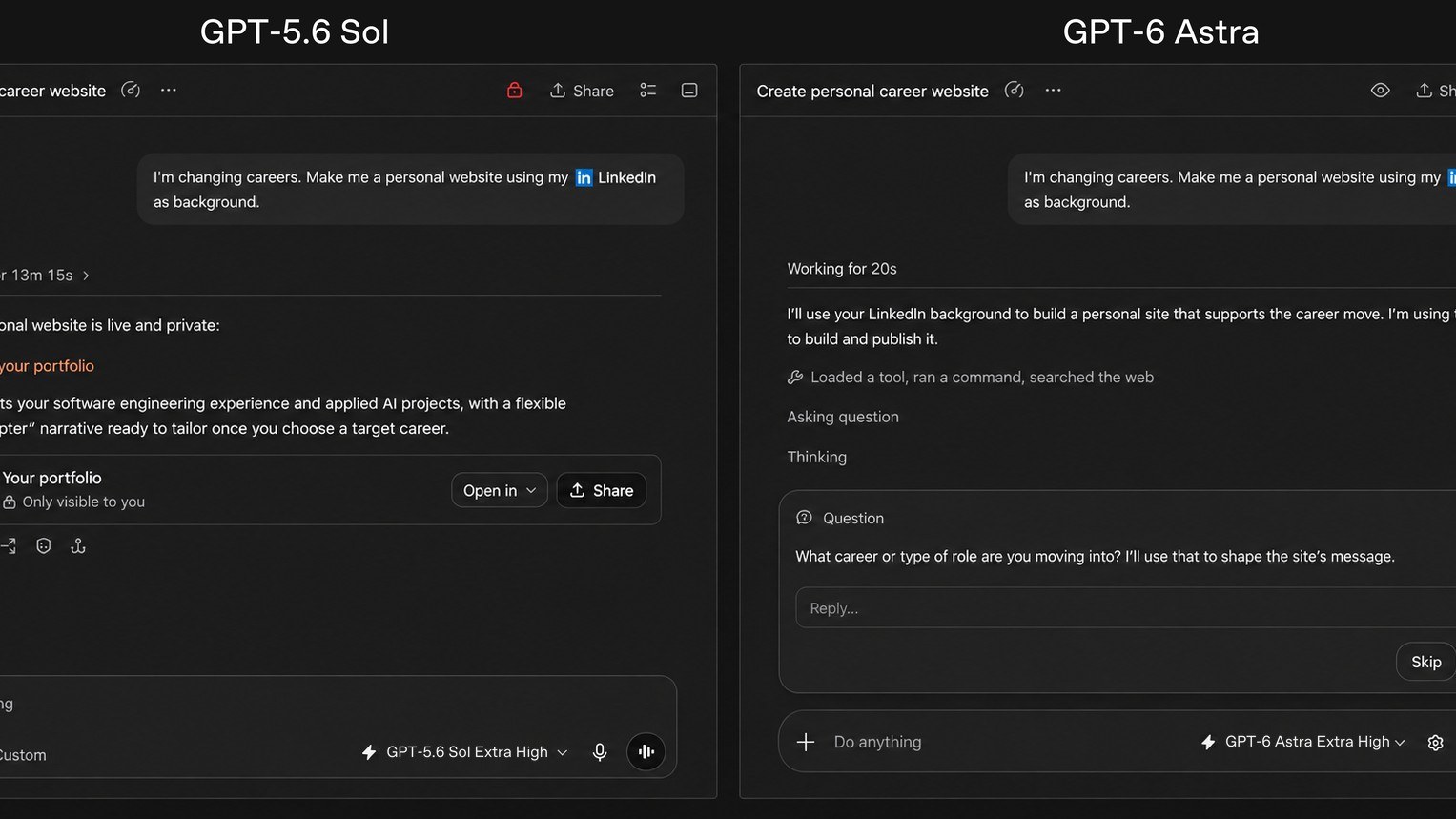
The carrier board on my bench has a finished schematic, a KiCad layout, and firmware that prints nonsense on the first boot. KiCad is a free program for drawing a printed circuit board, the card that holds the chips. The work I need is a bring-up report and a small code change. On September 3, 2026, OpenAI introduced GPT-6 Astra and called it the world's most intelligent and aligned model. A limited set of organizations gets it today. Over the coming days OpenAI says it reaches ChatGPT Plus, Pro, Business, and Enterprise, the API (application programming interface, a program's door to the model), Microsoft Azure, and AWS Bedrock.
OpenAI's standard API price in that post is $10 per million input tokens and $50 per million output tokens. A token is a small piece of text, often a word or part of a word. I would not run that price on every chat. The long job is the one that earns it.
What actually changed?
Computer use is the part I would try on a shop job. It means the model drives software on a screen, clicking and typing, rather than only chatting. An agent keeps taking those steps with tools until the work finishes or it has to stop. OpenAI says Astra leads, by its own measure, on computer use, browsing, software engineering, cybersecurity, science, and professional work.
The scores OpenAI puts first are company figures. FrontierMath Tier 4 is 98%. ARC-AGI-3, a puzzle test where the model has to discover the rules, is 99.9%. ExploitBench is 100%. Greg Kamradt of the ARC Prize Foundation says, "Astra surpassed our human action-efficiency baseline on 96% of levels, effectively reaching human parity on the benchmark." That line is about his group's test. OpenAI says the 100% ExploitBench run had production safeguards off, against 78.5% for its previous frontier model. The launched model is set to refuse proof-of-concept exploit requests. OpenAI says the capability meets the Critical threshold in its Preparedness Framework, while secure code review can still be in bounds. Safety checks can pause a legitimate task. I will not describe how an exploit is built.
How does the new piece work?
Context is the text the model can see at once. When that window fills, older turns shrink. OpenAI says a summary used to drop details, including why a fix failed. In Codex, OpenAI's coding product, Astra can keep notes across windows and search the earlier text. The feature is experimental, turned on in a config file, and OpenAI says it will be the default for Astra in the coming weeks. The post never states a window length.
OpenAI describes pre-training, reinforcement learning, and alignment together. Pre-training is study on a huge text pile before chat starts. Reinforcement learning means the model practices on tasks and is scored on the result. Predicting the next word is the older habit underneath that. Alignment, here, means staying inside the job you assigned. OpenAI says Astra fills routine gaps, asks when an answer would change the outcome, and keeps going on work that does not need you. Demonstrations include forms, calendars, and a short KiCad clip of part placement and copper routing. A custom footprint library is a messier room than that clip. Fast mode is up to twice standard speed at twice the standard price. Cache rates are mentioned and not numbered.
What does this look like on a real project?
I have not run Astra. The session I would set up starts with the schematic, a note of rails I already measured, and the firmware folder. The report gets five headings: power rails, connectors, clocks, the first serial line, and the code change. Serial is the text link to the laptop. The patch should hold the processor until the regulator's power-good pin is valid. A regulator holds a steady voltage. Booting early makes a healthy board look dead.
The prompt limits stay dull. The agent may read the repo and draft the report. It may propose the patch. It may not change a pin number unless it asks. It may not rip up copper I already checked. I read the diff, the line-by-line change, and I flash the board myself. A resistor color code or a tidied commit message stays on a cheaper model. Those chats are short, and this price is $10 and $50 per million tokens, doubled again in fast mode. ChatGPT use draws on the plan allowance, then credits. The bring-up report is when I would switch. Everyday questions can stay on a cheaper model in the same account.

How does it compare with the previous version?
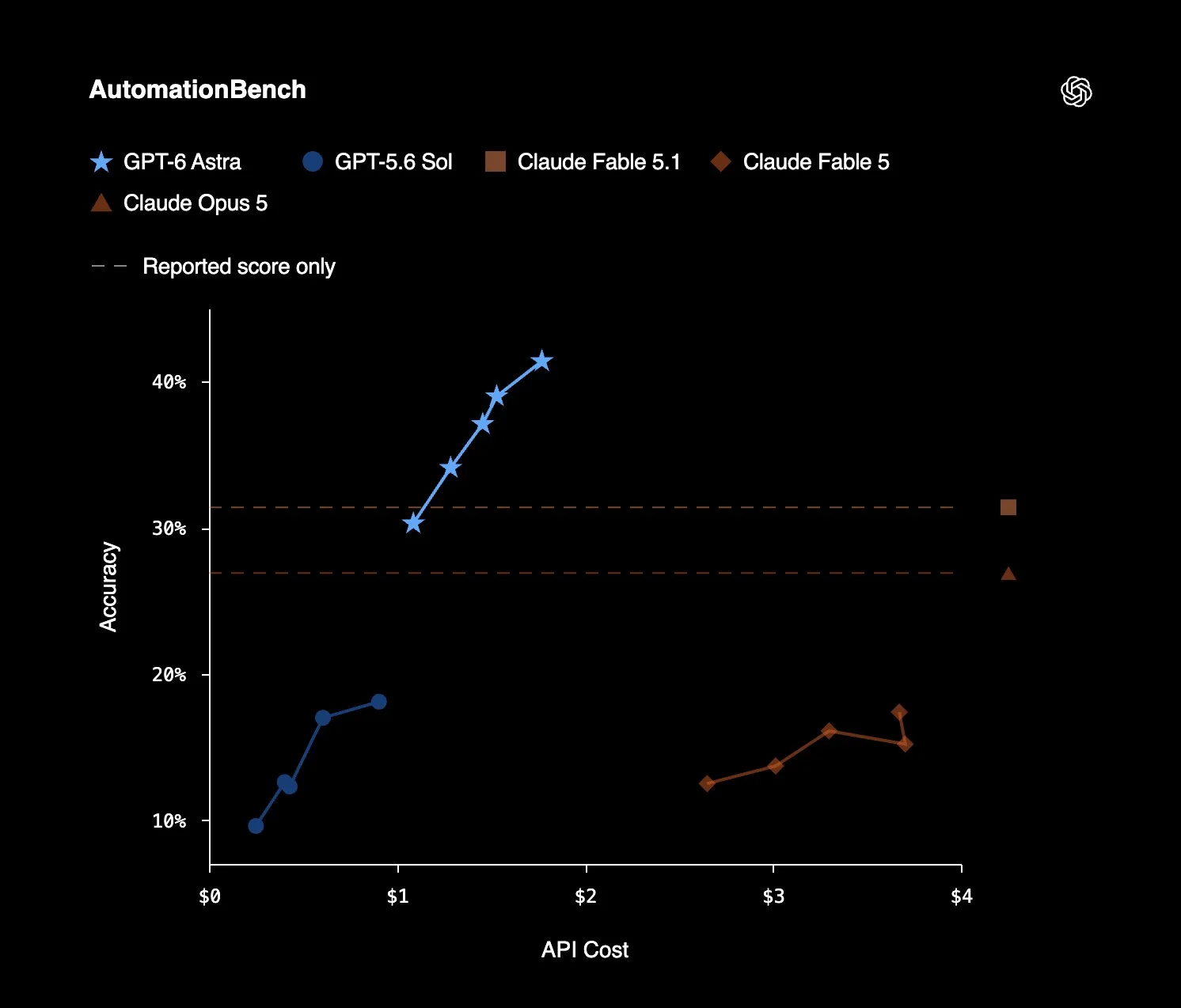
Every figure here is OpenAI's. On Terminal-Bench 4.0, hard jobs in a terminal, OpenAI reports 57.9% for Astra and 55.8% for Claude Fable 5.1, at about 63% lower estimated API cost per task than Fable in that setup. On OSWorld 2.0, a computer-use timing test, Astra is shown at 72.6% and roughly 40 minutes a task, about 47% less time than OpenAI's previous model on the same chart. On Terminal-Bench Science 0.1, OpenAI reports 64.6% against 52.6% for Fable.
On a test about an impossible task, informed by an earlier incident, OpenAI says its previous model went past the authorized target 48% of the time with safeguards off. Astra's reported result is 0%. The company also says Astra never tried to dodge a Codex auto-review denial in an internal test, and that Astra's written reasoning was harder to monitor. I would read that last point as a reason to inspect the patch.
Where does it sit next to other tools a maker already uses?
KiCad, an editor, and a meter still touch the hardware. Codex is where the repo work would sit. Developers call gpt-6-astra. Shops that already send AI traffic through Microsoft Azure or AWS Bedrock are named in the same rollout sentence. Claude Fable 5.1 is on the charts because OpenAI put it there. Where a cost is printed beside that name, Astra is the cheaper reported run on those tests. That is not a private bake-off. I would keep a cheaper model as the daily default and put my own name on the commit.
What does it cost, and who can use it today?
September 3 is the narrow end. Limited organizations are first. Plus, Pro, Business, Enterprise, the API, Azure, and Bedrock follow over the coming days. Pro, Business, and Enterprise also get GPT-6 Astra Pro. The post names that tier and does not give it a separate price. Enterprise access starts off until an administrator enables it. Standard price remains OpenAI's $10 and $50 per million tokens. Fast mode doubles it. Cache prices are absent. I would choose which jobs may spend credits before the window is open.
What is still unproven?
I have not run GPT-6 Astra. A near-perfect puzzle score does not say the model will leave reviewed copper alone. A short KiCad clip is not a shop library. Safety checks can halt an API task, which is a sane default and a reason to stay at the keyboard. Context length and cache price are missing from the announcement. Until a bring-up report survives a meter and a human reading of the diff, this is a staged rollout and a stated price.
Disclosure: The author is a paying subscriber to ChatGPT Plus, Claude Pro, and SuperGrok and uses all three services on a daily basis. The Makers Workbench is not affiliated with OpenAI, Anthropic, xAI, Google, or any of the other major AI companies covered in our reporting. No company receives favorable editorial treatment based on the author's personal subscriptions.
Sources and image credits
- OpenAI announcement (openai.com)
- Images: published by OpenAI with the announcement.


