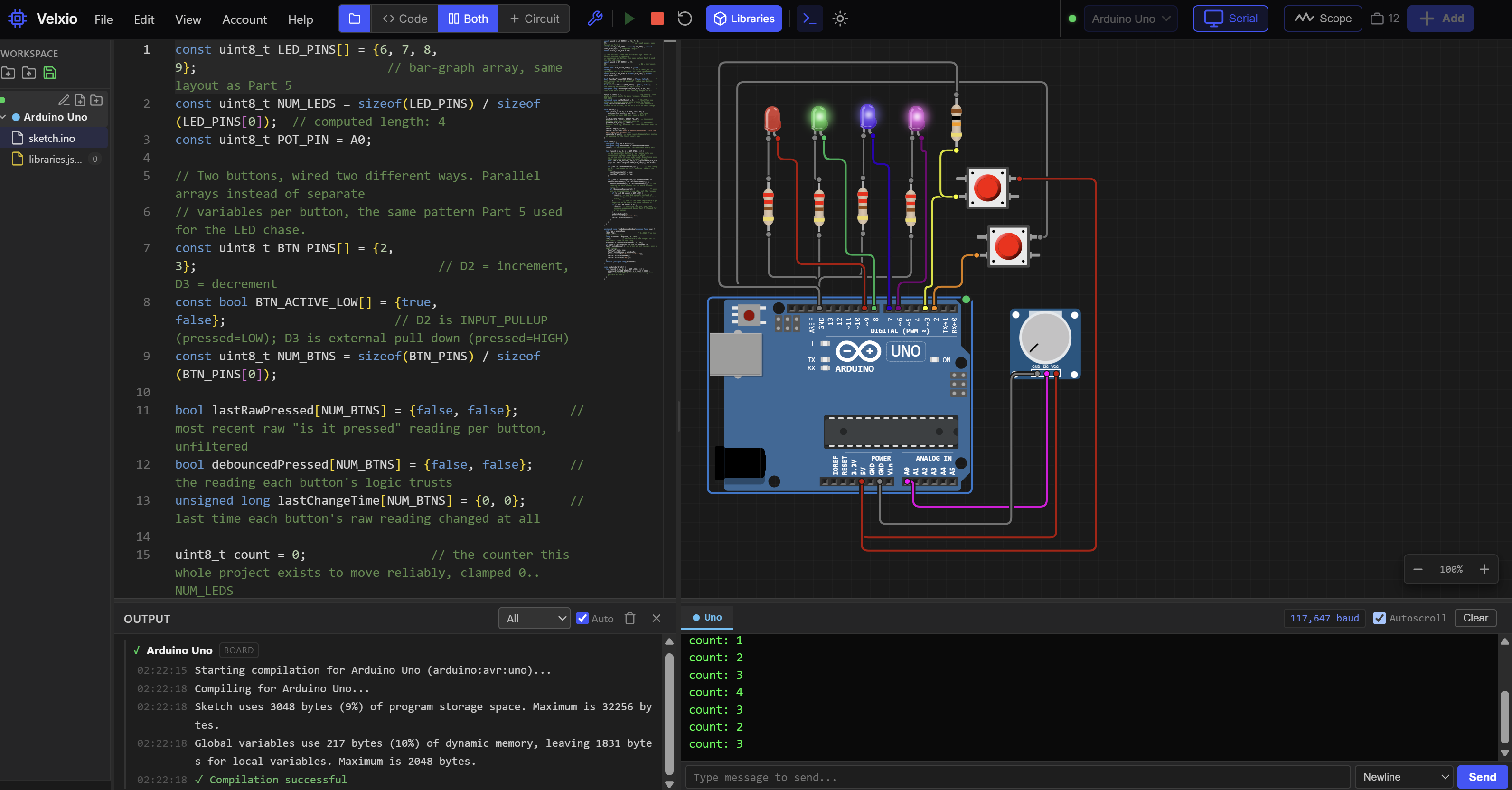
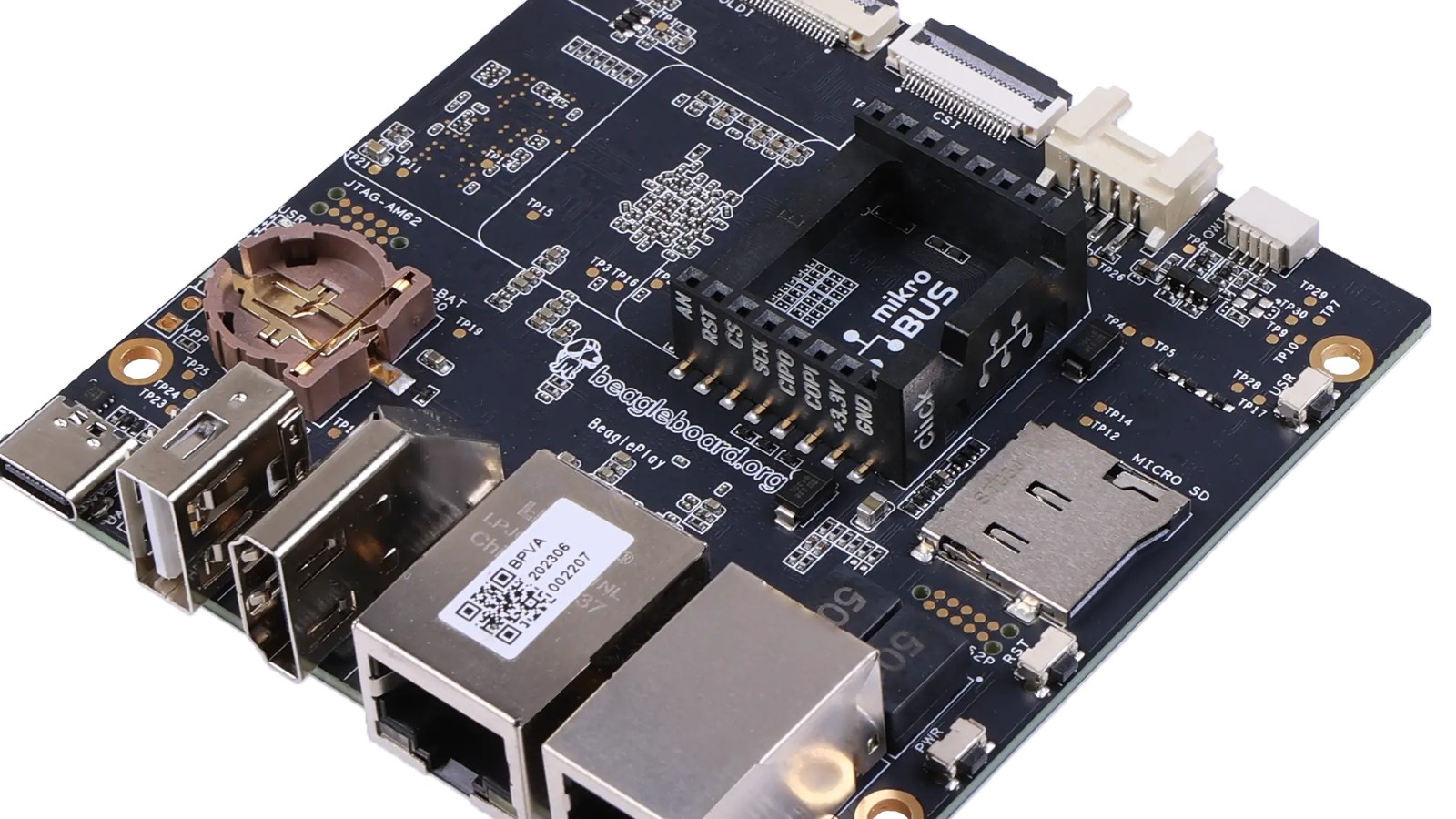
Bootlin added BeaglePlay support to its Embedded Linux system development course on August 16, 2023, moving one of the best-known practical Linux training programs onto a modern 64-bit open-hardware board. The change gave students another choice alongside the long-serving BeagleBone Black and updated the labs around Texas Instruments' AM625 processor.
This was more significant than a board appearing on a compatibility list. Bootlin publishes its course materials under an open-source license, including the slides, agenda, lab instructions, and lab data. Anyone can study the same material used in paid sessions, even when learning independently.
BeaglePlay is also a useful teaching target because it combines a normal Arm64 Linux environment with real-time processors, programmable I/O, onboard storage, networking, and well-documented expansion. Students can learn the operating system while staying close to the hardware it controls.
What the course teaches
Embedded Linux development is different from installing a desktop distribution on a small computer. A product team often needs to understand the full path from power-on to application: bootloader, Linux kernel, device tree, root filesystem, cross-compilation, storage, networking, and drivers.
A bootloader initializes enough hardware to load the operating system. The kernel manages processors, memory, devices, processes, and security boundaries. The device tree is a data structure that describes hardware the kernel cannot discover automatically. The root filesystem contains libraries, configuration, utilities, and applications available after boot.
Bootlin's practical labs make those layers concrete. Students configure and build components, transfer software to the board, boot it, diagnose failures, and interact with real peripherals. That experience is difficult to replace with slides alone.
The labs also teach cross-compilation. In a cross-development workflow, code is built on a faster host computer using tools that produce programs for the board's different processor architecture. This is common in embedded work because the target may have limited storage, memory, or build performance.
Why BeaglePlay is a useful replacement platform
BeagleBone Black is still a widely used training board, but BeaglePlay provides a newer 64-bit Arm platform. Its AM625 includes four Cortex-A53 application cores, a Cortex-M4F, a Cortex-R5F, and programmable real-time units. The main cores run Linux, while the other processors create opportunities to study mixed-criticality and real-time designs.
The board includes 2GB of DDR4 memory, 16GB of eMMC (embedded MultiMediaCard flash, persistent storage built directly into the board), and a microSD slot. Gigabit Ethernet, Wi-Fi, USB, and a serial debug path support the normal rhythm of remote development and recovery. Its open hardware documentation makes it possible to trace a software-visible device back to the actual circuit.
For training, predictable access is essential. A course platform must be obtainable, documented, and recoverable when a student makes a mistake. A removable boot medium and serial console are especially valuable because they provide a route back into a board that no longer reaches a login prompt.
The materials are useful outside a classroom
Bootlin offers public online sessions, private online training, and private on-site courses. Paid instruction gives learners a schedule, an experienced trainer, and help when a lab fails. The open materials also support self-study, university courses, internal company workshops, and community groups.
Independent learners should expect to do more diagnostic work. Course instructions are written for a known environment, and package versions or host distributions can change. Recording every command, version, and error makes it easier to distinguish a typo from an actual compatibility problem.
The open license is important because embedded knowledge ages. Training material can be reviewed, corrected, translated, adapted, and preserved rather than disappearing behind a proprietary portal. Learners can also inspect exactly what a course covers before spending money.
Hardware work makes Linux concepts visible
On a cloud server, the device tree and bootloader can feel distant. On BeaglePlay, students can connect an I2C (Inter-Integrated Circuit, a simple two-wire bus for low-speed sensors) sensor, change a pin configuration, watch serial boot messages, or load a driver and immediately see the result.
That feedback builds a more accurate mental model. Linux does not access a sensor because an application names it. Firmware and hardware descriptions must identify the bus and address, the kernel must bind a driver, permissions must allow access, and user-space software must interpret the data.
BeaglePlay's Qwiic, Grove, and mikroBUS connectors make experiments physically approachable. They do not remove the need to understand voltage, pin assignments, bus conflicts, and drivers. In a course, those constraints are part of the lesson.
How to prepare for the labs
Use a Linux host or a supported virtual-machine setup with enough storage for toolchains and source trees. Keep the host version close to Bootlin's current recommendation. An unsupported new distribution can introduce compiler, Python, or package differences that distract from the lesson.
Have a reliable power supply, microSD card, Ethernet connection, and serial adapter or supported debug cable. Serial console access is essential because it shows messages before the network starts. Save an untouched recovery image before changing the bootloader or storage layout.
Follow the lab sequence even if later topics look more exciting. Boot flow, cross-compilation, and filesystem construction provide the foundation for driver work. Skipping them can leave a learner copying commands without understanding which component produced the result.
When a command fails, read the complete error and confirm the current directory, environment variables, target architecture, and file paths. Embedded Linux problems often come from building a correct component for the wrong target or installing it in the wrong place.
Why this announcement matters
A development board becomes more valuable when respected educational material supports it. Hardware specifications can show what is possible, but a maintained course teaches developers how the pieces fit together and how to recover when they do not.
Bootlin's adoption also signals that BeaglePlay is more than an inexpensive prototyping board. The AM625 platform, open documentation, and accessible interfaces make it suitable for professional instruction in the same workflows used to build commercial Linux devices.
For makers, the freely available materials create a route from using a prebuilt image to understanding how that image is assembled. For working engineers, the BeaglePlay labs provide a current Arm64 target for refreshing skills or onboarding a team. The board supplies the hardware, but the real value comes from turning it into a transparent system that learners can build, break, inspect, and repair.
Even if you never take the paid course, I'd work through the open labs with a serial adapter and a recovery image on hand. Watching a boot message scroll past is a great way to learn.
Sources and image credits
- Bootlin Embedded Linux system development course, Bootlin.
- BeaglePlay board page, BeagleBoard.org.
- BeaglePlay product image from BeagleBoard.org.
- Square and vertical crops are edited from the same source image.