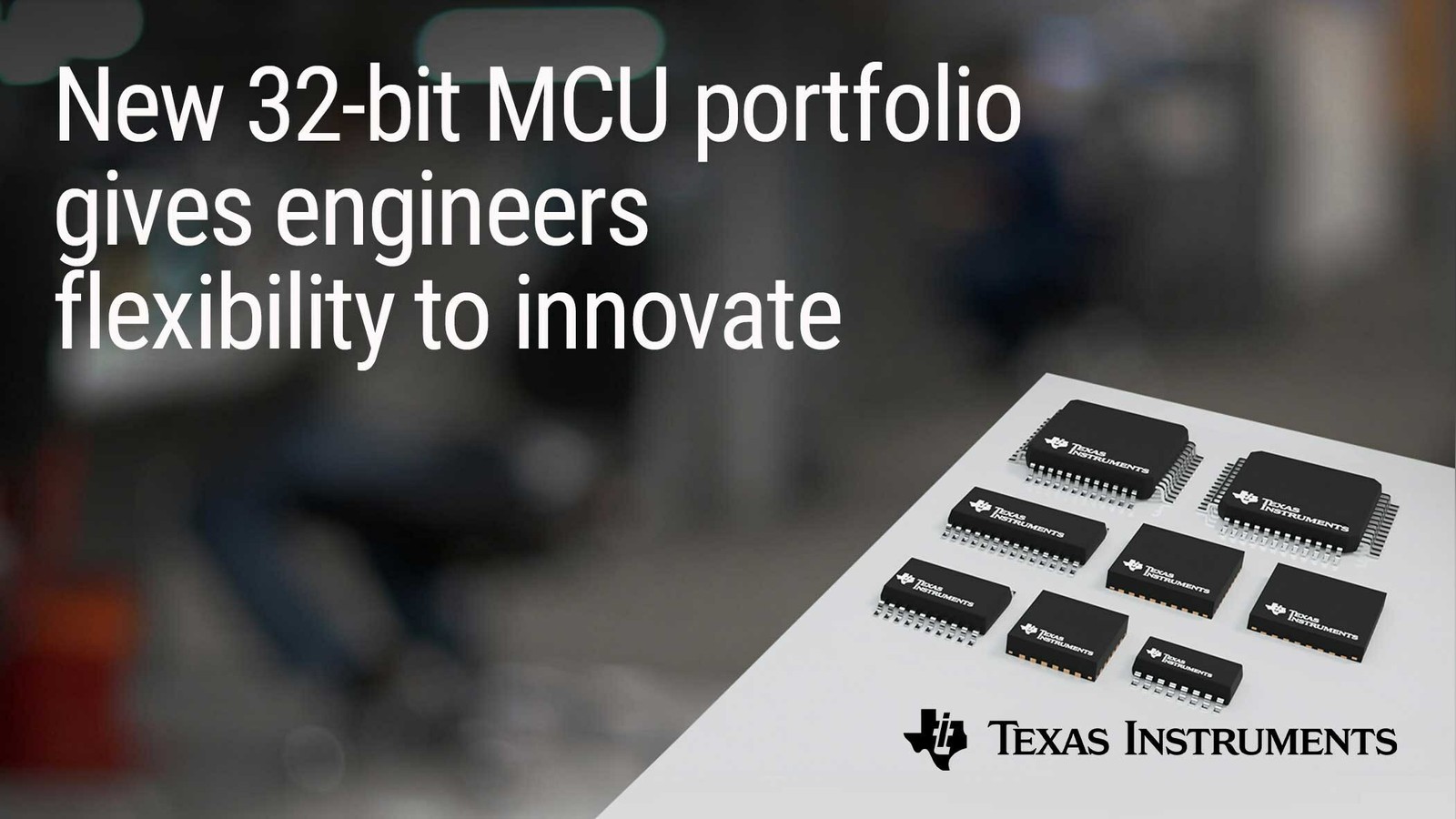
Texas Instruments introduced MSPM0 on March 15, 2023, creating a broad family of inexpensive 32-bit microcontrollers around the Arm Cortex-M0+ processor. The launch covered devices from 32MHz to 80MHz, flash capacities from 8KB to 128KB, multiple analog configurations, and package options with 16 to 32 pins. TI advertised pricing beginning at $0.39 in quantities of 1,000.
The low price was only part of the story. MSPM0 gave TI a modern, scalable general-purpose family that could serve jobs once split among small 8-bit controllers, MSP430 devices, and more capable Arm chips. It also arrived with an SDK (software development kit, the bundle of drivers, libraries, and example code TI provides for a device family), graphical configuration tools, reference designs, and LaunchPad development boards.
For makers, the LaunchPads offer an approachable route into the family. For product designers, the attraction is being able to move between related parts while retaining much of the software investment.
What Cortex-M0+ provides
Arm Cortex-M0+ is a small 32-bit processor core designed for low power and low silicon cost. It supports a modern address space and interrupt architecture without the complexity of higher-end Cortex-M devices. That makes it suitable for sensors, simple motor controllers, appliances, medical devices, power systems, and control panels.
MSPM0 launched in two broad groups. MSPM0L devices emphasized cost-conscious, lower-frequency applications, while MSPM0G devices offered higher clock rates, more memory, math acceleration, and richer analog options. Developers need to select the specific part rather than treating MSPM0 as one fixed specification.
A 32-bit core does not automatically make a product faster or more efficient than an 8-bit design. The software, peripherals, clocking, and sleep behavior matter. MSPM0's advantage is a consistent architecture with room to scale from simple control to more calculation-heavy sensing.
Integrated analog is a major differentiator
TI highlighted analog hardware because most embedded products must measure or control real-world signals. Selected MSPM0 devices include 12-bit analog-to-digital converters rated as fast as 4 million samples per second, operational amplifiers, comparators, and other signal-chain components.
An analog-to-digital converter, or ADC, translates a voltage into a number that firmware can process. Higher sample rates help with fast signals, but effective resolution, noise, reference quality, and circuit layout determine useful accuracy.
TI also described the portfolio as including the first zero-drift operational amplifier integrated into a microcontroller. A zero-drift amplifier continually corrects offset error, helping with small sensor signals that would otherwise be distorted by the amplifier's own input offset and temperature drift.
Integration can reduce component count and board area. It does not eliminate analog design. Input protection, filtering, grounding, source impedance, calibration, and PCB (printed circuit board) layout remain essential.
The software platform is designed to scale
The MSPM0 SDK launched with drivers, libraries, subsystem reference designs, and more than 200 examples. TI's graphical SysConfig tooling helps select pins and configure peripherals, then generates initialization code for the project.
Generated configuration is most useful when developers understand what it creates. Review clock settings, interrupt priorities, peripheral ownership, and power modes. Store the configuration source alongside the generated files so another developer can reproduce the build.
TI promoted a code-once, scale-across-devices workflow. Related peripherals and SDK conventions can reduce migration work, but moving to another MSPM0 still requires checking memory, pinout, package, analog features, timers, and electrical limits. Family compatibility is a head start, not a substitute for validation.
LaunchPad boards lower the entry cost
At introduction, TI offered LaunchPads for MSPM0L1306 and MSPM0G3507 devices. A LaunchPad is TI's development-board format, typically including the target microcontroller, headers, LEDs, buttons, and an onboard debug probe.
The debug probe is important because embedded development depends on more than uploading firmware. A debugger can stop code, inspect registers and memory, set breakpoints, and follow program execution. Those capabilities make timing and peripheral problems far easier to understand.
LaunchPad headers also support BoosterPack add-on boards. As with any modular system, confirm voltage, pin use, and software compatibility before stacking hardware.
Where MSPM0 fits
The portfolio targets products that need reliable sensing and control without a high-end processor. Examples include smoke detectors, blood-pressure monitors, pulse oximeters, motor-control systems, battery products, meters, small appliances, and industrial modules.
MSPM0 is not a wireless family by itself. A connected product needs an external radio or another processor with connectivity. It is also not aimed at large graphical interfaces or Linux. The family is strongest when deterministic control, integrated analog, low cost, and modest memory are the priorities.
Developers coming from MSP430 will find a different processor architecture, but a familiar TI emphasis on low-power control and analog integration. Those coming from other Cortex-M families gain standard Arm development concepts plus TI-specific peripherals and tooling.
What to evaluate before selecting a part
Begin with the worst-case memory requirement, not the smallest current build. Leave space for diagnostics, field updates, and future features. Check SRAM as carefully as flash because buffers and task stacks can exhaust it first.
Match the analog specifications to the complete sensor circuit. Verify ADC input range, reference options, amplifier bandwidth, timer-trigger support, and direct-memory-access paths. If motor control is involved, inspect PWM (pulse-width modulation, a technique that varies a signal's on/off ratio to control power delivered to a motor or LED) timing and fault-handling hardware.
Power measurements should use the real application. Datasheet sleep figures do not represent a product that wakes frequently, drives sensors, or leaves clocks running. Measure active, sleep, and transition currents on the intended board.
Finally, review long-term availability and tool support. TI positioned the family as a large portfolio backed by its internal manufacturing investment. Product teams should still record approved orderable part numbers and second-source strategies.
The development boards are the sensible starting point even when the final product will use a much smaller package. A LaunchPad exposes power, reset, debugging, and common peripheral pins in a known-good layout. First prove the firmware and measure peripheral behavior there. Then compare the custom board against that reference when something fails. This avoids debugging a new schematic, new layout, and new software stack at the same time.
Cost comparisons should include the parts that integrated analog may remove. A slightly more expensive microcontroller can produce a cheaper and smaller board if it eliminates an external amplifier, comparator, reference, or timing component. The opposite can also be true when a design needs specifications beyond the internal peripheral. Price the complete signal chain and verify it under temperature and supply variation before committing to volume.
MSPM0's significance is the combination of price, analog capability, and a coherent development platform. The family gives beginners affordable boards and gives engineers a path from a small controller to an 80MHz device without abandoning the ecosystem. That makes it more than a single launch: it's the platform TI is building its low-cost microcontroller strategy on.
I'd start with a LaunchPad, prove the firmware there, and only then design a custom board. That way you're debugging one thing at a time.
Sources and image credits
- TI Makes Embedded Systems More Affordable With New Arm Cortex-M0+ MCU Portfolio, Texas Instruments, March 15, 2023.
- MSPM0 launch graphic, Texas Instruments, March 15, 2023.
- Square and vertical crops are edited from the same source image.