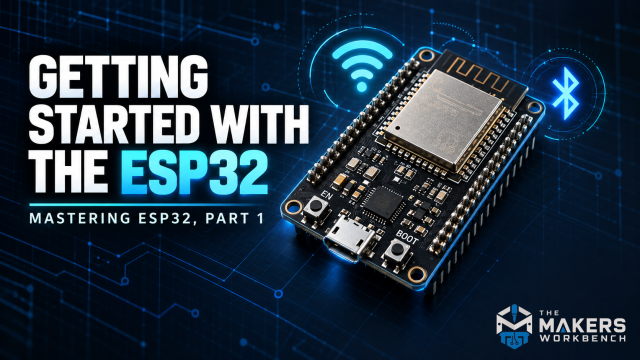

YuzukiHD has published the design files for YuzukiNeko, a Raspberry Pi Pico-style board built around an Allwinner F101 RISC-V chip that runs Linux. The GitHub repository releases the hardware under CC0-1.0, the public-domain dedication, and the board is not listed for sale. The author's repository carries schematics, PCB layout, and 3D shell files, with its latest update on October 12.
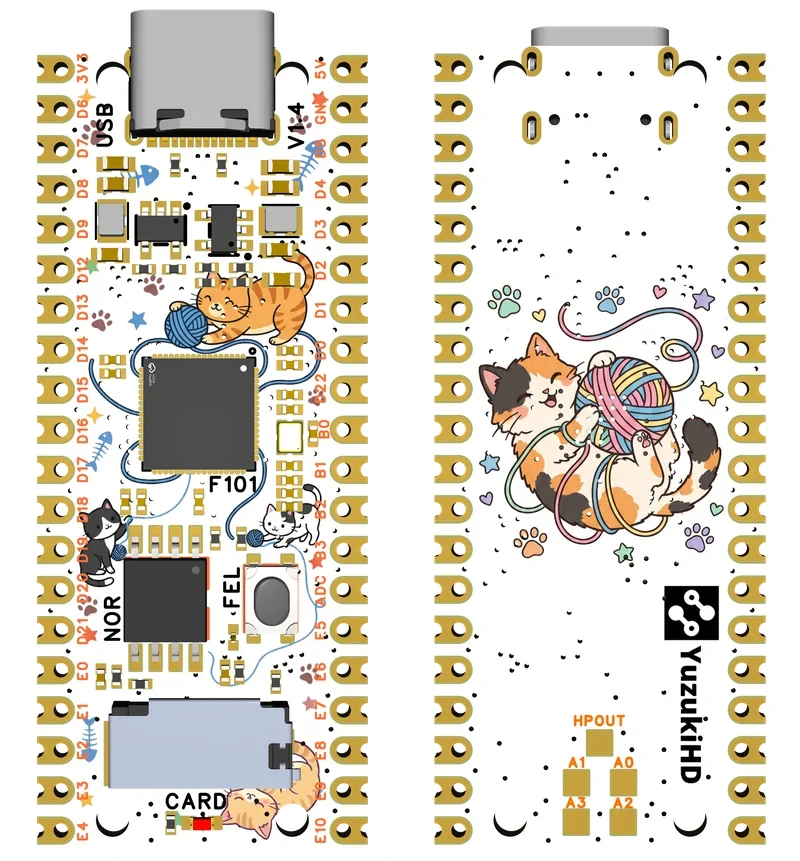
What the board has
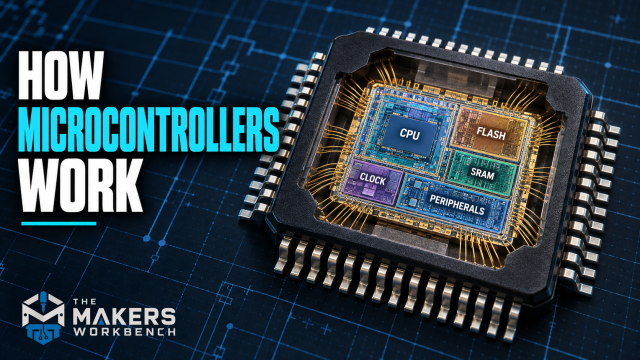
The README describes a compact board based on the F101 series SoC, with the Pico form factor of two 20-pin rows. The F101S3 version is equipped with 16 MiB of PSRAM, and the F101S4 variant has 32 MiB. Both have 16 MiB of NOR flash with execute-in-place support. The CPU is a XuanTie C907 RISC-V core with 32 KB of instruction cache and 16 KB of data cache, in a 7 by 7 mm QFN68 package. A USB-C port, a microSD socket, and a button labeled FEL for booting into the chip's flashing mode complete the visible hardware.
The README lists what the SoC can do: JPEG decoding up to 16,384 by 16,384 pixels, PNG up to 2,048 by 2,048, and JPEG or MJPEG encoding up to 720p at 30 frames per second. Video output options are RGB888 up to 1280 by 720 at 60 frames per second, single-link LVDS up to 1366 by 768, and four-lane MIPI DSI up to 1280 by 800. Peripherals include one USB 2.0 controller, two SPI, six UART, three I2C, two CAN, PWM, and a 512-bit eFuse. The README notes that multiplexed pin functions are options the chip can select, not features that are all wired out on this board.
Software
The project provides a mainline-based Linux tree, a Buildroot external tree, and a Zephyr port, all as separate repositories under the author's account, and the Linux source is on a branch named for Linux 7.2. The repository's documentation covers Zephyr demos including LVGL graphics, a Doom port, and video playback, along with a USB display mode. Linux on a chip with 16 MiB of RAM is likely to mean a stripped-down Buildroot system, not a desktop distribution.
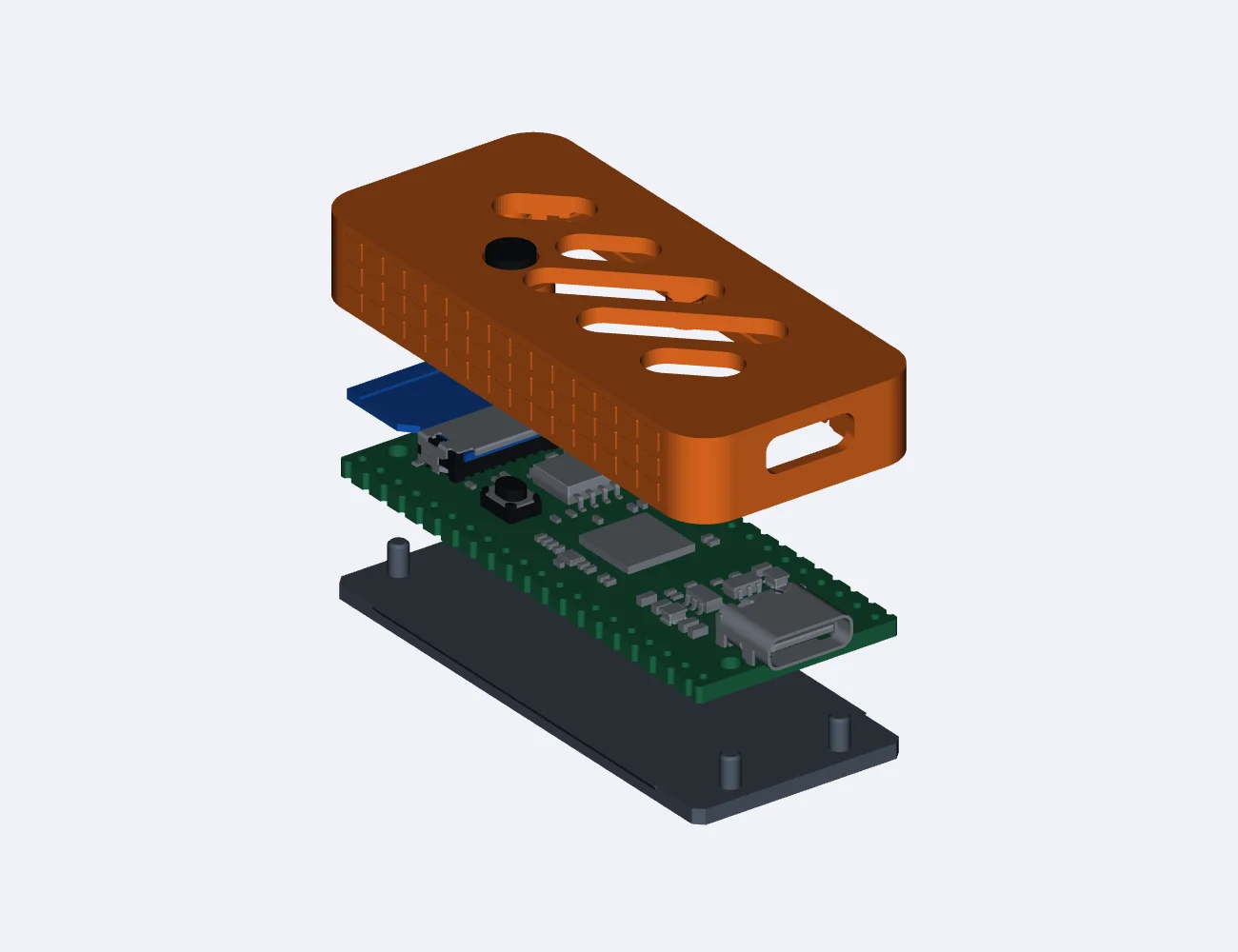
The memory sizes put the chip between a microcontroller and a small Linux computer. The Raspberry Pi Pico 2 has 520 KB of RAM, so 16 MiB of PSRAM is far more than that form factor usually offers, although the Pico family runs bare-metal firmware and the F101 can run an operating system. The XuanTie C907 core is a single-core RISC-V design from T-Head with a 32 KB instruction cache and a 16 KB data cache. The video blocks, including MIPI DSI, LVDS, and RGB output, point to small display projects more than general computing, and the hardware JPEG decoder can handle large images without loading the CPU.
Errata and a printable case
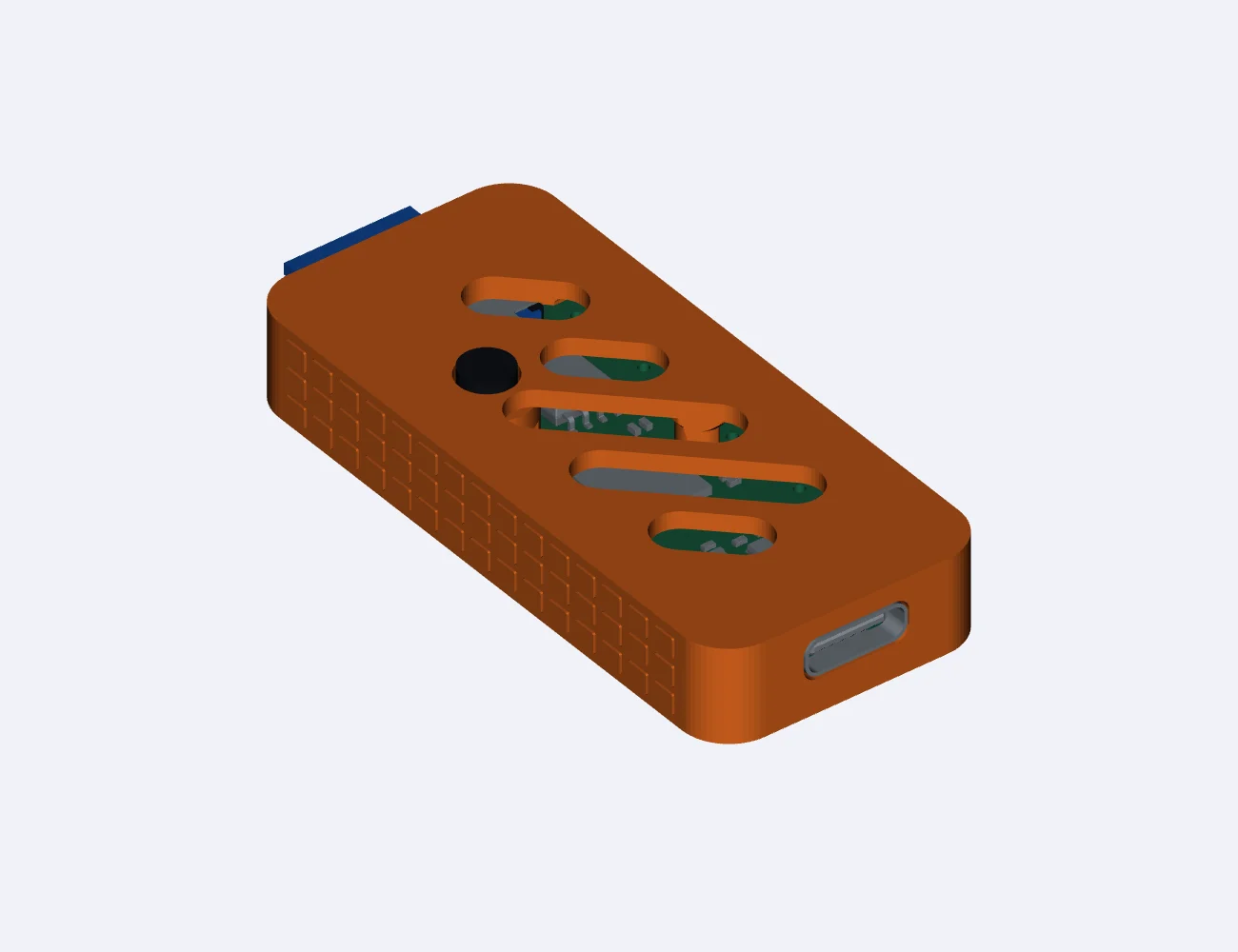
The README is upfront about hardware errors. On the V1.3 board, the PD pin labels from PD10 onward are numbered two lower than the actual SoC pin, so a user must select functions using the corrected number, and the V1.4 silkscreen is fixed. There is also an errata note about the microSD card-detect pull-down on V1.4 and earlier. A 3D-printable shell design is included, with an assembled view, bottom supports, and microSD socket access.
Context
The usual comparison is the Raspberry Pi Pico family, which uses the same pin layout but microcontroller chips that run no Linux. Other Linux-capable RISC-V boards in small sizes include Sipeed's Lichee Pi and Milk-V's Duo line, which use different chips and typically have more RAM. The YuzukiNeko's draw is the form factor, the open design, and the low-cost chip, plus the mainline Linux and Zephyr support the author is building.
The repository does not give a price, and nothing on the project says when the board will be sold. Builders can order the PCB themselves from the published design files.
YuzukiHD calls the board a development board and publishes the pin tables with version numbers, which makes the errata notes easy to follow. The V1.3 silkscreen offset on the PD pins means anyone building from older design files should check which revision they have, and the V1.4 and earlier microSD card-detect pull-down note is another item to read before ordering boards. Because the license is CC0, anyone can copy, modify, and sell the design without attribution, which is rare even among open hardware projects.
Sources and image credits
- GitHub: YuzukiHD/YuzukiNeko
- YuzukiHD Linux mainline branch for the F101
- Images: YuzukiHD repository materials