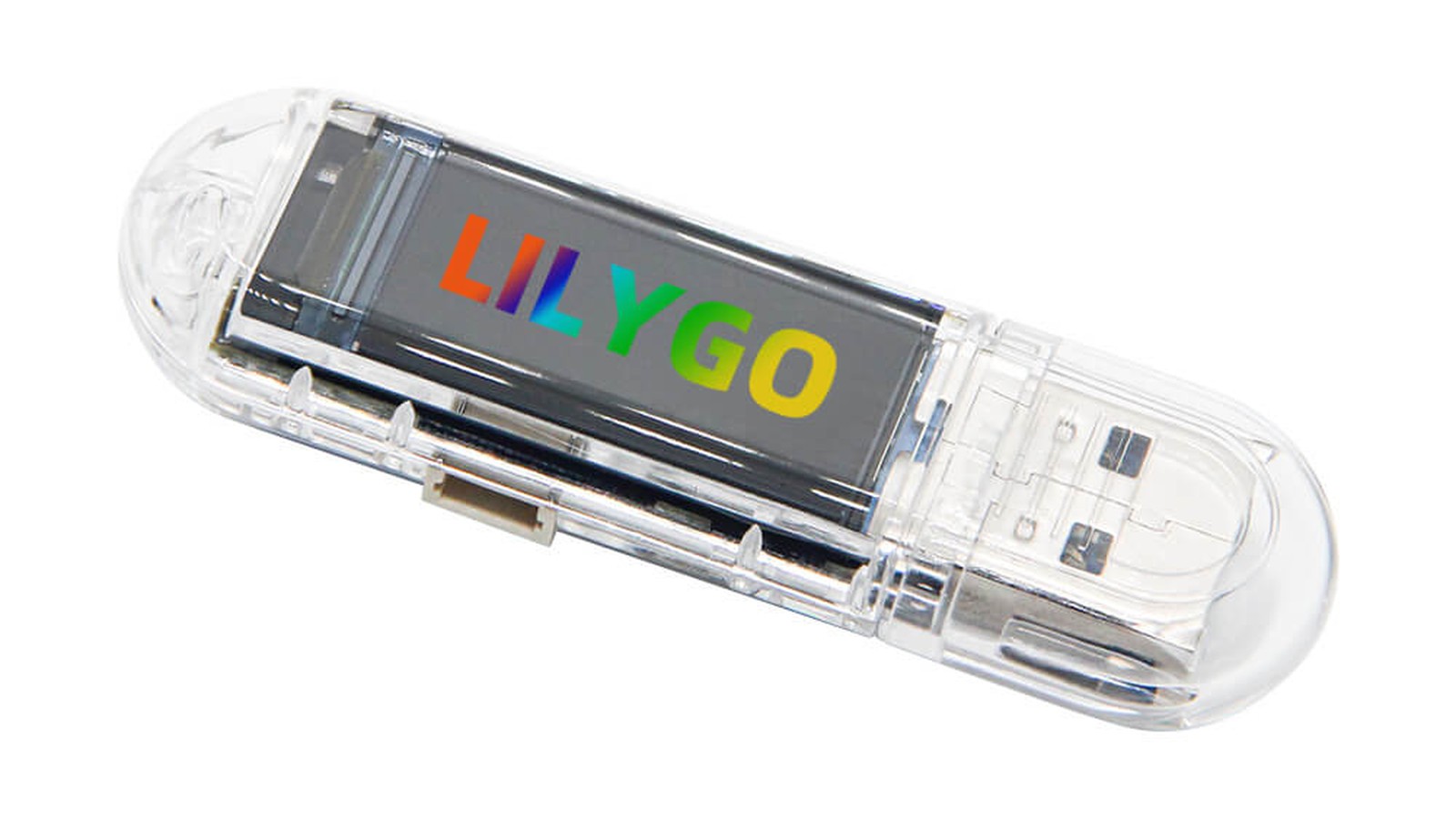
LILYGO is selling the T-Dongle-C5, a USB-A dongle built around an ESP32-C5, for $13.98 with a screen and $13.02 without on its own store. It is the successor to the ESP32-S3-based T-Dongle-S3, and it adds dual-band Wi-Fi 6, Bluetooth 5 LE, and an 802.15.4 radio for Thread and Zigbee 3.0. LILYGO's wiki page gives the board's details.
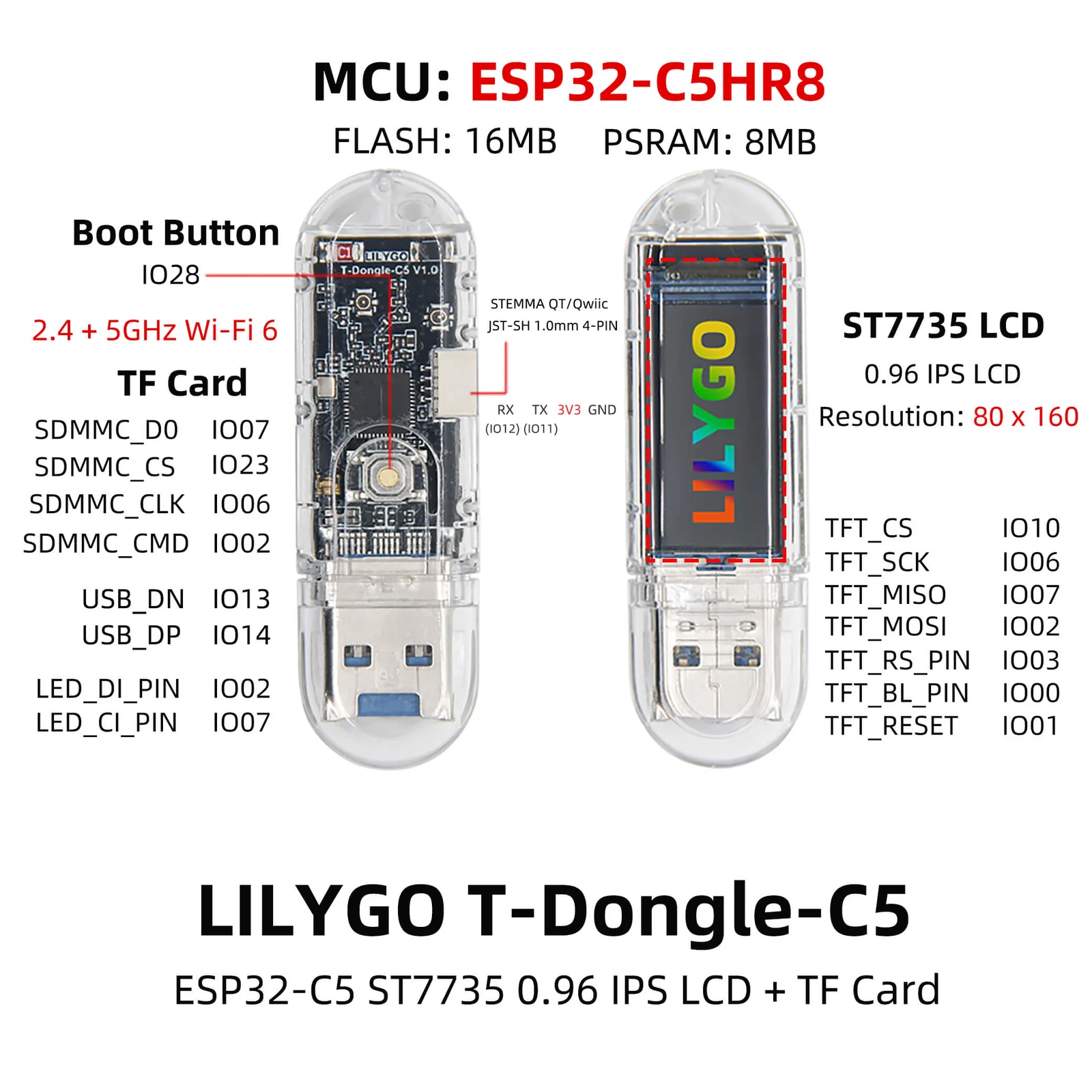
Hardware
The board carries 16 MB of flash and 8 MB of PSRAM inside a transparent USB-A housing that measures 58 by 18 by 9 mm. The optional display is a 0.96-inch ST7735 IPS color panel at 80 by 160 pixels with 65,000 colors. A microSD slot, which LILYGO's wiki calls a TF card slot, sits at the connector end.
The ESP32-C5 is Espressif's chip that combines 2.4 and 5 GHz Wi-Fi 6 with the 802.15.4 radio, which makes the dongle useful for Thread and Zigbee work as well as Wi-Fi testing. Programming works with PlatformIO and the Arduino IDE.
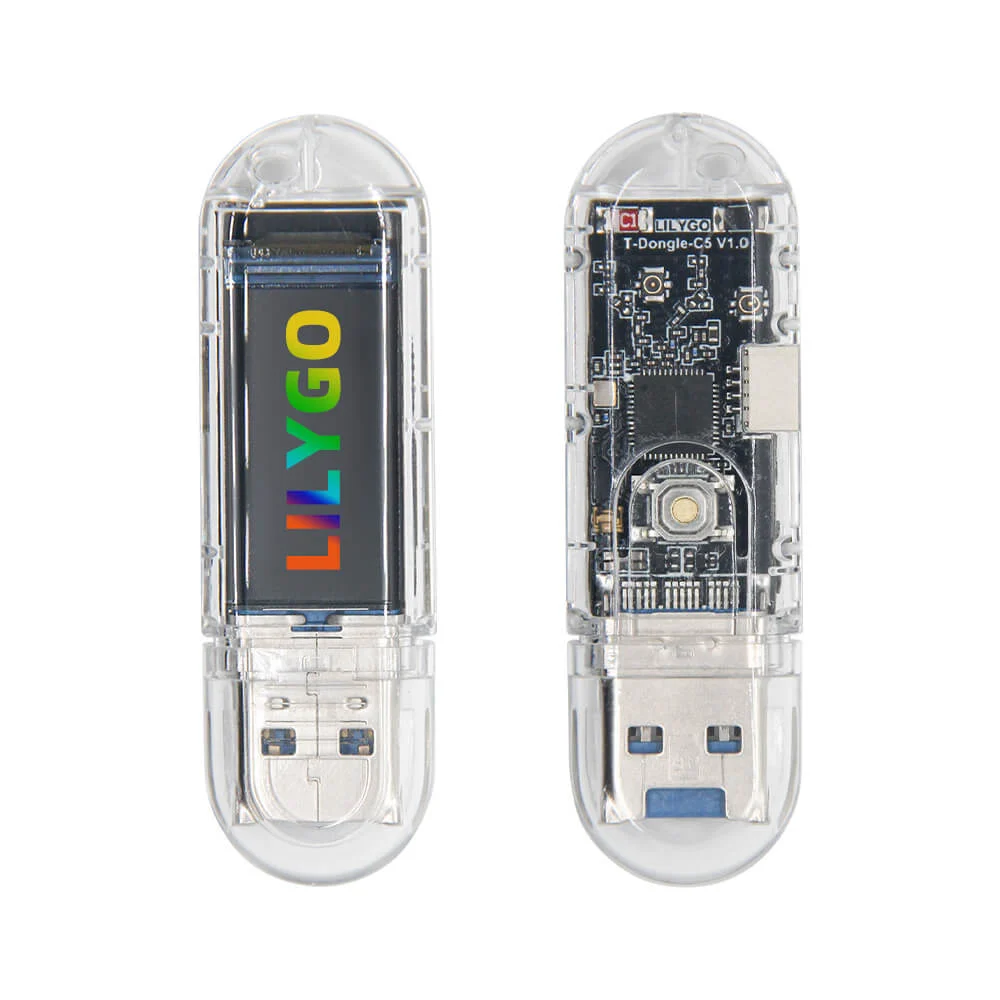
The dongle format has practical uses. A board in a USB-A plug can draw power from a laptop, a power bank, or a router's USB port without cables, and the microSD slot gives it local storage for logs and captures. The display, when installed, shows status without a computer attached. Because the ESP32-C5 carries an 802.15.4 radio, the same board can act as a Thread or Zigbee node, and with 5 GHz support it can talk to networks the older S3 dongle could not see. Espressif's own ESP32-C5-DevKitC-1 board uses the same chip family, so code written for one is likely to move to the other with pin changes.
Variants and pricing
LILYGO lists the board in with-screen (K193-A) and without-screen (K194-A) versions, and splits the offers by region: a China listing marked for worldwide shipping, a Germany listing for Europe only, and a United States listing for US only. The $13.98 and $13.02 prices come from the store's listing data, and final cost depends on shipping and taxes. Part of the appeal is the price. A USB dongle with a 5 GHz Wi-Fi 6 radio, a screen, and a card slot for about $14 is hard to match with other ESP32-C5 boards.
The T-Dongle-S3 that this replaces used an ESP32-S3 and handled only 2.4 GHz Wi-Fi. The C5 version adds the 5 GHz band and the Thread and Zigbee radio.
What people run on it
A dongle that plugs into a computer's USB port suits portable wireless tools. Because it has dual-band Wi-Fi, BLE, and an 802.15.4 radio, projects built for network and radio testing tend to target it. Community firmware for such work is available for similar ESP32 boards, and anyone planning to use it for wireless audits should keep to networks they own or have permission to test. Many of the uses that circulate for dongles like this, including packet capture and deauthentication tests, are legal only on equipment the user controls.
The comparison with its predecessor is straightforward. The T-Dongle-S3 uses the ESP32-S3, which supports 2.4 GHz Wi-Fi 4 and Bluetooth 5 LE and has more processing power for tasks like USB devices and graphics. The C5 version trades that for 5 GHz Wi-Fi 6 and the 802.15.4 radio, and carries 16 MB of flash and 8 MB of PSRAM. A buyer who needs raw performance or native USB-device features may still prefer the S3, while someone who needs 5 GHz or Thread and Zigbee should look at the C5. LILYGO's store lists the part numbers K193-A for the screen version and K194-A for the screenless one, and offers separate listings for worldwide, Europe-only, and US-only shipping.
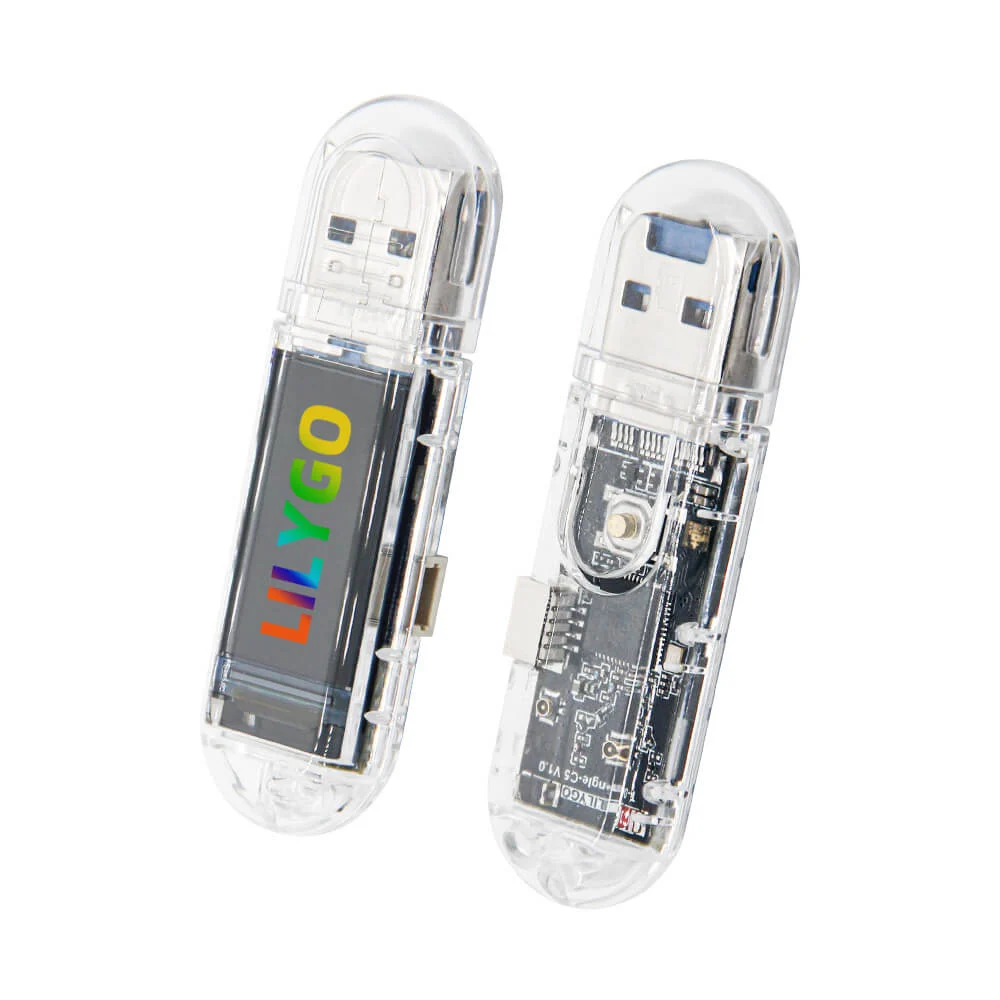
Power and software details are worth checking before buying. The wiki's specification graphic lists a 5 V supply at 500 mA over the USB connector, so the board should run from an ordinary computer port. Support for newer chips like the ESP32-C5 has been arriving in recent releases of Espressif's ESP-IDF and the Arduino-ESP32 core, so builders should confirm the version they use supports the board. LILYGO says the dongle works with PlatformIO and the Arduino IDE. The transparent shell lets the bare PCB show, which is part of the design and makes the dongle easy to inspect.
The with-screen version costs 96 cents more than the screenless one, so the display adds very little to the price.
Sources and image credits
- LILYGO store: T-Dongle C5
- LILYGO wiki: T-Dongle-C5
- Images: LILYGO product materials