M5Stack has relaunched its Faces platform with a third generation, and the Faces 3 Bottom Board is on the M5Stack store at $22.50. The base takes a Core-series controller on top and swappable input panels underneath, which turns a Core module into a battery-powered handheld with a keyboard, gamepad, or calculator. A 600 mAh battery is built in, and the Core module is sold separately.
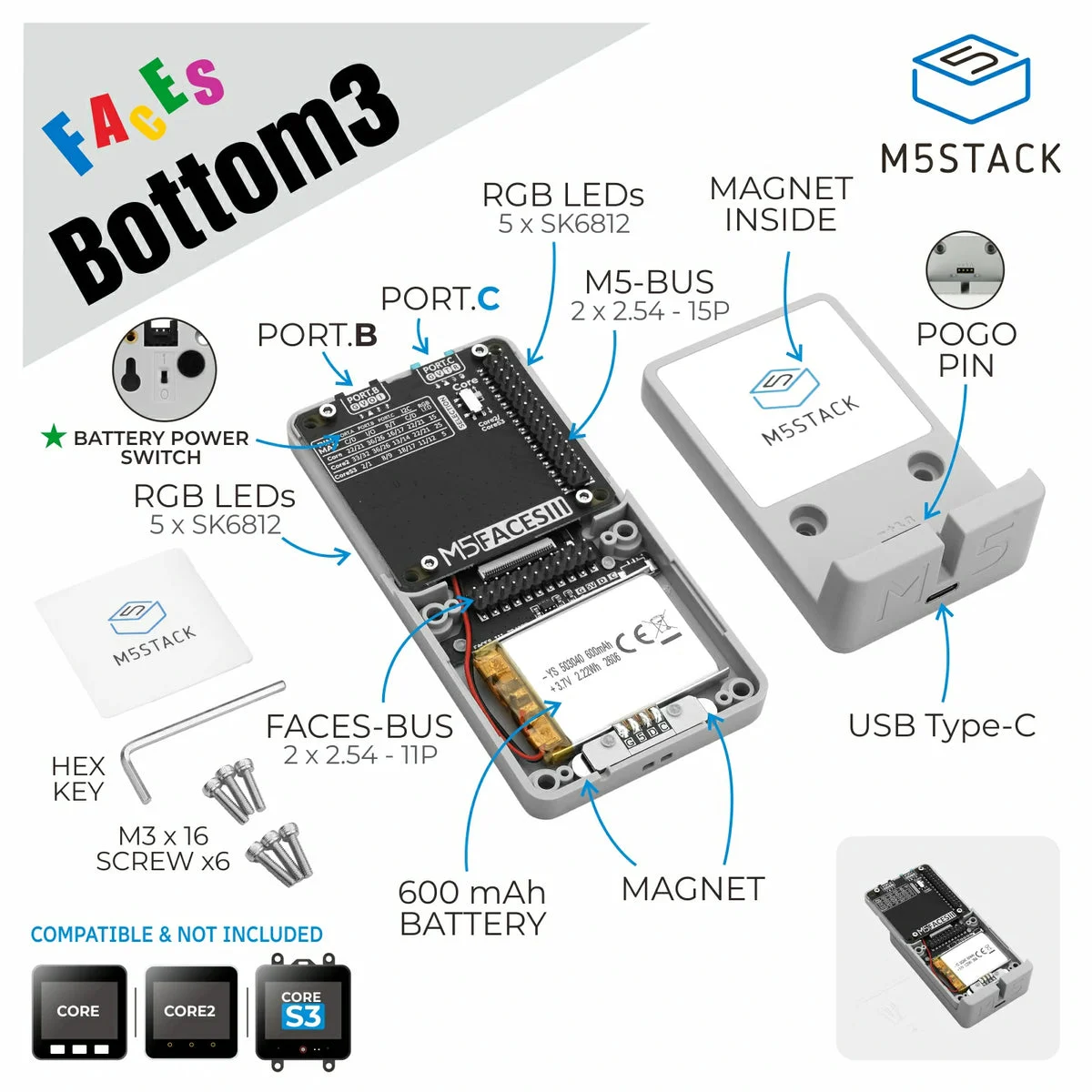
The Bottom Board
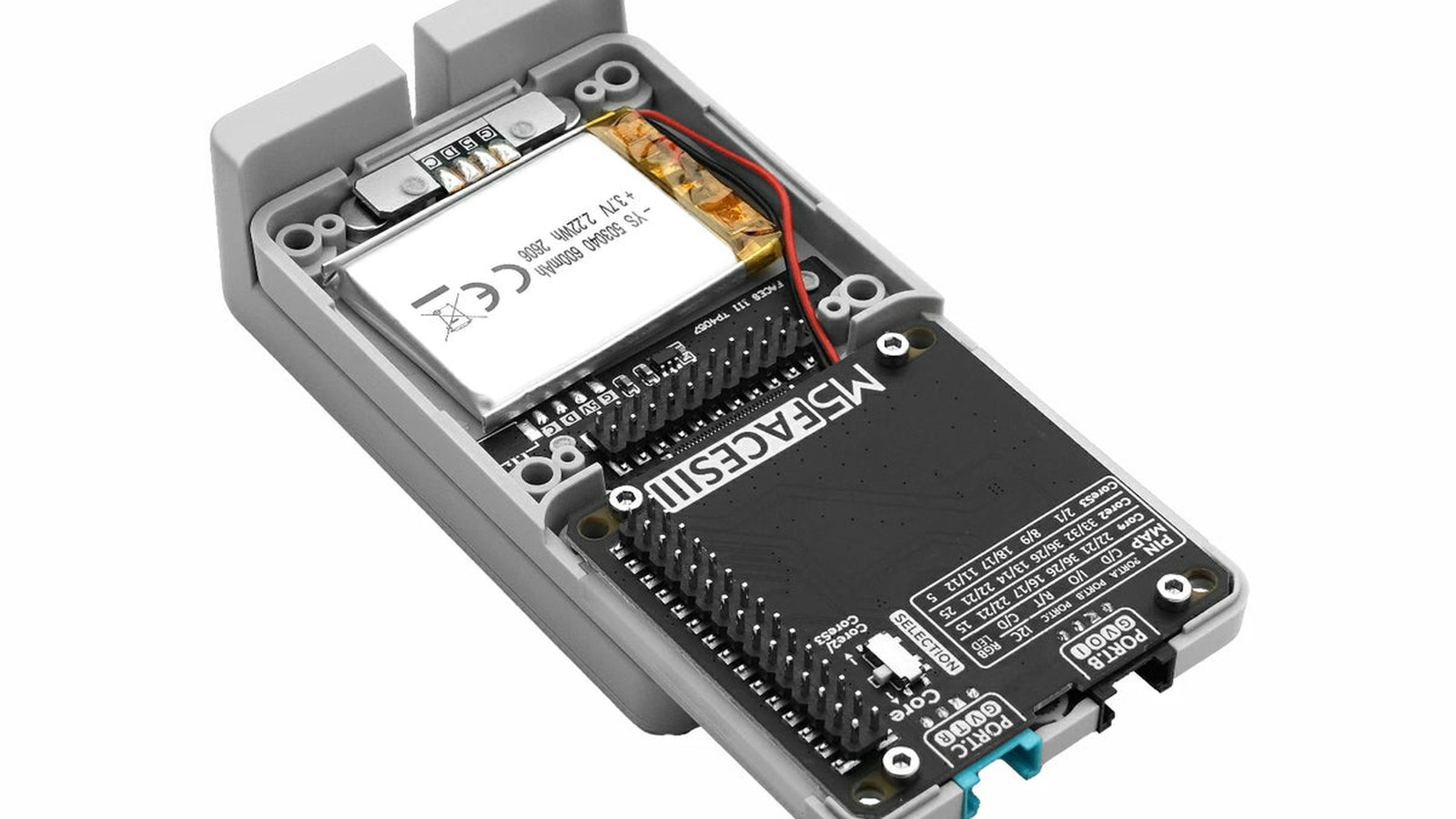
The board connects to the host over the M5-Bus and provides a 2.54 mm, 22-pin panel bus for input panels. M5Stack lists compatibility with Core1, Core2, and CoreS3 controllers and with Faces function panels from the first and third generations. The base adds an RGB LED strip on each side with five LEDs apiece, two HY2.0-4P expansion ports labeled PORT.B and PORT.C, and a switch that moves the LED data line to suit different hosts.
Power comes from the built-in 600 mAh rechargeable battery, managed by a TP4057 charging chip, with pogo-pin magnetic charging contacts on the back and a battery switch beside them. M3 screw holes and wall-mount holes on the back and a lanyard hole at the bottom support handheld use and fixed installation. The box includes the Bottom board, a Faces Charging3 accessory, a 2.5 mm hex key, and six M3 by 12 mm screws.
Input panels
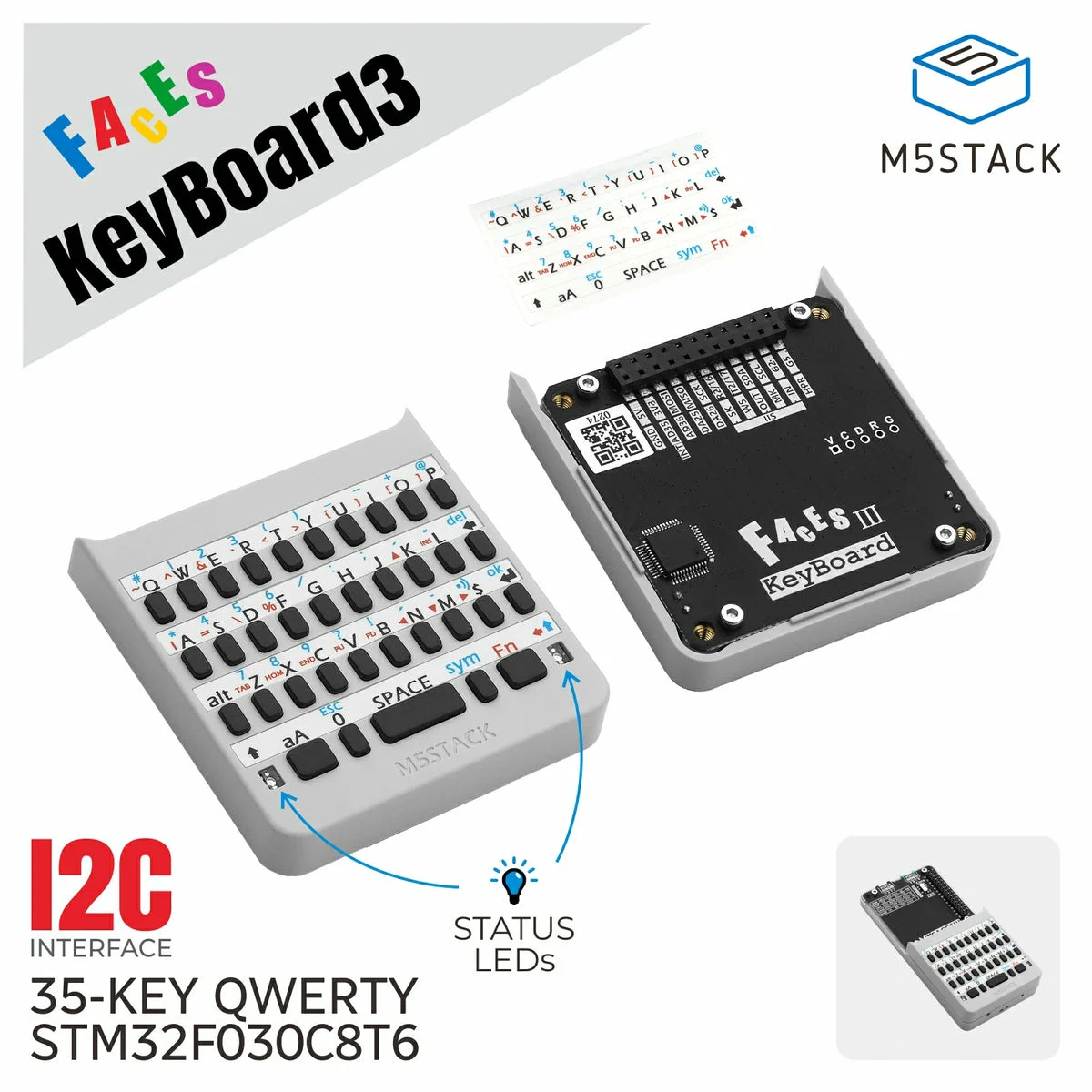
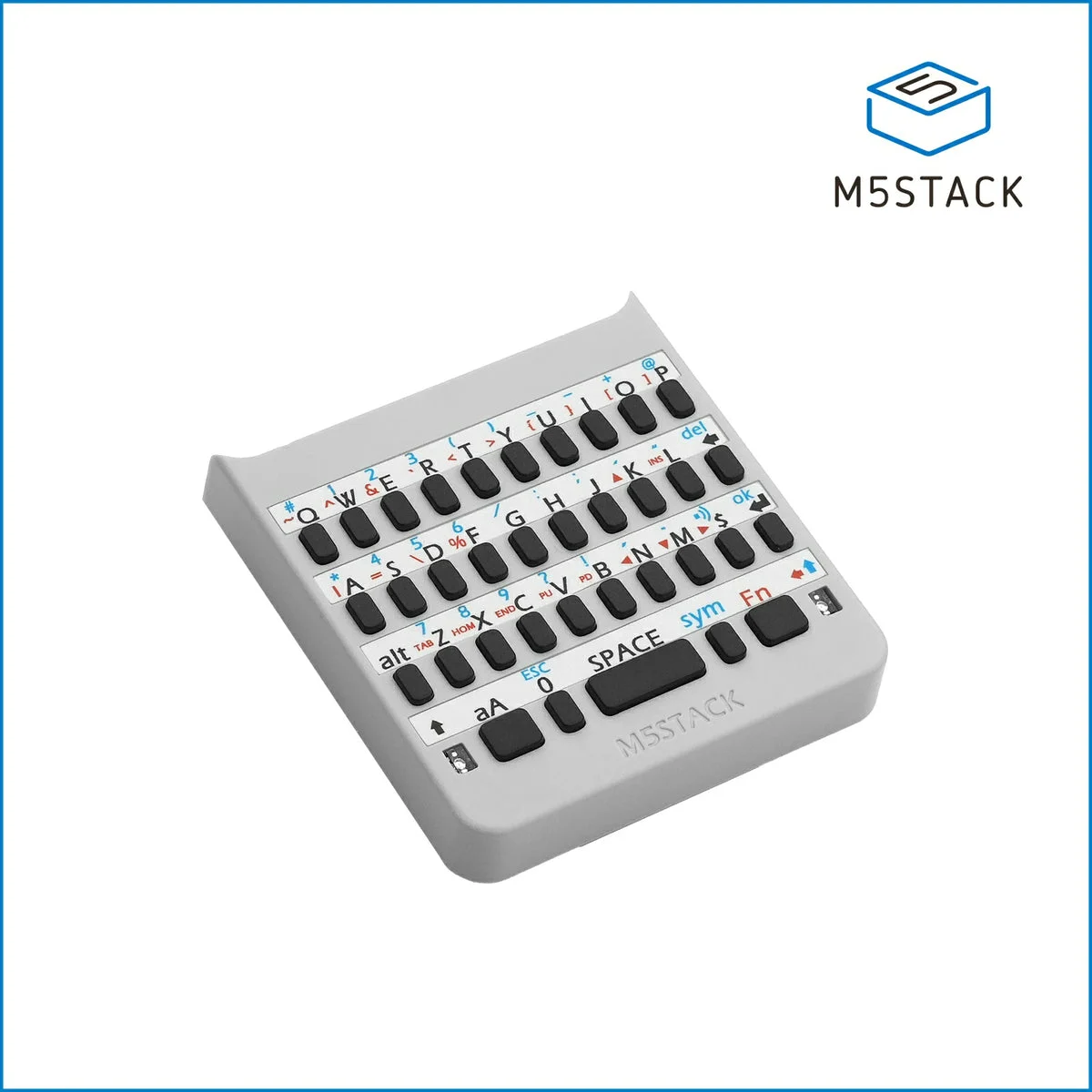
Three third-generation panels are available at launch. The Keyboard Panel v3.0 costs $12.50, and the store lists it with an I2C interface, a 35-key QWERTY layout, and status LEDs. The Calculator and Gamepad panels cost $7.95 each, according to the Hackster report on the launch. M5Stack lists the Bottom Board as compatible with first- and third-generation panels.
Pairing a Core controller with the base gives a combined unit with the Core's screen on top, the panel below, and the battery in between. A CoreS3, for instance, has a touchscreen and a camera, so the stack becomes a pocket device with a physical keyboard and a display. The Core1 and Core2 are older boards in the same family and the M5-Bus connector links them to the base the same way. The two HY2.0-4P ports, labeled PORT.B and PORT.C, accept M5Stack's Unit sensor modules, so sensors can be added without opening the housing.
Why the platform returns
The original Faces line was M5Stack's way of making Core controllers pocketable. M5Stack's Cardputer, a keyboard-equipped ESP32-S3 computer, has since become a popular standalone device, and the CoreS3 and Core2 remain the company's flagship controllers with built-in touchscreens. The new Faces base lets owners reuse a Core they already have instead of buying a dedicated handheld.
The magnetic charging contacts and wall-mount holes also suggest uses beyond handhelds. M5Stack's listed applications are handheld interactive devices, portable embedded projects, and multi-module expansion and prototype development. A Core on a Faces base can be mounted on a wall as a control panel with its own battery and LED strips.
Cost and limits
The base, a Core module, and a panel together cost more than a Cardputer-style single board, since the Core controller is sold separately and varies in price. A buyer who does not already own a Core module should price the full stack first. The 600 mAh cell is small for a color screen and Wi-Fi radio, and M5Stack gives no runtime figures.
Prices are straightforward on the store pages: $22.50 for the Bottom Board and $12.50 for the Keyboard Panel v3.0. The calculator and gamepad panels list at $7.95 each. A complete keyboard handheld therefore starts at about $35 before the Core controller, whose price depends on the model. M5Stack does not list a runtime for the 600 mAh battery, and the company gives no estimate with a Core module attached, so battery life will depend on screen brightness and radio use.
The LED strips use five RGB LEDs on each side, listed as SK6812 parts in the product graphic, a family of addressable LEDs that follows the same one-wire control scheme as the popular WS2812B. That makes the strips easy to drive with common libraries. A switch on the base moves the LED data line to suit different host controllers, because the Core models route that signal to different pins.
Adding the $7.95 gamepad panel puts the base and panel at $30.45, and the $7.95 calculator panel does the same, before the Core controller.