ZeroWire Robotics has put the Q8botOne, a smartphone-sized quadruped robot with no internal wiring, on Crowd Supply. The campaign went live on October 6, and as of this writing it has raised $4,384 of a $10,000 goal from 16 backers, with 38 days left. Funding closes on November 19, 2026 at 3:59 PM PST, and reward levels run from $199 to $599.
A robot built on one board
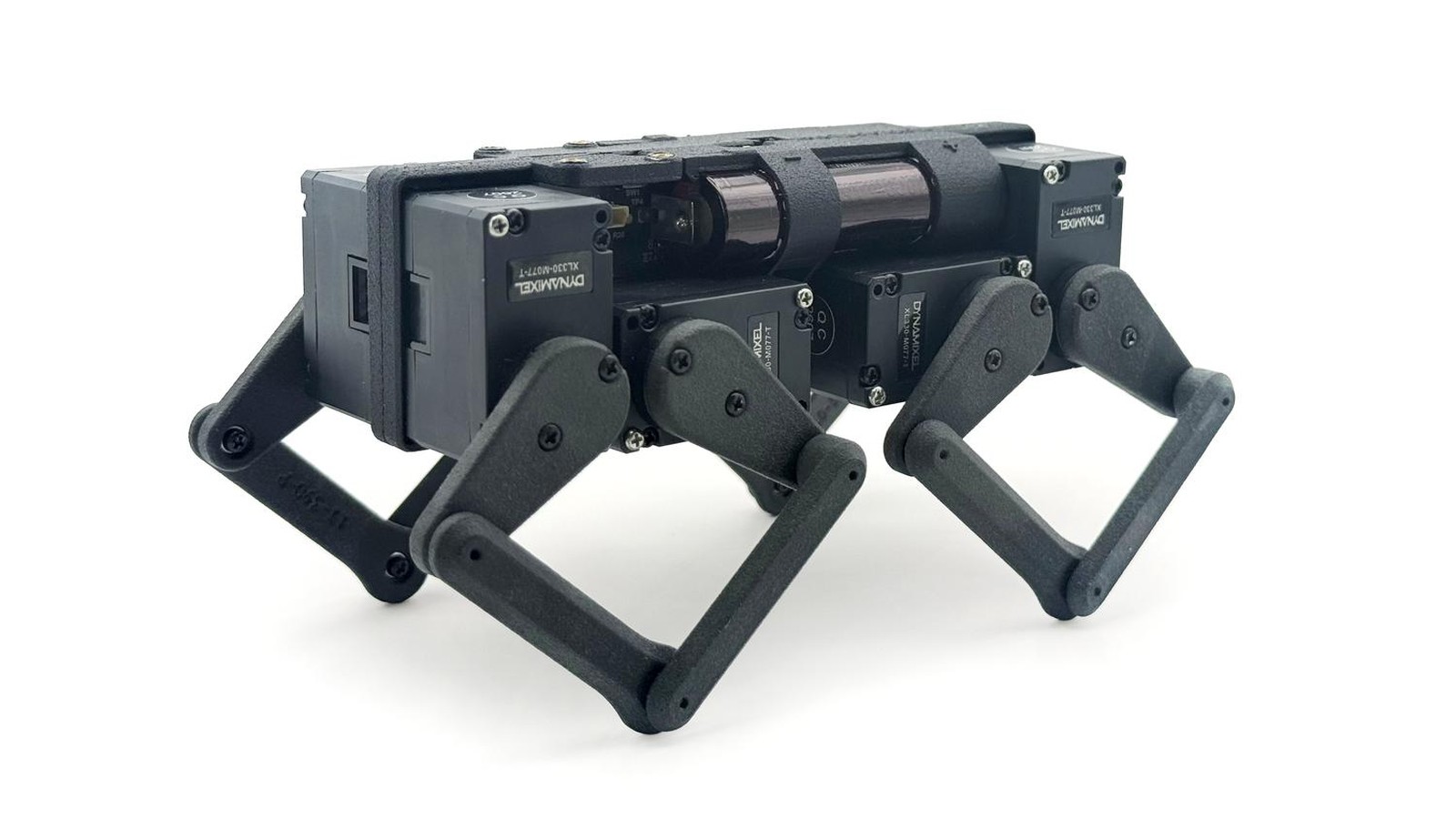
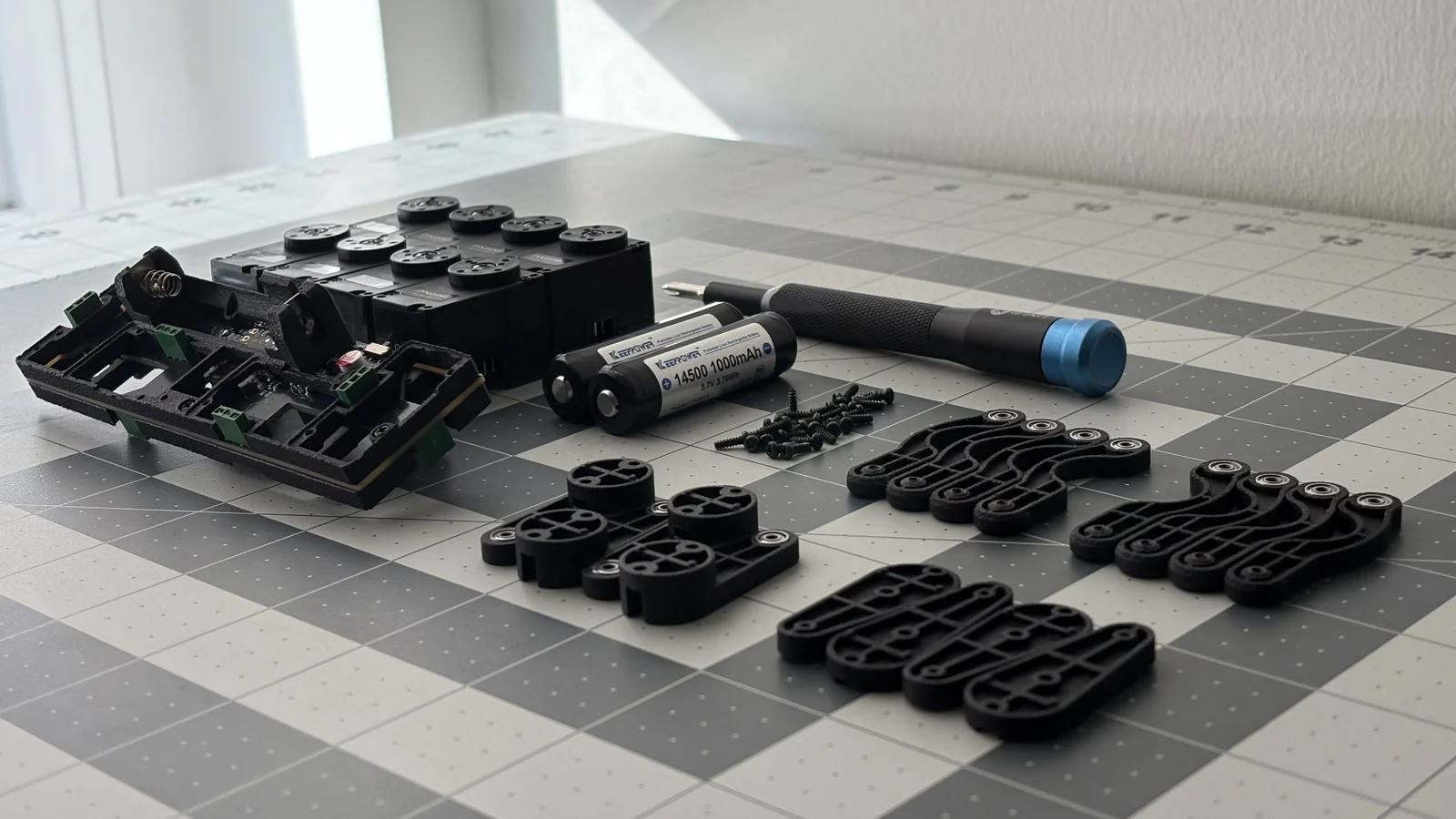
The design idea is in the name ZeroWire. Every core component plugs directly into a central printed circuit board, which also serves as the structural spine of the chassis, so there are no cables to snag or reroute. Crowd Supply says this improves electrical reliability, reduces size and weight, and makes servicing easier, and it presents the result as an open-hardware platform. The body is a simple rectangle with parallel-linkage legs, and the makers say the abstract shape makes the robot approachable and easy to customize.
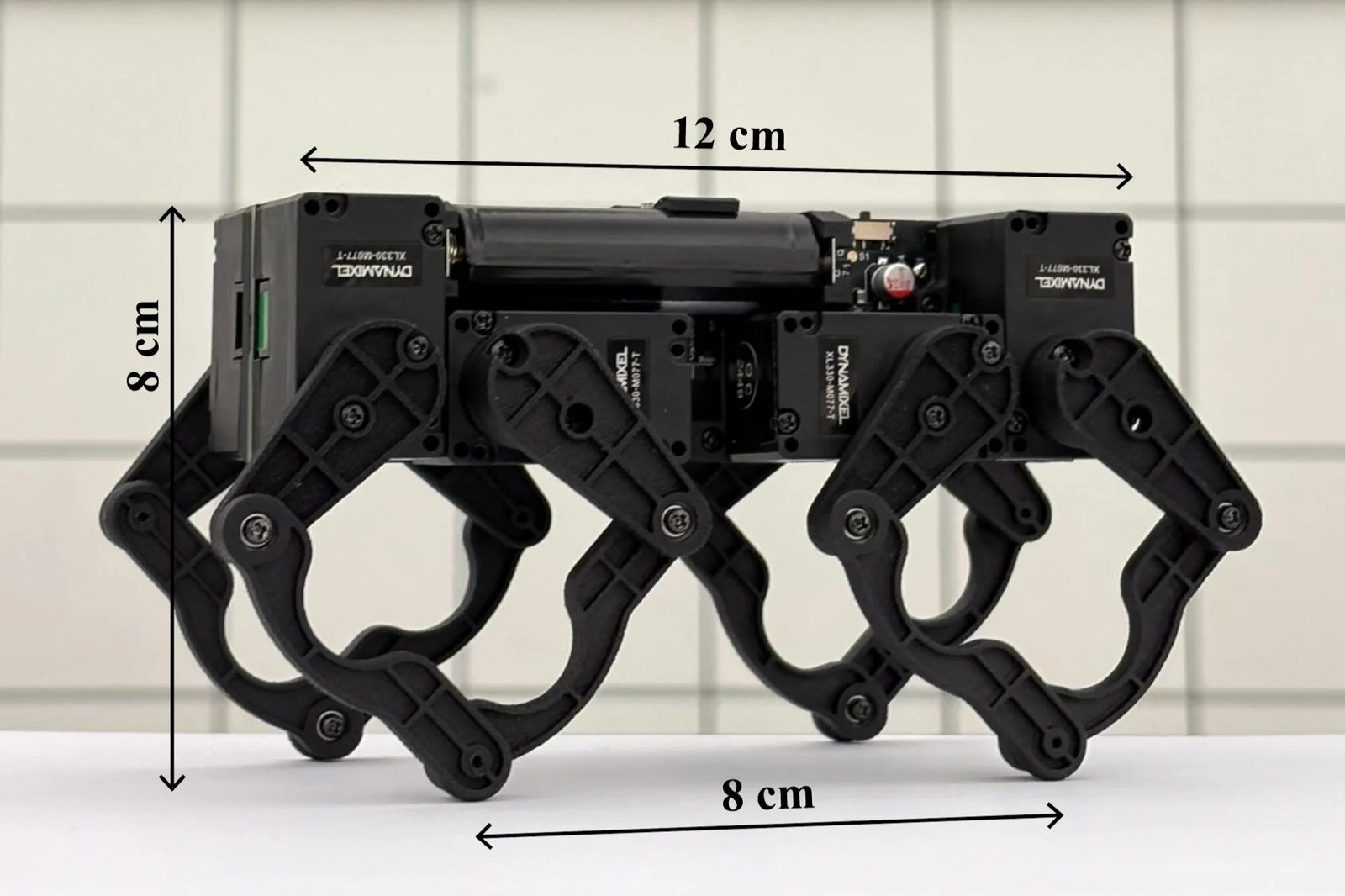
According to the campaign, the robot is about the size of a smartphone, can jog, jump, and carry up to twice its own weight, and can be programmed for many gaits. Reported dimensions are about 120 by 70 by 70 mm, with a weight of roughly 221 to 250 grams depending on whether the optional camera and sensors are installed.
Hardware
The brain is an ESP32-C3 module, a single-core 160 MHz RISC-V chip with Wi-Fi and Bluetooth LE. Eight ROBOTIS DYNAMIXEL XL330-M077-T smart actuators drive the legs, and each one is individually addressable over a shared serial bus with tunable position, velocity, and PID settings. PID is a control method that adjusts motor output based on position error. The main board includes a 6 V, 16 A step-down converter for the motors, a battery management system, and power monitoring, and it runs from two 14500 lithium-ion cells with USB-C charging.
Frames and leg linkages are printed in nylon PA12 using multi jet fusion, with ball-bearing joints. Optional extras include an MPU-6050 six-axis motion sensor for stabilization and an ESP32 camera for visual feedback, and a Qwiic-compatible connector allows more sensors to be added.
Controller and software
The kit includes a separate ESP32-C3 controller board with an Adafruit Mini I2C Gamepad that has a joystick and buttons, powered from a USB-C power bank. The project's code and design files are in the ZeroWire Robotics GitHub repositories, which is where the open-source claim can be checked.
The numbers explain the scale. Eight actuators means two per leg, and each XL330 is a small smart servo that reports position, load, and temperature back over the bus, which lets firmware adjust gaits in real time. A 250-gram robot carrying twice its own weight is lifting about 500 grams, and the campaign describes jogging and jumping. A 6 V, 16 A converter feeds the motors because eight actuators moving at once draw large current spikes. Two 14500 cells are the same size as AA batteries, which fits the palm-sized chassis, with a charger chip that balances the cells.
Competition and risk
Small open-source quadrupeds already exist. Petoi's Bittle and Nybble are the best-known palm-sized robot dogs, and both are programmable and aimed at education. Q8botOne's differences are the wire-free PCB-chassis design and the use of DYNAMIXEL smart actuators, which are more expensive than hobby servos.
Crowdfunding campaigns carry delivery risk. The campaign was less than halfway to its goal when checked. The jump and carry claims and the weight figures come from the makers, and no independent demonstration beyond the campaign materials is available yet. Buyers should read the delivery estimates and the refund terms on the campaign page.
Crowd Supply campaigns carry a funding end date, and this one closes on November 19, 2026. At $4,384 raised of a $10,000 goal from 16 backers, the average pledge is about $274, which sits inside the $199 to $599 tier range. The campaign page lists reward tiers, and ZeroWire Robotics posted its first update on October 6, when the campaign opened.
The campaign page says the robot is meant to be taken apart, modified, and understood, and it positions Q8botOne for students and for serious robotics experiments. The ESP32 camera and the motion sensor are optional add-ons, so the base kit does not include them, and a buyer who wants camera feedback should check which tier includes the module. A mechanical jumper with MOSFET power switching sits on the main board to control motor power.
Sources and image credits
- Crowd Supply: Q8botOne by ZeroWire Robotics
- ZeroWire Robotics GitHub (EricYufengWu/q8bot)
- Images: ZeroWire Robotics campaign and repository materials