How to write, save, and upload Arduino sketches from a Chromebook using Arduino Cloud and the Chromebook app, which boards work, how USB fits in, and what you give up compared with Windows, macOS, or Linux.
What Arduino Cloud is, how Things, variables, dashboards, triggers, and OTA fit together, how the Cloud Editor compares to Arduino IDE 2, and a first project that puts a sensor on a dashboard.
What an Arduino IDE 2 nightly build is, how it differs from stable 2.3.x, who should install one, how to run it beside stable, how to back up configuration, and how to report a bug.
Recovery path when a UNO Q will not boot or App Lab cannot see it: cables and udev first, then Emergency Download Mode and Arduino Flasher CLI `flash latest`.
How to reinstall the UNO Q Debian image when the board still talks to App Lab, using the built-in flasher, with a clear warning that this is not the same as uploading a sketch.
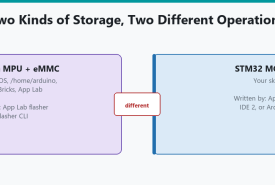
Why UNO Q and VENTUNO Q run a Linux operating system, how that differs from uploading a sketch, when to reflash, how App Lab's flasher compares to Arduino Flasher CLI, how to recover a UNO Q that will not boot, and why VENTUNO Q follows a different procedure.
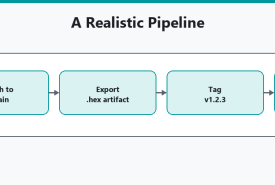
How to turn Arduino CLI compile checks into a small pipeline: compile on pull requests, save hex artifacts, optionally lint, and keep flashing boards as a local or tagged-release step, not something GitHub-hosted runners can do without hardware.