Espressif upgraded its entry-level ESP32-C2 platform on March 3, 2025, giving the revised chip more working memory, more usable flash storage, and a software framework tuned for the new hardware. The change targets small connected products where a few kilobytes can decide whether another feature, update, or diagnostic buffer will fit.
There is one warning developers should see first: Espressif recommended updating to the latest compatible ESP-IDF minor release. The revised ESP32-C2 v2.0 is not simply extra capacity that old tools will discover automatically. Current framework support is needed to use the hardware correctly and avoid compatibility or stability problems.
ESP-IDF is Espressif's official software development framework. It supplies the build system, drivers, networking components, real-time operating system integration, and chip-specific definitions used to create firmware.
What changed in the ESP32-C2 upgrade?
Espressif said the revision provides up to 20KB of additional static random-access memory, or SRAM. SRAM holds variables, stacks, queues, network buffers, and other data while a program runs. Unlike flash, its contents disappear when power is removed.
The company also cited approximately 100KB of extra flash storage. Flash keeps program code and persistent data without power. On a constrained microcontroller, that additional space can accommodate a larger application, more logging, stored resources, or a less cramped update layout.
The words "up to" carry weight. The precise memory available to an application depends on the product variant, framework, memory map, enabled features, and reserved system regions. Developers should use the figures reported by their build tools and target documentation rather than subtracting one headline number from another.
Why 20KB of SRAM can be meaningful
Twenty kilobytes sounds tiny beside a phone or computer, but the ESP32-C2 is designed for cost-sensitive embedded products. Firmware in this class is deliberately compact. A network connection may require several buffers, a real-time task needs stack space, and a parser may allocate temporary structures. When free memory becomes fragmented or falls too low, failures can appear only under peak traffic.
Extra SRAM can provide room for another task, sturdier buffering, or safer margins. It may reduce the temptation to shrink stacks until they are barely adequate. It can also make real-time processing steadier when several activities overlap, such as receiving Wi-Fi data while sampling a sensor and writing a log.
It is not a substitute for measuring memory. Developers should still track static use at build time and observe minimum free heap during worst-case operation. A memory leak will eventually consume a larger pool too.
More flash helps updates and diagnostics
Over-the-air firmware updates commonly require space for more than the running application. A safe layout may keep the current image while downloading a replacement, then switch boot partitions only after verification. Larger firmware can squeeze that arrangement on inexpensive parts.
Approximately 100KB of extra flash can make room for update metadata, certificates, factory settings, web resources, or more complete diagnostics. Better logs are especially valuable during deployment because many embedded faults cannot be reproduced on a developer's desk.
Flash size and usable application space are not identical. Partition tables reserve regions for the bootloader, nonvolatile storage, OTA data, and application slots. Teams should inspect the partition layout after updating their tools and keep enough margin for future releases.
This is still the ESP32-C2 platform
The ESP32-C2, also sold in the ESP8684 family, is a small and inexpensive connected system-on-chip. It combines a 32-bit RISC-V processor with 2.4GHz Wi-Fi and Bluetooth Low Energy. The target uses include smart plugs, lighting, simple sensors, appliances, and other products that need mainstream wireless connectivity at low cost.
The revision does not transform it into a high-end multimedia processor. Applications needing large displays, cameras, substantial external memory, or several demanding radios may be better served by a different ESP32 family. The upgrade instead gives ordinary C2 workloads more breathing room.
That is often the more useful kind of revision. Products can retain a familiar footprint and software family while gaining capacity for security updates and incremental features.
Pay attention to part identification
Espressif's product change documentation distinguishes revised ordering codes by adding an X suffix. For example, the company listed codes such as ESP8684H2X and ESP8684-MINI-1-H2X for extended versions, while earlier codes lack that final character.
Procurement and firmware teams should coordinate around those identifiers. A development board, module reel, or contract-manufacturing lot may not contain the revision someone assumes. Record the exact chip revision during validation, and make firmware capable of reporting useful version information in the field.
Mixed production deserves particular attention. If old and new parts can both appear in a product, build and test against the supported common configuration unless the software reliably detects and manages the difference. Never let a larger memory target hide an overflow that still affects earlier hardware.
A practical migration checklist
Start by reading Espressif's product change notification and compatibility announcement for the exact C2 or ESP8684 device in use. Update ESP-IDF to the recommended minor version, clean the build, and rebuild all components so stale generated files cannot preserve old assumptions.
Then verify the bootloader, partition table, flash settings, and memory report. Exercise Wi-Fi, Bluetooth Low Energy, sleep modes, OTA rollback, storage, and any timing-sensitive peripherals on revised silicon. Run long enough to capture the lowest free heap and stack margins during peak activity.
Manufacturers should update approved part lists, incoming inspection rules, programming stations, and traceability records. If the ordering code changes, purchasing systems and assembly documentation need to recognize it.
Finally, resist filling every new byte immediately. Capacity held in reserve gives future security fixes and protocol updates somewhere to go.
Why the revision matters
The ESP32-C2 competes on cost, so modest resource changes have an outsized effect. More SRAM can improve runtime headroom. More flash can preserve an update strategy as firmware grows. Updated framework support can make both resources dependable. Taken together, that is where the performance gain actually shows up: not as a faster clock, but as steadier real-time behavior, less risk of memory fragmentation slowing things down under load, and more room for the framework to do its job well.
The release is also a reminder that a familiar product name does not guarantee identical silicon forever. Embedded teams have to manage hardware revisions with the same care they apply to software versions. For new projects, the upgraded C2 offers a more comfortable baseline. For existing products, the benefit is real, but it begins with the unglamorous work of updating tools, checking part codes, and retesting the complete device.
If you're building on the revised ESP32-C2, I'd update ESP-IDF and rebuild cleanly before trusting the extra memory, and I'd record the exact chip revision during testing.
Sources and image credits
- Espressif announcement: ESP32-C2 upgrade
- Espressif ESP32-C2 product page
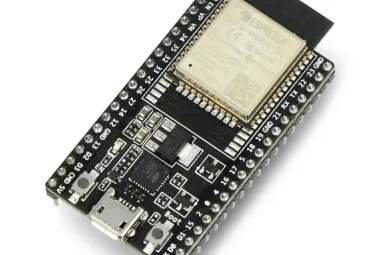
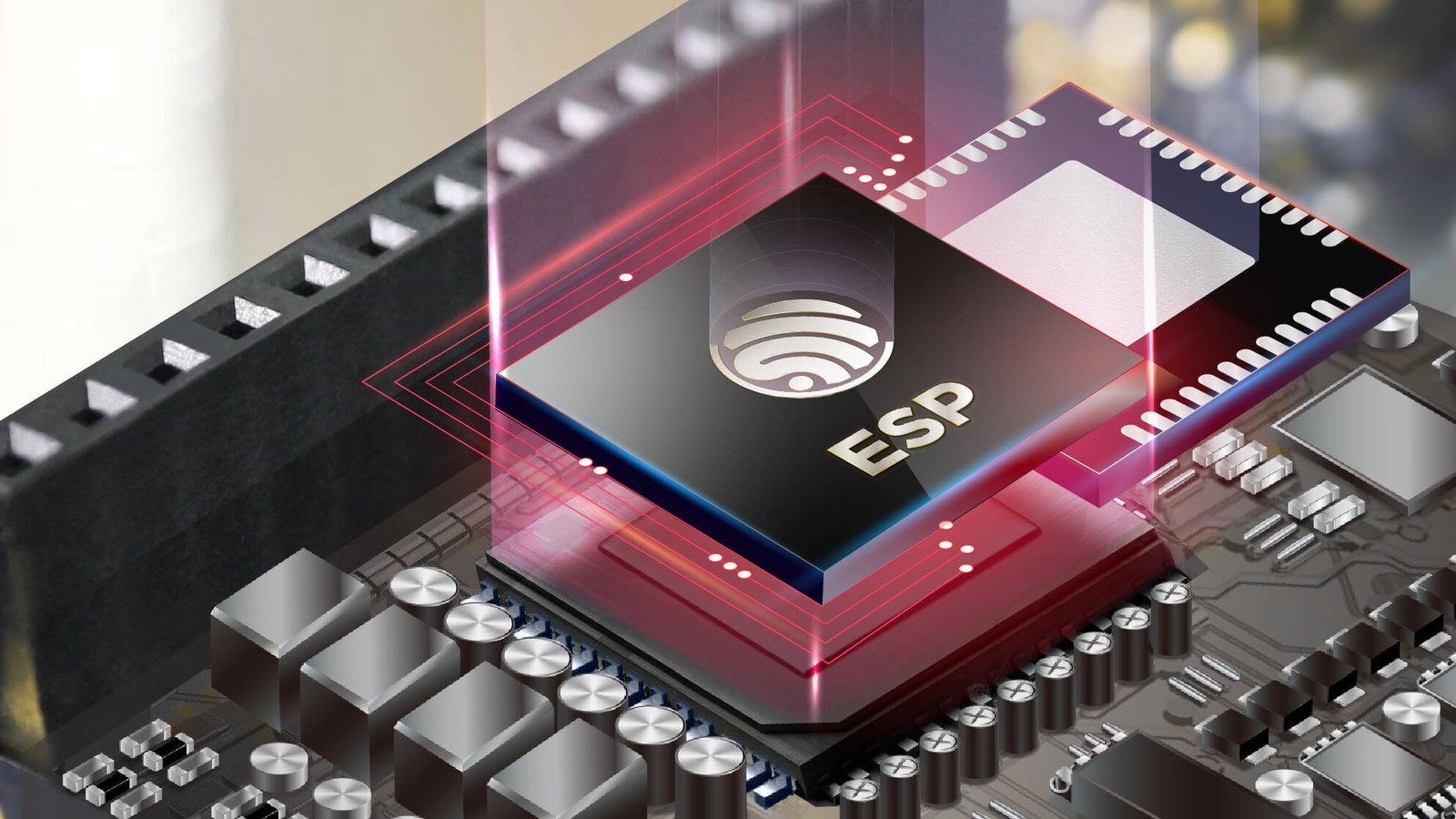
- Official product image supplied by Espressif Systems.
- Square and vertical crops are edited from the same source image.