Add Espressif's stable board index, install the esp32 core, choose the right board entry, and upload your first sketch to a classic ESP32 DevKit in Arduino IDE 2.
New to the ESP32? Learn what it is, what's inside, which variant and dev board to buy, how to read the pinout safely, and how it compares with an Arduino Uno.
Learn how a microcontroller works: the CPU, flash, SRAM, clock, GPIO pins, and peripherals packed into one chip, and how your code turns into a lit LED.
Meta's open-source Muse Gadgets SDK lets makers connect an ESP32 board or a Raspberry Pi to the Muse personal AI agent, with screens, audio, sensors, and buttons.
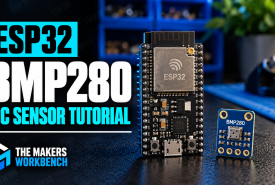
Learn how I2C moves data over two wires, why pull-up resistors matter, how to find a device's address, and how to read pressure and temperature from a BMP280 on an ESP32.
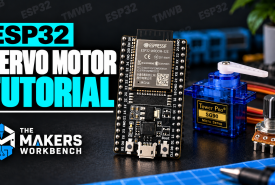
Learn what is inside a servo motor, how a pulse width sets its angle, how to power it safely, and steer one with a potentiometer on an ESP32, in the Lab or on a breadboard.
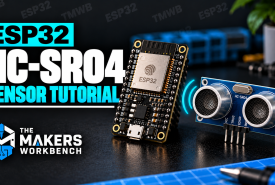
Learn how the HC-SR04 ultrasonic sensor turns an echo into a distance, how to protect your ESP32's 3.3 V pin with a voltage divider, and build a distance meter in the Lab or on a breadboard.